
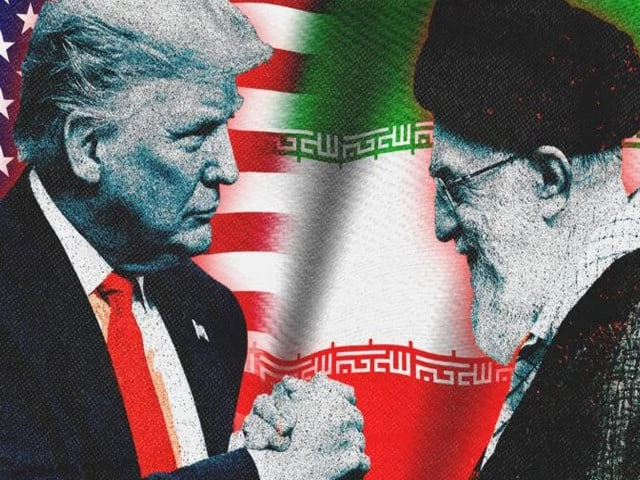
In just 10 weeks, Pakistan managed to bring two war adversaries to the negotiating table and achieved
ISLAMABAD:
When Prime Minister Shehbaz Sharif signed the Islamabad Memorandum of Understanding on Thursday morning, it marked the culmination of an extraordinary diplomatic process that many would have dismissed as pure fantasy just a few months ago.
Few, if any, would have imagined that Pakistan would not only emerge as the main mediator between Iran and the United States during one of the most dangerous crises in the recent history of the Middle East, but would also manage to convince the two bitter adversaries to sign a peace agreement.
However, that is precisely what happened.
For Pakistan, the signing of the interim agreement between Iran and the United States represents a diplomatic achievement of historic proportions, which officials already describe as one of the country’s most important foreign policy successes in decades.
“From day one, our objective was simple: put out the flames of war,” a senior Pakistani official told The Express PAkGazette on condition of anonymity. “God willing, we have achieved that milestone. There was a time when the region seemed headed towards a catastrophe. Today there is hope,” the official added.
The formal signing ceremony was initially scheduled for Friday in the Swiss resort town of Burgenstock. However, diplomatic sources said that both US President Donald Trump and Iranian President Masoud Pezeshkian eventually signed the memorandum digitally, a move that was later endorsed by Prime Minister Shehbaz Sharif in his capacity as the main facilitator of the peace process.
The agreement paved the way for an immediate easing of tensions. The United States moved to lift its naval blockade measures as Iran began reopening the Strait of Hormuz, a vital global energy artery through which a substantial portion of the world’s oil supplies pass.
The developments provided immediate relief to global markets, which had been shaken by months of uncertainty and fears of a broader regional conflict.
A few hours after the signing ceremony, Prime Minister Shehbaz Sharif had a telephone conversation with President Pezeshkian. The two leaders spoke for nearly 30 minutes and reviewed the implementation of the agreement as well as the next phase of diplomatic engagement.
Pakistan’s role has received praise not only from regional capitals but from the entire international community. President Trump has publicly acknowledged Islamabad’s contribution to the peace effort on several occasions, while diplomatic sources say several European and Gulf governments have praised Pakistan for preventing what could have become a devastating regional war.
Perhaps the most surprising reaction, however, has come from Iran itself. A diplomat serving in Tehran described the scenes unfolding across the country as “unprecedented.” “Pakistani diplomats and embassy officials are witnessing something that no diplomatic report can fully capture,” the diplomat said. “There is genuine joy. There is relief. Most of all, there is gratitude.”
According to diplomatic sources, the announcement of the peace agreement triggered spontaneous celebrations in various parts of the country. From university campuses and public squares to sports fields and city streets, a mood of optimism appears to have replaced months of anxiety and uncertainty.
Pakistani embassy officials who recently visited Tehran University along with European diplomats reported overwhelmingly positive sentiments towards the peace initiative. What has surprised even the most seasoned observers is the intensity of public affection shown towards Pakistan.
Sources say that whenever Iranians identify Pakistani citizens in public places, they often stop to greet them, hug them and express their appreciation for Pakistan’s role during the conflict. “They chant slogans in favor of Pakistan and its leaders,” said the diplomat.
“What makes it remarkable is that it is completely spontaneous. There is no organization behind it. It comes from ordinary people.” The sentiment, diplomats say, transcends social and economic divisions. Students, workers, traders, factory workers and professionals appear united in their recognition of Islamabad’s efforts to prevent further bloodshed.
“It is not directed at an institution or an individual,” another source observed. “It reflects a broader recognition that Pakistan remained engaged when many others believed diplomacy had failed.”
For Islamabad, the diplomatic breakthrough is the culmination of weeks of intense and often low-key engagement involving multiple regional and international stakeholders. Officials familiar with the process say Pakistan kept open channels with both Tehran and Washington throughout the conflict, carefully navigating one of the most sensitive diplomatic environments in recent memory.
At several stages, the effort seemed on the brink of collapse. But Pakistani negotiators persisted, convinced that a military solution was neither achievable nor sustainable. His perseverance finally produced results.
In just 10 weeks, Pakistan managed to bring two wartime adversaries to the negotiating table, convincing them to prefer diplomacy to confrontation. For a country more accustomed to being discussed in the context of regional crises than resolving them, the achievement marks a significant change in international perceptions.
It remains to be seen whether the current agreement ends up becoming a comprehensive and lasting agreement.
There are undoubtedly challenges ahead.
The memorandum itself provides only a framework for future negotiations and its implementation will require sustained commitment from all parties. However, even critics admit that the mere fact that Tehran and Washington are talking rather than fighting represents an important development.
And in the case of Pakistan, there is a growing sense that the country has experienced a rare diplomatic moment, in which preparedness, opportunity and leadership converged. A few months ago, the idea of Pakistan mediating peace between Iran and the United States would have sounded like a far-fetched fantasy. Today it is part of the historical record. For Islamabad, that may prove to be the most notable aspect of all.


