
KARACHI:
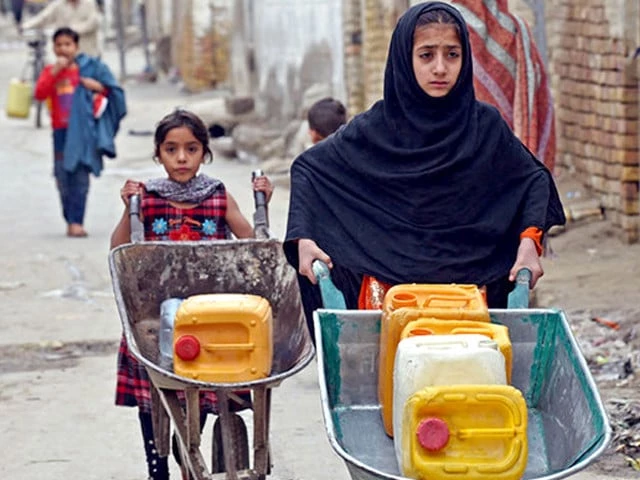
Another water supply disruption, another ordeal for Karachi residents – a pattern that has been repeated so often that it seems woven into the city’s daily reality. The metropolis has once again been hit by a serious water crisis: 50 to 60 percent of areas faced suspension of water supply over the weekend, while hydrants reportedly continued to operate without interruption.
An unannounced shutdown by K-Electric at the Dhabeji pumping station on Saturday disrupted water supply to much of the metropolis. The situation worsened on Sunday when a power outage occurred at the North East Karachi (NEK) Pumping Station, further affecting water distribution to several localities.
Officials and residents said water supply disruptions have become a recurring feature in the city, even as government-run hydrants continue to operate normally.
Meanwhile, Karachi residents are increasingly forced to rely on expensive water tankers to meet their daily needs amid growing shortages.
Karachi Water and Sewerage Corporation (KWSC) officials said K-Electric abruptly suspended power supply on Saturday, affecting water distribution to almost half of the city. Although electricity was restored after about two hours, another breakdown soon occurred at the NEK pumping station, aggravating the crisis.
Areas operating under the weekly water rationing system are among the most affected. The localities that were supposed to receive water on Saturday and Sunday did not receive supply and will now have to wait until the next cycle.
Officials further stated that even a brief disruption in pumping operations in Dhabeji can take 10 to 20 hours to normalize, causing widespread delays in distribution across the city.
A KWSC spokesperson said that following the restoration of power supply at Dhabeji, operations resumed across 21 pumps, although full stabilization of the system would take time. The breakdown occurred around 3 a.m. on May 31 at the NEK pumping station, partially interrupting the city’s water supply system.
K-Electric technical teams were called to the scene, where they identified a fault in the main transmission cable that supplies electricity to the K-II pumping station.
The failure caused the KWSC to take emergency measures, including a temporary feedback of the K-III feeder. Power was partially restored around 5 a.m.; however, limited capacity prevented full pumping operations from resuming.
Officials said the city is currently facing a shortfall of 54 million gallons per day (MGD) due to the outage. They warned that if the fault is not permanently fixed, further deterioration in water supply and distribution schedules could occur throughout the city.
The KWSC has urged K-Electric to immediately repair the fault and ensure uninterrupted power supply to the pumping stations to avoid further hardship for citizens.
MQM-P protest
water problems
MQM-P sharply criticized the prolonged water supply disruptions, calling the situation “criminal negligence” on the part of the city’s water and power utilities.
In a statement issued by the party’s central committee, the MQM-P said the power outage in Dhabeji and subsequent pipeline bursts caused by back pressure had once again pushed Karachi into a serious water crisis during the intense summer heat.
The party said millions of gallons of water supply were suspended due to repeated technical and electrical failures, resulting in what it described as the collapse of the city’s water distribution system.
The MQM-P maintained that frequent power outages at a critical facility like Dhabeji and recurring pipeline failures could no longer be treated as routine technical problems. Rather, it reflected “negligence and serious administrative failure” on the part of K Electric and KWSC.
They allege that more than 40 million Karachi residents are forced to rely on expensive tanker supplies, while accusing authorities of failing to control what they call an “oil tanker mafia” operating amid the crisis.


