
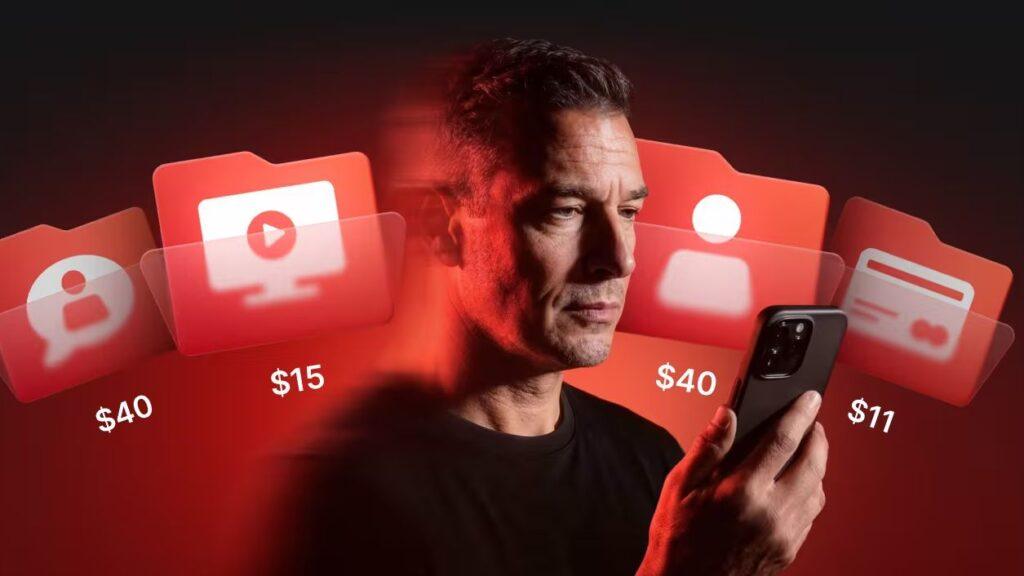
- NordVPN has launched a new tool that calculates the price of your online data
- It is based on research of 75,000 listings on dark web marketplaces.
- Research shows that currently, US data is the cheapest to buy.
NordVPN invites you to understand the price of your personal data online with a new tool based on extensive dark web research.
TechRadar’s best VPN analyzed more than 75,000 listings on dark web marketplaces and compiled a list of personal data commonly traded there. From bank accounts to Netflix subscriptions to credit card details, this data was frequently sold on the dark web for as little as $5.
To illustrate this point, the VPN provider has turned all its research into an interactive calculator that helps you find out how much your unique and sensitive data is really worth if it falls into the wrong hands.
How does it work?
NordVPN’s calculator challenges users to discover their own digital value. By selecting your country and data types, the tool displays a figure corresponding to the price a cybercriminal would pay to purchase that data package on the dark web.
“Every online account you own has a price on the dark web,” warns Marijus Briedis, CTO at NordVPN.
Perhaps this is nothing new: insurance companies have long been in the business of putting a monetary figure on human life.
However, the dark web has gone a step further, allowing criminal market dynamics to set the price of our digital assets at a shockingly low level: even just $1 for a personal email account if sold wholesale.
NordVPN research shows that prices vary considerably from country to country, depending on supply and demand dynamics.
Perhaps not surprisingly, Americans’ personal data is the most sought after in the world. Less obvious, however, is that the abundance of security breaches there also makes it the cheapest to buy.
Stolen payment credit cards in North America sell for as little as $10 and account for more than 70% of all stolen card listings. However, in countries where stolen data is scarcer, such as Japan or Singapore, the same cards are sold at a significant premium.
The same logic applies to data packets: sets of information, including identification numbers and dates of birth, that are enough to steal someone’s identity. While an American pack sells for $35, a Japanese one is worth many times that amount.
A subtle and dramatic threat
The tool also shows how the effects of criminal theft can range from almost imperceptible to dramatic.
At one end of the spectrum, criminals can create ongoing subscription-type businesses by stealing and reselling Netflix or Spotify accounts that cost as little as $4.55 and are often invisible to you.
At the other extreme, your entire identity, including social media accounts, can be purchased for less than $150 and greatly alter your life.
Between these two extremes lies the middle corporate case: NordVPN found more than 14,000 lists of corporate email addresses on the dark web. These accounts act as gateways to entire corporate networks, which can cause significant and often irreversible business damage.
“The reality is that your data could already be for sale and you would have no way of knowing unless you actively verify it,” Briedis warns. Its Dark Web Monitoring Pro actively scans the dark web for leaked credit card numbers, tax ID numbers, and phone numbers.
If buying our data is so cheap, how should we react? If there is any key takeaway, it is that identity theft is not always dramatic and vigilance is key.
As cyberattacks continue to increase, using unique passwords for each account through a trusted password manager, enabling multi-factor authentication, and limiting the sharing of personal information online can make a difference.


