
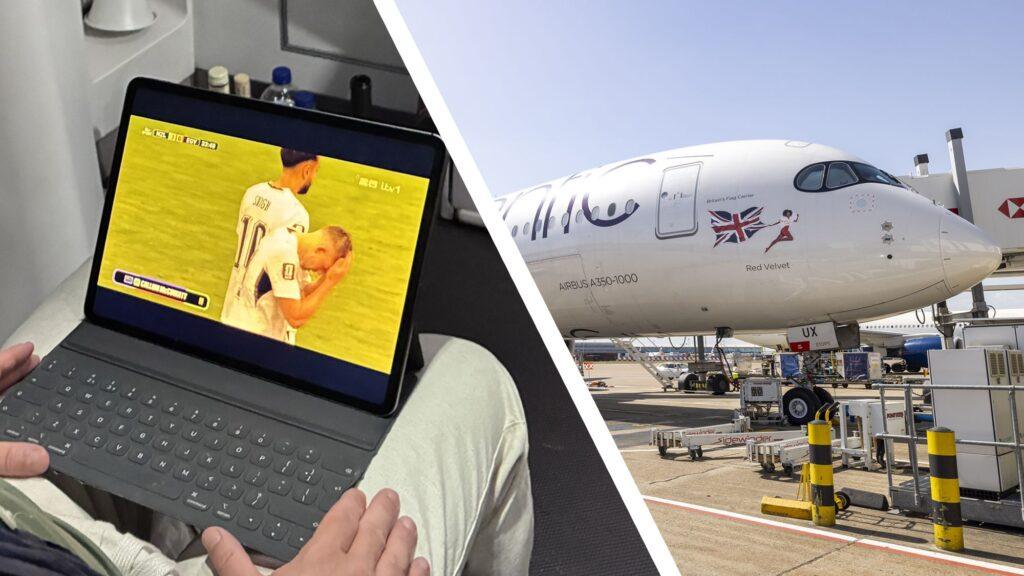
There is a particular kind of fear faced by football fans who fly long distances on the day of a big game. You take your seat and try to make peace with the fact that for the next nine hours you’ll exist in an information vacuum before landing to a barrage of notifications informing you of everything you spent the flight trying not to think about. So it felt like biting into forbidden fruit when, somewhere over the Atlantic and a few kilometers up, I was watching the World Cup goals fly by, and they were live.
He was flying Virgin Atlantic’s ‘Fearless Lady’, one of several newly configured Airbus A350 aircraft connected to Elon Musk’s SpaceX Starlink Wi-Fi. The flight from Orlando to London Heathrow collided with Uruguay vs Cape Verde and Egypt vs New Zealand.
Games for purists, you might think? Well, both would end up among the best games of the tournament so far, so could the new satellite internet service combat my usual FOMO? A freeze frame during a movie is a nuisance, but a freeze frame when a ball goes into the box is a tragedy, so I wanted to see if the airline’s new service could handle the only test most people really care about: handling live sports in real time.

Starlink in numbers
Starlink is SpaceX’s low-Earth orbit satellite network and distinctly different from the in-flight Wi-Fi we’ve all suffered through over the years. Traditional aircraft connectivity bounces the signal off geostationary satellites parked about 22,000 miles above the equator, which is why it’s always been like sending a postcard and waiting for a response. The Starlink satellites are a few hundred kilometers high. The round trip is dramatically shorter and the latency is dramatically lower.
I would have loved the option to cast the feed to the large seatback screen or mirror my iPad to it.
Virgin Atlantic was the first UK airline to announce that Starlink will be rolled out to the A350 fleet first, followed by the Boeing 787 and A330neo, with full fleet coverage touted by 2027. For now, it’s available only on select A350 services, and is so new that experienced cabin crew leaders told me they haven’t yet connected to it.
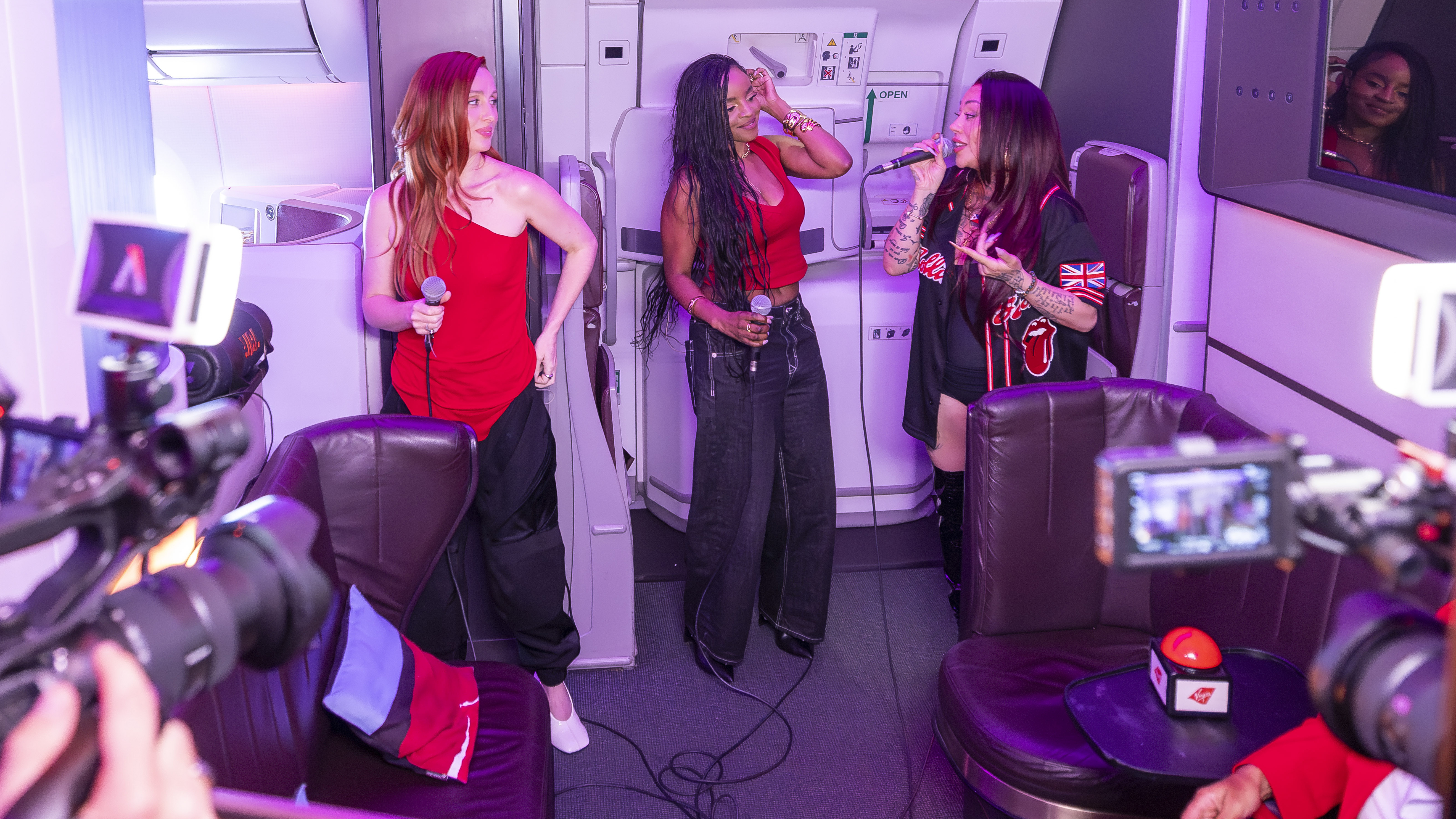
However, the airline has already conducted a public test of the system. In May, he livestreamed a full Upper Class Sugababes performance, streaming to fans on the ground via Starlink, complete with an audience Q&A session. If the network could broadcast an entire musical concert without missing a beat, a football game should be a small thing, in theory.
The only trick worth knowing
An important tip: If the network appears in the list on your device but does not allow you to connect, turn your Wi-Fi off and on several times.
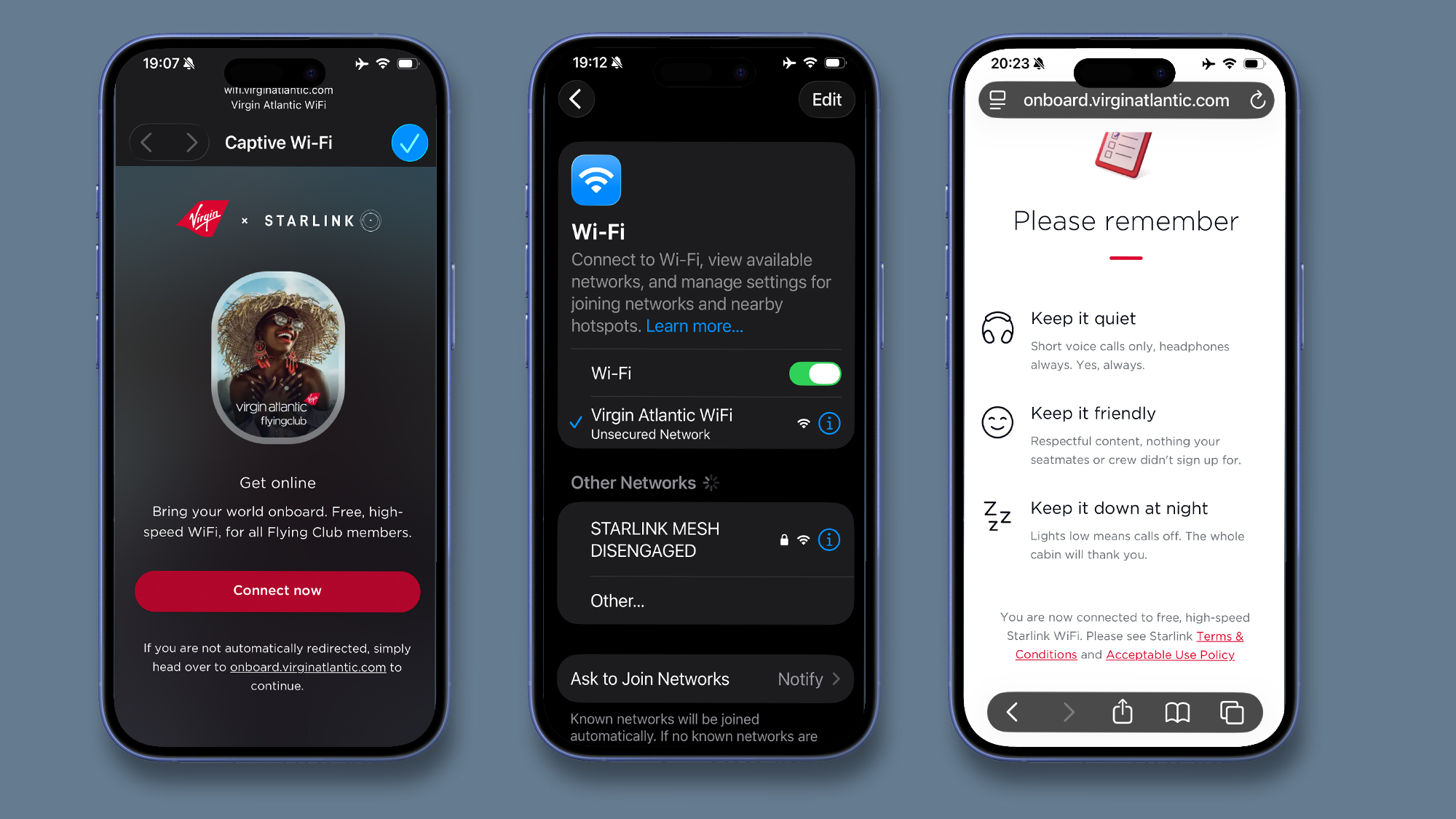
The Virgin Atlantic network immediately appeared in Airplane Mode on my iPad Pro and iPhone, but it took a while for the login prompt to appear. My first assumption was that we were still over protected US airspace, or that the turbulence we encountered upon takeoff was to blame. Neither, as it turned out. A few flicks of the Wi-Fi switch and the portal prompt screen came to life. A teething problem rather than a failure, but not something the onboard signage prepares you for.
It is, in essence, a polite request not to be that person that everyone on the plane silently hates.
From there, there are a series of friendly touch screens. A welcome note from Virgin x Starlink says “You’re connected. Fast, free and all yours.” Then there are the rules of etiquette: short voice calls only, headphones always (“Yes, always”) and a firm reminder that turning off the lights means cutting off calls. It is, in essence, a polite request not to be that person that everyone on the plane silently hates.
A few words about “free”. It’s actually free in all cabins, from Economy to Upper Class, with one condition: you must be a Virgin Flying Club member to log in. Membership is free, so the asterisk is small, but it’s there, and you’re paying with your email address instead of your credit card.
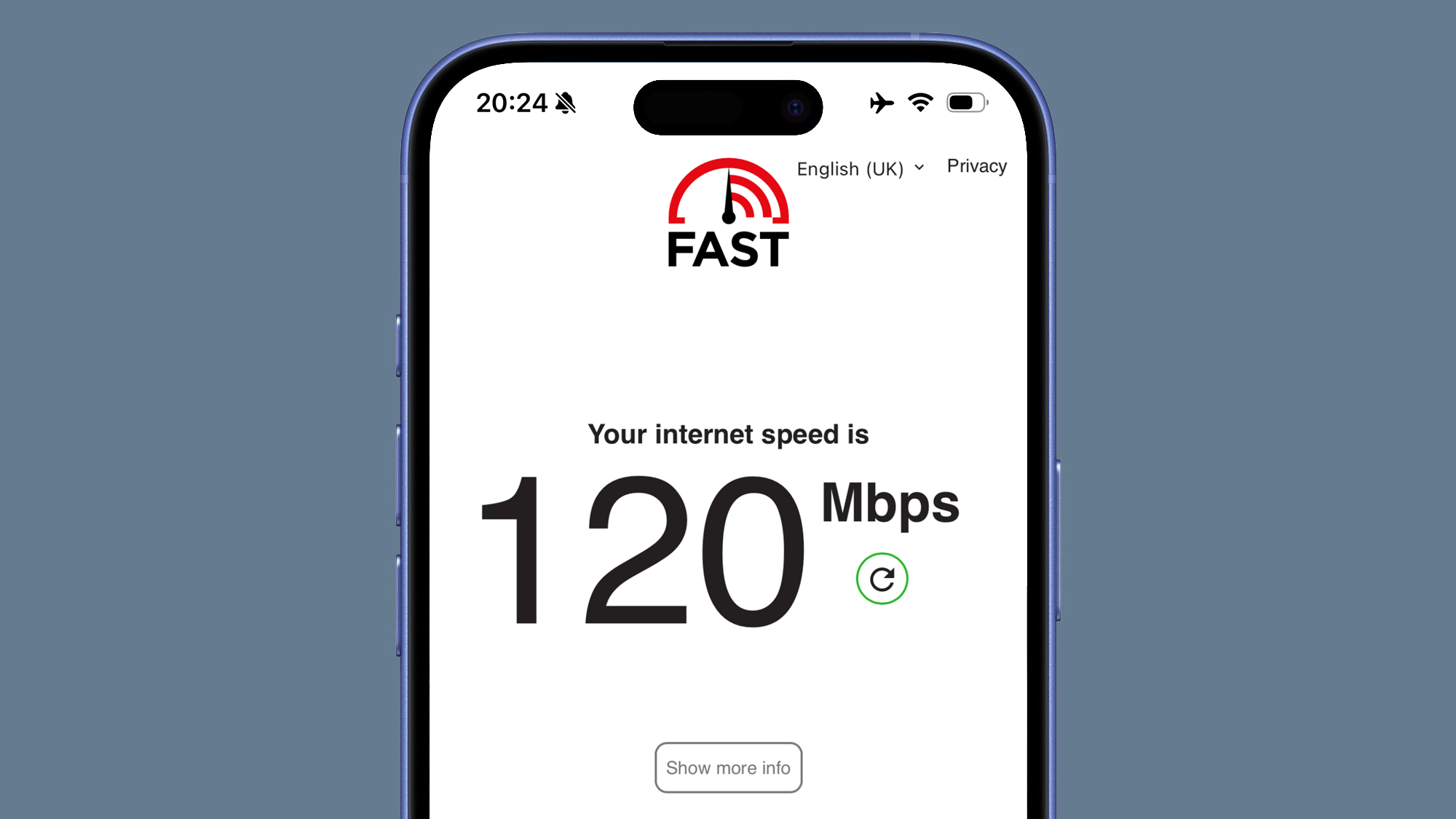
120 Mbps at 35,000 feet
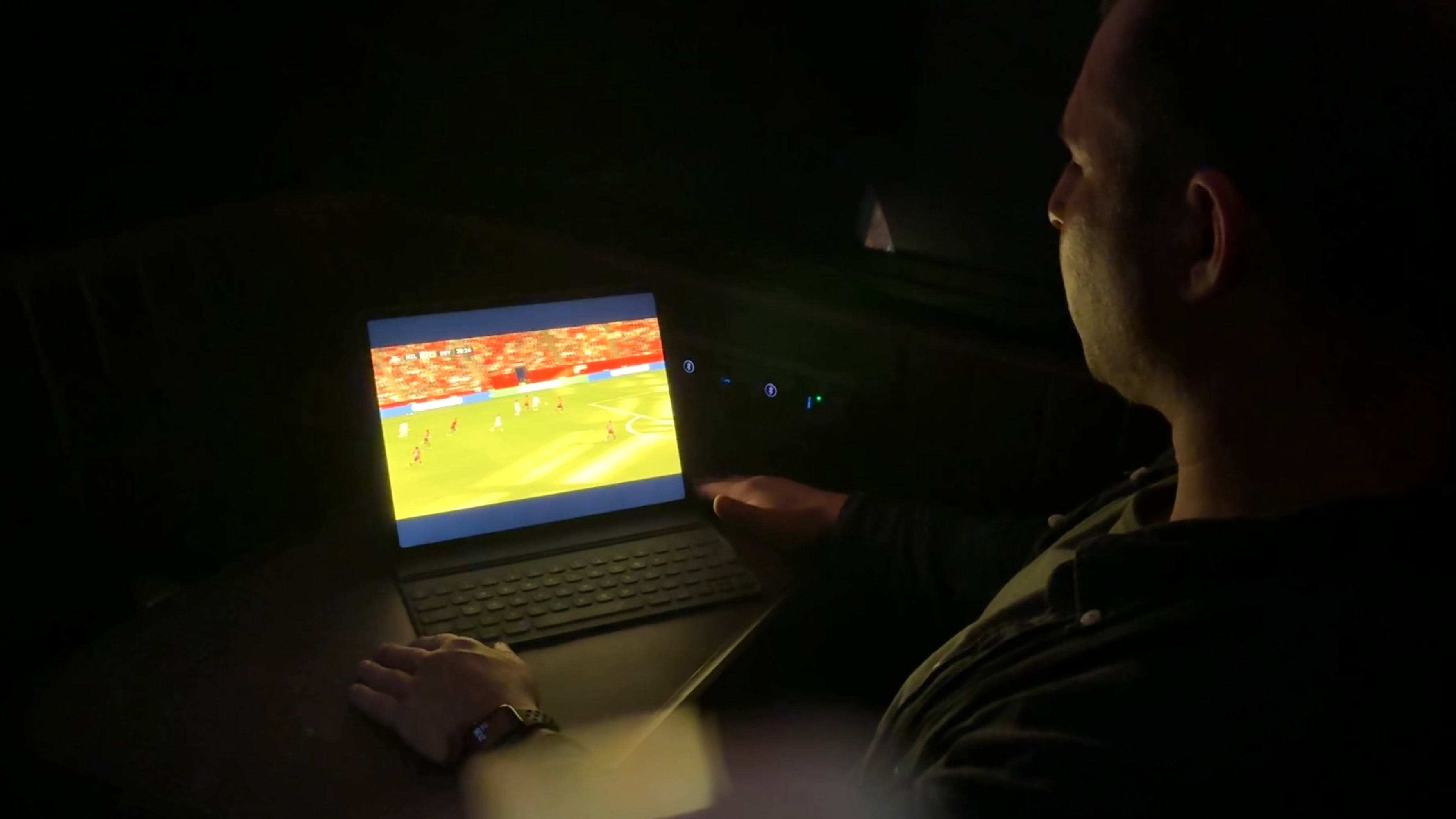
Sitting next to a guy called Sam, a Chelsea fan from west London (yes, I was surprised too), we connected at the same time, once we figured out the trick of alternating. We both connected via VPN to ITVX and BBC iPlayer and got set up.
The only weird part of the experience you’re not prepared for is the social contortion of trying to watch live sports in a quiet booth full of sleeping strangers.
I ran speed checks throughout the flight, and the best I recorded was 120 Mbps, which at first glance seems much lower than the “up to 1 Gbps” figure cited around Starlink’s aviation product. But that gigabit figure is the total capacity of the entire plane, with two antennas delivering up to 500 Mbps each, shared among everyone on board, not a promise per passenger.
Viewed correctly, 120Mbps for a single iPad, somewhere across the ocean, with a full cabin also online, is not a deficit and is about twice the speed of my home rural broadband. That’s very impressive, and the best part is that the stream remained free of buffering, pixelation, and resolution drops at crucial moments.
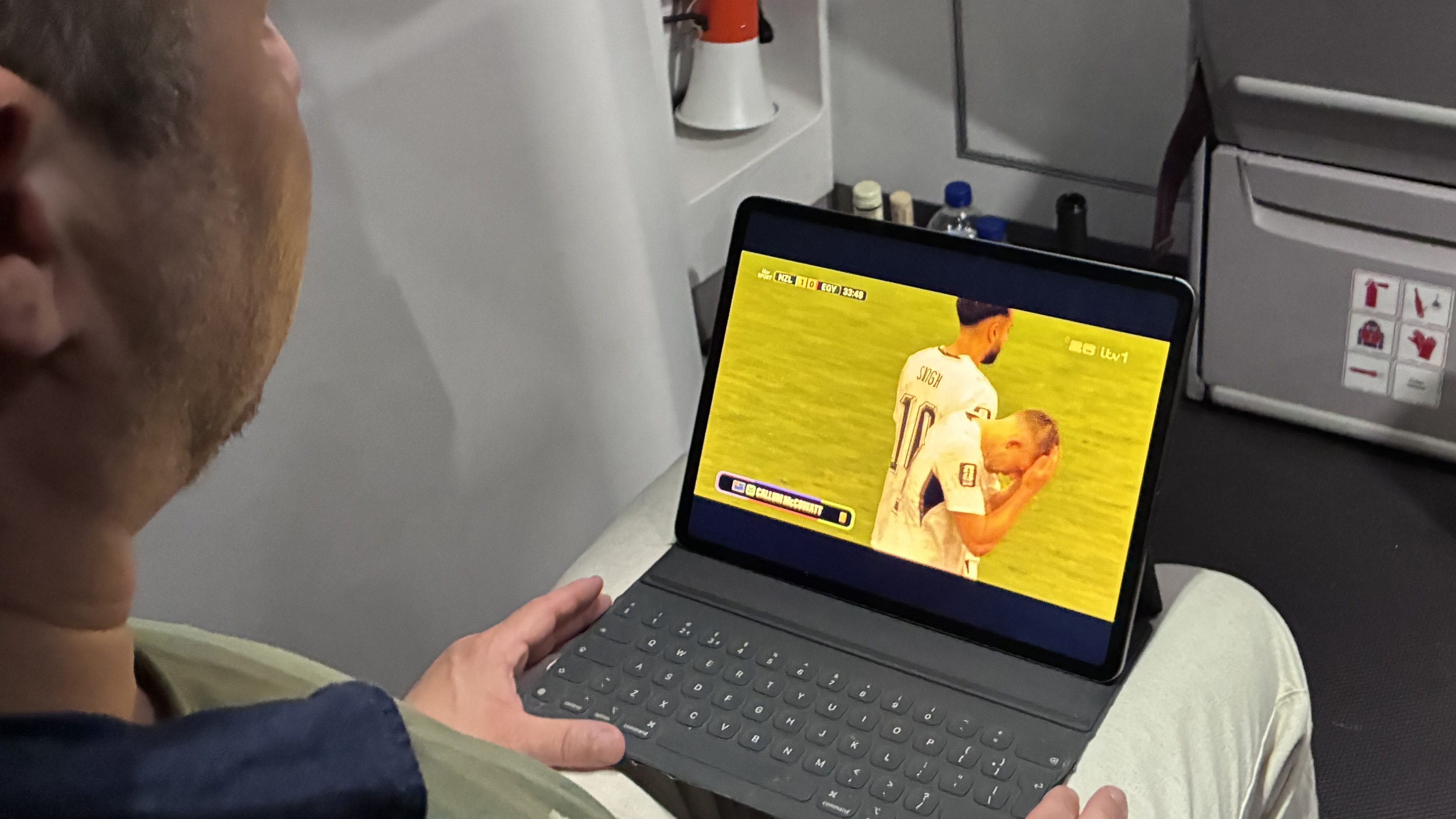
I watched an entire match in its entirety, in a second screening, and messaged my friends to analyze a goal while the live stream continued uninterrupted alongside it. The image stayed sharp from start to finish, turbulence and all. Sam, who I suspect was approached as a skeptic, was convinced. “Once I got it up and running, I couldn’t believe how stable it was,” he told me later. “Being able to text my girlfriend in Florida is enough, but I never expected to watch a game. I’m impressed that it’s free even if you’re in economy class, and who would have thought Egypt vs New Zealand would be a bit of fun.”
He also made the obvious but useful point that you’re not limited to the inflight entertainment library. So if nothing in the seat-back selection appeals to you, you can simply log into any streaming service you already pay for and watch. Maybe useful for anyone Dragon House fans flying over the next few weeks.
The strange etiquette of celebrating at altitude
The only weird part of the experience you’re not prepared for is the social contortion of trying to watch live sports in a quiet booth full of sleeping strangers. When a goal went in I had to hold back, like a visiting fan trapped on the home field.
The stream remained free of buffering, pixelation, and resolution drops at crucial moments.
Later, I chatted to Andy from Hampshire, who travels upper class with his family and who flies often enough to have opinions about who he gives his money to. “I fly back and forth from the United States quite regularly for business and I was interested to see that even a low-cost airline like JetBlue is adapting to Amazon’s satellite broadband,” he said. “Not everyone is going to like this, but it means I can work a full day and that indicates which airline I would choose. Virgin Atlantic and British Airways have no choice but to keep up or lose customers.”
The larger map confirms this. Starlink is being rolled out gradually with United, Hawaiian, Qatar Airways, Air France, SAS, WestJet, Alaska, JAL, Zipair and more, and IAG (British Airways’ parent company) has signed a deal to equip more than 500 aircraft starting in 2026.
Qatar Airways has been recording download speeds above 200Mbps, while Amazon’s Project Leo, the rival low-Earth orbit network Andy mentioned, will launch on JetBlue services next year. So far, Amazon has launched more than 350 of the more than 3,200 planned satellites.
To put that into perspective, Starlink already has more than 10,000 in orbit with an ultimate “megaconstellation” goal of 42,000. Airbus’ HBCplus platform is designed to allow operators to swap suppliers without having to dismantle hardware, meaning this competition could develop in the years to come.
In other words, the connected cabin is quickly becoming a competitive weapon rather than a luxury when Wi-Fi is good enough for a full day’s work or watching a game without compromise.
Behind the transmission

It’s also worth thinking about the machinery that puts the phosphor on your screen in the first place. The images I was seeing had traveled an extraordinary distance before reaching 35,000 feet, and this summer’s tournament relied heavily on Lenovo infrastructure.
This includes ThinkSystem servers at the International Broadcast Center in Dallas, which process and deliver live streams across more than a thousand screens in locations in near real time. Transmission delays are less than five seconds, with AI handling views from multiple angles and the vast data channels behind all 104 matches.
It doesn’t have to be football, of course. The same connection should be streaming matches from Wimbledon, a full Grand Prix, or the final round of a major golf tournament, although a full day of cricket could be a big challenge for you and the service.
Virgin Atlantic x Starlink: the verdict
What didn’t work? Very little and nothing fatal. The connection problem at first would have baffled a less stubborn passenger, and Virgin could do worse than print “try toggling your Wi-Fi” on the welcome card.
I would also have loved the option to cast the feed to the large seatback screen or mirror my iPad to it. Virgin confirmed that this is not currently possible, but it is something it would like to offer in the future. Watching a game on a tablet propped up against a food tray is fine, but the hardware to do it properly is right in front of you.
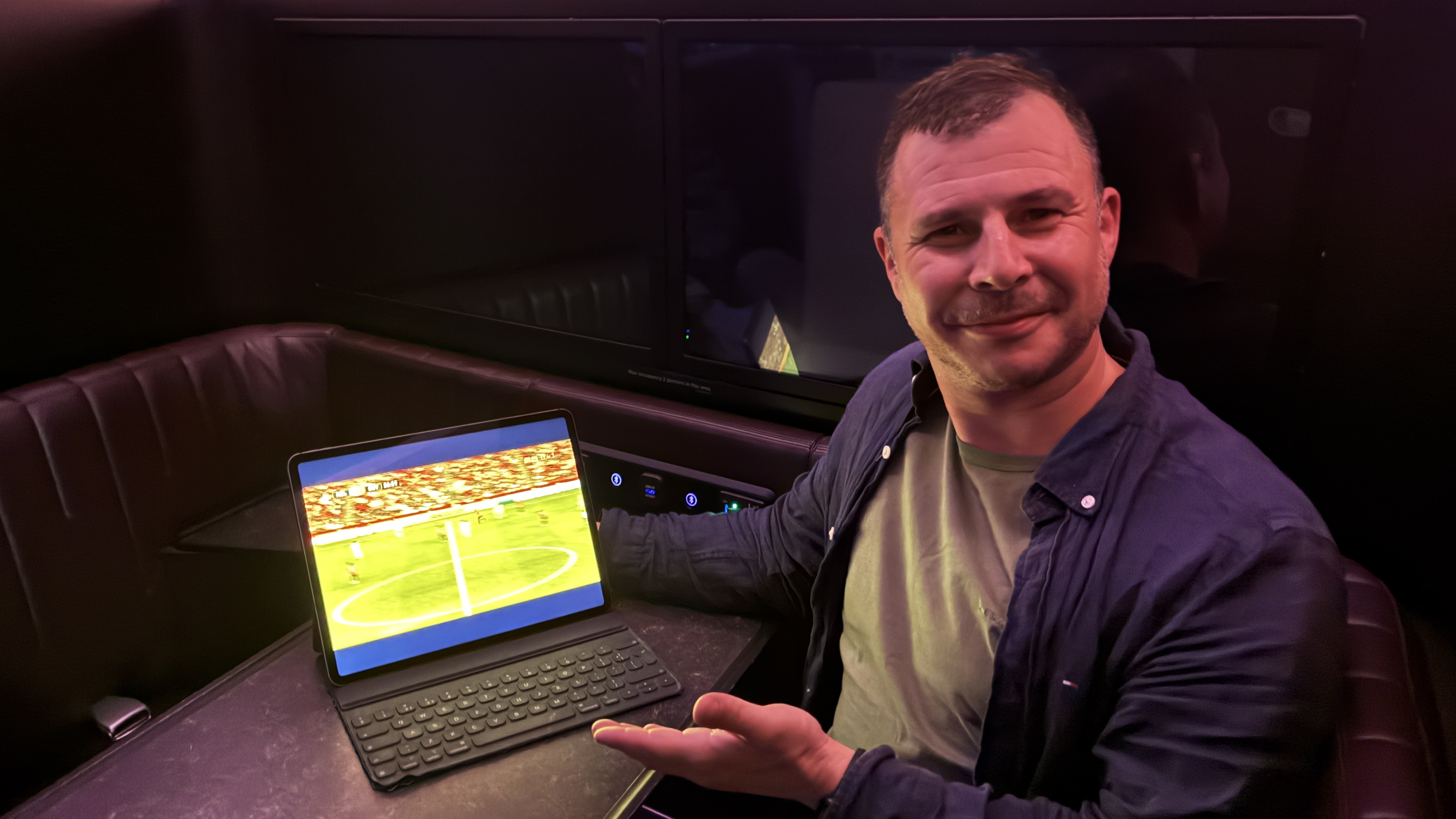
Those are quibbles, but the gist is that I watched football live, in full, in real time, from a plane over the Atlantic, and it was indistinguishable from watching it at home. The technology delivered, and it did so for free in every cabin, and for that Virgin is to be congratulated. Those looking for a few hours of respite from work and a bit of escapism from the real world may think otherwise.

Follow TechRadar on Google News and add us as a preferred source to receive news, reviews and opinions from our experts in your feeds.


