
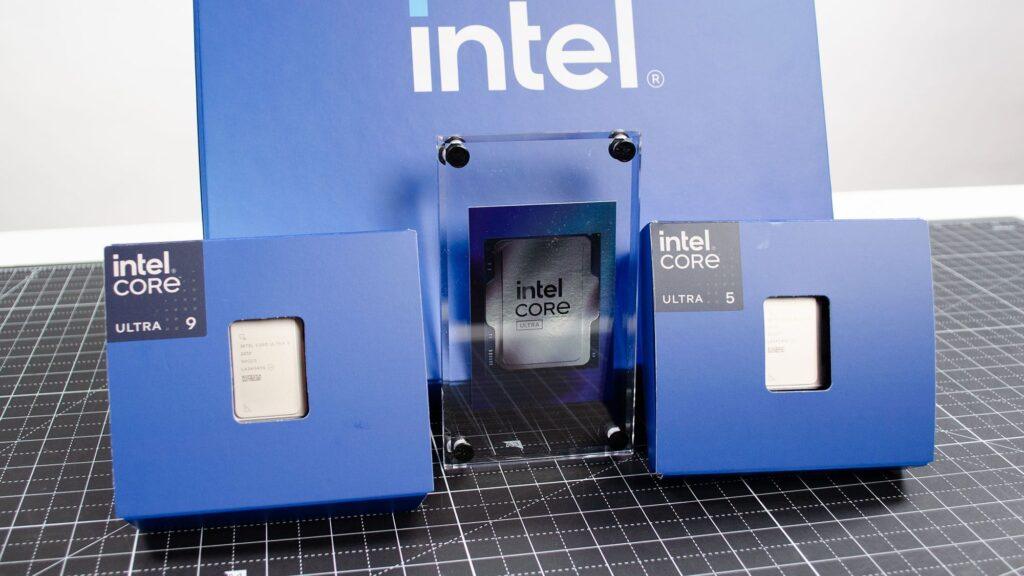
- Intel Just Had an Impressive Fiscal First Quarter, Somewhat Exceeding Revenue Expectations
- This is reportedly due in part to “converting what may have been scrap or production with low expectations into revenue,” according to one analyst firm.
- This basically means reusing silicon that hasn’t reached the right level for its intended use, but it’s not a reflection of the quality of the CPU, it should be noted.
Intel has reportedly been able to increase its revenue by selling CPU chips that in the past would have effectively ended up on scrapheap.
Tom’s Hardware spotted a post on
Add your own pinch of salt, but Bajarin says, “Intel saw an unexpected increase in margin thanks to better yield rescue. Chips that would normally have been of lower value on the wafer were bundled together and still sold in usable SKUs, turning what may have been scrap or low-expectation production into incremental revenue.”
Article continues below.
Several chips are cut from a single wafer, but not all chips are up to par for their intended use, so some (particularly those cut near the edge of the wafer, as noted) are degraded for use as lower-end CPUs (where bad cores are simply disabled) or simply thrown away (well, recycled for other purposes).
That’s a basic, condensed view of what’s going on, but you get the point, and apparently part of Intel’s big revenue increase for this quarter came from being able to sell chips that normally would have been “scrap” to its customers.
As Bajarin further observed: “Customers didn’t care, they just said I’ll take it all. That’s the demand environment we’re in for CPUs.”
It is interesting to note that Bajarin is optimistic about Intel’s CPU manufacturing capabilities, to the point that in another post he predicts that, before long, AMD could manufacture some of its processors at the Intel Foundry (to make up for what it cannot produce at TSMC, which is struggling to cope with demand).
Analysis: bad omens?
There are some important points to keep in mind here. First, we’re not sure this is happening; We only have the word of one analyst on the matter. Although it does shed some light on how Intel took a lot more money out of its coffers for the first quarter than financial experts had predicted (in fact, revenue beat expectations by 10%).
The other thing that needs to be made very clear is that these ‘subpar’ chips are not somehow dubious, which means you are not at risk of buying such an Intel CPU. It is common practice in the industry to use chips that are not of the quality for the intended product, as noted, in a lower quality product.
A chip that failed to make the cut for a Core Ultra 9, for example, can be reused as a Core Ultra 7, with the faulty cores simply disabled (as they are not required for the latter’s core count). This doesn’t make a chip of this type any different from another Core Ultra 7, or those that were created to be Core Ultra 7 models: they all have exactly the same number of functional cores, with no greater chance of something going wrong. Failed Core Ultra 7 models could become Core Ultra 5, and so on.
All of which means that you don’t need to worry about anything related to chip quality here. The only thing that is happening is that Intel is making more money on chips that normally wouldn’t sell, as hardware manufacturers are buying up these CPUs because there is so much demand for silicon right now that supply seems tougher.
Sound familiar? Yes, this may remind you of the memory chip shortage, which affects RAM and storage, and as predicted, the same problems are now affecting processors. With more and more data centers being built to meet the demand for AI, the servers in those gigantic buildings not only need RAM and SSDs, but are also powered by processors, of course.
Now, here’s the grim part. Do you remember the beginning of the RAM crisis, when prices started to skyrocket? And let us also remember that they then shot up at an unfathomably rapid rate. Well, we could also see an acceleration in processor prices. In fact, a recent report already noted some major price increases for AMD CPUs in Japan, adding to other rumors that both server and consumer processors are getting more expensive.
Don’t get me wrong, I don’t think this will have the same upward trajectory as with the price of memory, but regardless, this rumor is one more sign that another PC component, and a key one, could become much more expensive as 2026 progresses.

The best processors for all budgets
Follow TechRadar on Google News and add us as a preferred source to receive news, reviews and opinions from our experts in your feeds. Be sure to click the Follow button!
And of course, you can also follow TechRadar on YouTube and tiktok for news, reviews, unboxings in video form and receive regular updates from us on WhatsApp also.


