
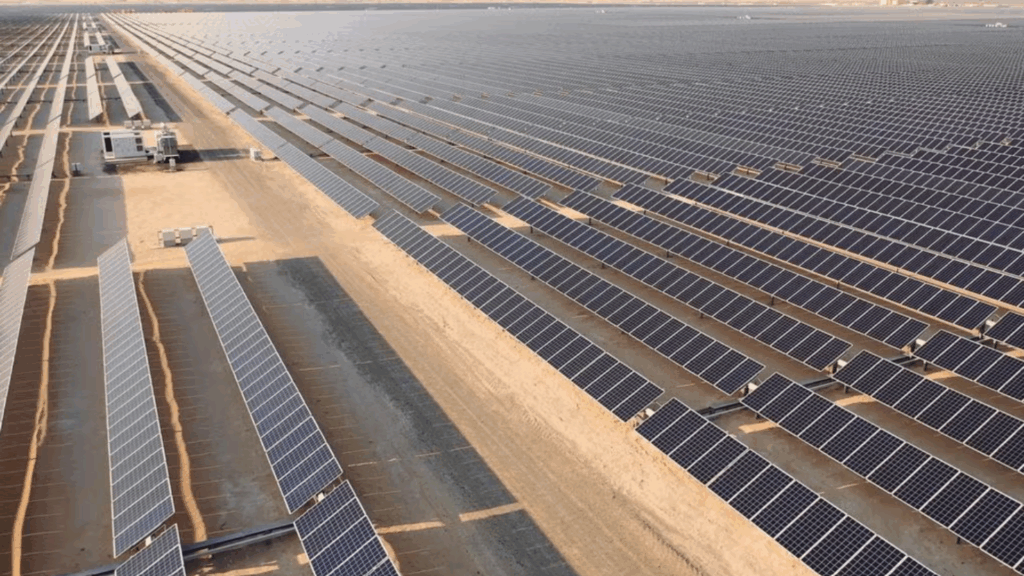
- Renewables now account for more of the world’s electricity than coal
- They represent 33.8% of electricity generation compared to 33% of coal
- Solar energy is a key factor in this regard, as it covered 75% of the growth in global electricity demand.
Sustainability Week 2026
This article is part of a series of sustainability-themed articles we are publishing to commemorate Earth Day 2026 and promote more sustainable practices. Check out all our Sustainability Week 2026 content.
According to a new study, renewable energy became the world’s main source of electricity throughout 2025, finally surpassing coal in this regard.
A CarbonBrief report included the revelation made by a think tank called Ember. According to Ember’s calculations in its latest global electricity review, coal-fired electricity generation fell 0.2% last year to 33%, while renewables maintained a steady upward trajectory to overtake coal, reaching 33.8%.
Wind and solar energy covered 99% of electricity demand growth last year (solar energy accounted for the majority; in fact, 75%). The International Energy Agency said separately in its Global Energy Review 2026 report that “the absolute increase in solar PV generation in 2025 is the largest ever observed for any source.”
Article continues below.
In the past, we have seen the share of fossil fuel generation fall year on year, but that was driven by economic crises or the pandemic, while this is the first time that a move towards clean energy has led to a drop in coal use.
Record solar generation, up 30% year-on-year, appears to have been the key factor driving renewable energy to overtake coal’s top spot. Note that this is only coal-based power, which is compared to renewables for electricity generation (rather than including other fossil fuels, such as gas, which are considered separately).
Analysis: Highlights of electric vehicles and solar energy, and the threat looming on the horizon
Clearly, this is good news, and Ember’s report makes an interesting point about electric vehicles (EVs) being a “structural driver of electricity demand growth”, accounting for around 8% of global electricity demand growth last year.
Electric vehicles totaled growth of 66 TWh last year compared to 36 TWh in 2024, so this is a big jump as EV sales now account for more than 25% of the global car market, the think tank says.
With the rising cost of fuel, I wouldn’t bet against seeing bigger jumps, and a recent report in the UK noted that electric vehicles saw year-on-year sales growth of 24.2% in March (with diesel and gasoline vehicles falling 6.1% and 11.4% respectively).
Electric vehicles aside, Ember points to solar energy as the main driver of renewables: “The accelerated development of solar energy is increasingly occurring alongside the deployment of battery storage, enabling the next paradigm shift: from daytime solar to anytime solar.”
As battery costs have fallen “sharply” over the past two years (by 20% in 2024 and 45% last year, we’re told), deployment has increased by 46% and “the world installed enough battery capacity to shift 14% of new solar generation in 2025 from midday to other times of day.”
The advances made with solar energy apply not only to traditional large panel arrays, but increasingly to devices that harness the sun’s energy. Like this solar-powered Windows 11 laptop or a smart lock with a mini solar panel, which was showcased a few months ago at CES 2026. Solar-powered home security cameras are also becoming much more common and offer key advantages in terms of getting rid of wiring.
Admittedly, these are very small increases in solar energy use, but they all add up to the progress that is clearly being made in this field.
The potential blemish on the landscape amid this positive renewable energy news is the threat posed by the construction of AI-powered data centers (and the energy demands that come with them) and how they will be met. This is a danger that is being taken seriously, and in the United States, a recent development is that Maine has even passed new laws that effectively prohibit the construction of sprawling data centers in certain areas.

The best laptops for all budgets

Follow TechRadar on Google News and add us as a preferred source to receive news, reviews and opinions from our experts in your feeds. Be sure to click the Follow button!
And of course, you can also follow TechRadar on YouTube and tiktok for news, reviews, unboxings in video form and receive regular updates from us on WhatsApp also.


