
The reported split raises questions about whether it reflects routine restructuring or deeper divisions within the TTP.
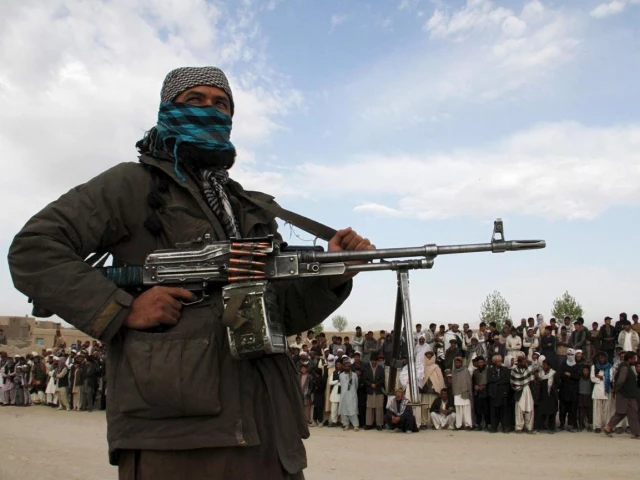
A photo of a TTP member. PHOTO: ARCHIVE
PESHAWAR:
Jamaat-ul-Ahrar (JuA), widely considered one of the most influential and lethal factions within Tehrik-e-Taliban Pakistan (TTP), second only to the Hafiz Gul Bahadur group, has reportedly announced its third split from the organization.
The group has maintained a significant presence in Pakistan’s Malakand Division, Mohmand, Bajaur, Peshawar and surrounding districts, while developing networks in major urban centers such as Karachi and Lahore.
The reported split has raised questions about whether it reflects a routine organizational reorganization or larger strategic and ideological differences within the TTP.
Historical background
Jamaat-ul-Ahrar first emerged in 2014 after formally breaking away from the TTP. The faction was led by Omar Khalid Khorasani, one of the organization’s most influential commanders, while Ehsanullah Ehsan was its prominent spokesperson.
The split was mainly due to opposition to the appointment of Mullah Fazlullah (a non-tribal figure from Swat) as head of the TTP. JuA leaders argued that the decision had been made without proper consultation with senior commanders and that their faction had been excluded from the leadership process.
After almost a year of mediation between local Taliban leaders and the Afghan Taliban, the two sides reached a reconciliation. Sources have previously stated that Sirajuddin Haqqani, now Afghanistan’s Interior Minister, played a key role in facilitating those efforts. Jamaat-ul-Ahrar subsequently rejoined the TTP in 2015.
Read more: TTP hideouts are hit with new precision attacks
However, relations between the factions remained tense. JuA commanders reportedly criticized Mullah Fazlullah’s leadership for lack of strategic clarity, despite both groups adhering to the same school of thought.
They also disagreed over operational policy, with JuA and the Hafiz Gul Bahadur group often claiming responsibility for attacks that TTP leaders chose not to publicly acknowledge, describing their silence as a “strategic” approach.
In 2017-2018, the two parties were reportedly operating separately, despite the absence of a formal public announcement. Following Fazlullah’s death, TTP leader Mufti Noor Wali Mehsud managed to get JuA back into the organisation, where it remained until the latest reported split.
The current split is reportedly related to disagreements over TTP policies and concerns about the organization’s alleged growing proximity to hardline factions. These claims, however, have not been independently verified.
Operational scope and strategy
Security observers say the reported split suggests that Jamaat-ul-Ahrar seeks to pursue a broader operational strategy, considering all of Pakistan as its area of operations rather than limiting its activities to the former tribal districts or Khyber Pakhtunkhwa.
Analysts have cited recent attacks claimed by the group, including one in Karachi, as evidence of this broader geographic focus.
Some analysts also believe JuA’s more proactive operational stance could help it attract new recruits. However, these evaluations remain analytical judgments and not independently established facts.
If confirmed, the reported split would represent another significant development within the changing militant landscape in Pakistan and could have implications for the cohesion and future trajectory of the TTP.
JuA is also believed to have established connections with Balochistan separatist groups, and analysts suggest it could claim responsibility for attacks in Balochistan province in the near future.


