
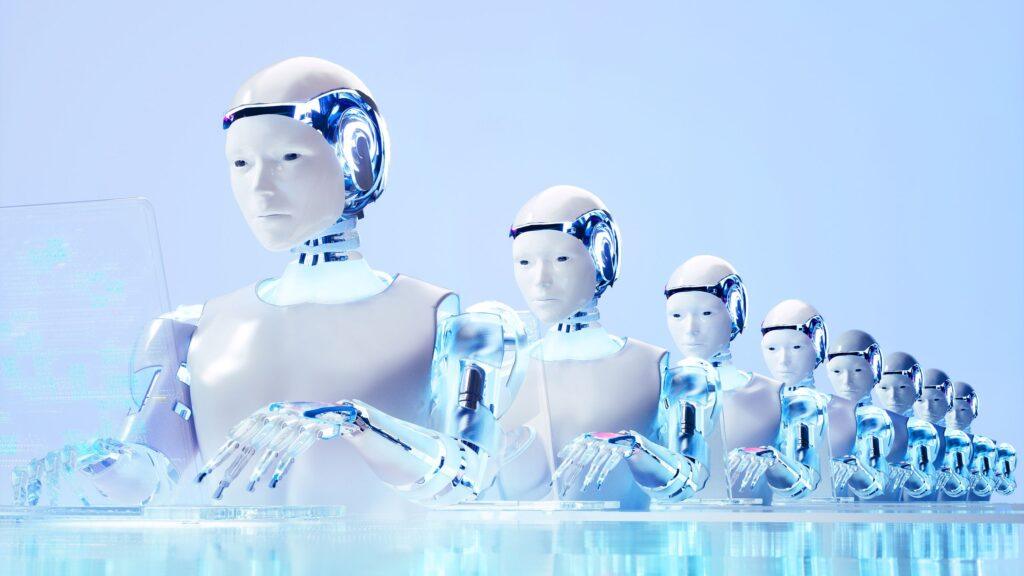
- Japan plans to deploy 10 million additional robots by 2040
- Nursing homes and food factories are the center of the expansion
- Noetra will supply the AI foundation that will power future Japanese robots nationwide
Japan has unveiled a revised national robotics strategy that aims to introduce around 10 million robots in the country by 2040.
Minister of Economy, Trade and Industry Ryosei Akazawa announced the plan, which now covers 18 fields after adding food manufacturing and healthcare to previous priorities.
The government intends to move quickly to establish a central AI robotics center, supporting implementation, research and workforce training activities across the country.

Robots go beyond the factory
Officials described the center as instrumental in helping companies adopt robots at scale in the coming years, particularly in sectors already struggling with workforce shortages.
The strategy focuses on Noetra, a domestically produced multimodal base model developed in conjunction with a National Institute of Advanced Industrial Science and Technology project focused on physical AI.
Noetra is majority owned by SoftBank, NEC, Sony Group and Honda, while Fujitsu and Rakuten are reportedly still weighing the possibility of joining the consortium.
Akazawa said accumulated data on elder care, disaster response, manufacturing sites and the Fukushima Daiichi decommissioning effort support the government’s confidence in the approach.
“Utilizing accumulated data” would become Japan’s “winning strategy,” he said, framing the global competition as a competition for accessible data sets rather than just raw computing power.
The government plans to build a data infrastructure for physical AI and robots that reflects the country’s own industrial strengths.
You will draw on decades of experience operating machinery in hazardous or labor-scarce environments across the country.
International partnerships and regional ambitions
Officials have confirmed a collaboration agreement with research institutions in the US, Canada, France and the UK to support the development of the base model.
The resulting technology will reportedly be widely available to Japanese AI developers, companies, and eventual users across multiple industries and regions.
According to officials briefed on the plan, some companies are expected to use the platform as a basis for expanding into foreign markets in later years.
The minister also linked the strategy to broader efforts that encourage AI-driven transformation originating in regional areas outside Japan’s major metropolitan centers, rather than concentrating growth in Tokyo alone.
Japan’s aging population and restrictive immigration policies continue to create labor shortages in industries struggling to hire sufficient numbers of workers.
Policymakers increasingly see automation as a practical answer because many vacancies remain difficult to fill through conventional hiring efforts alone.
Supporters often argue that robots are filling roles unavailable to human workers rather than directly replacing existing employees across industries.
The revised strategy therefore includes healthcare responsibilities alongside duties within food and beverage production environments across the country.
South Korea announced a comparable robotics ambition this week, adding a competitive dimension to the broader regional picture as both countries pursue sovereign AI capabilities.
Whether those ambitions become a reality may depend less on announcements than on sustained investment, technical progress and broader public acceptance at the national level.
Through registration
Follow TechRadar on Google News and add us as a preferred source to receive news, reviews and opinions from our experts in your feeds. Be sure to click the Follow button!
And of course you can also follow TechRadar on TikTok for news, reviews, unboxings in video form and receive regular updates from us on WhatsApp also.


