
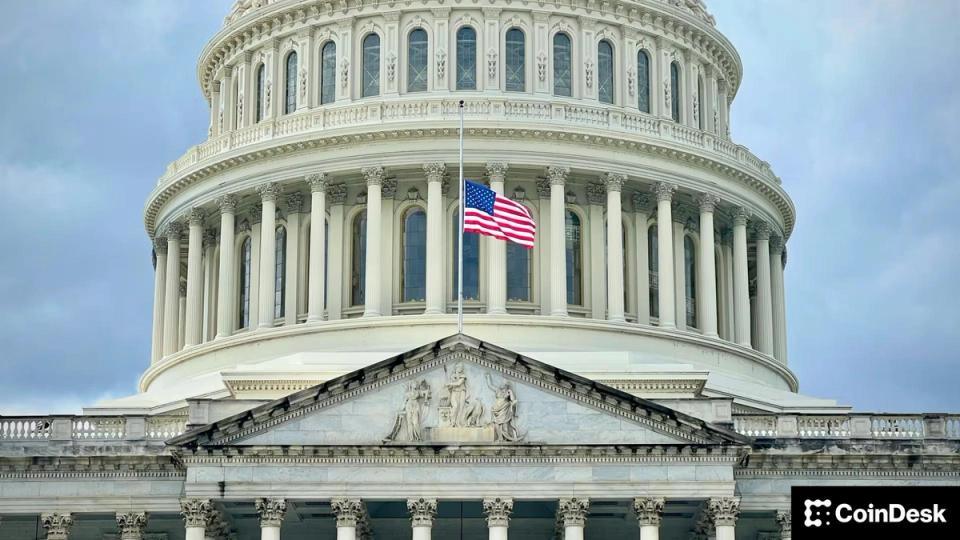
JPMorgan (JPM) said the US crypto market structure bill, known as the Clarity Act, may have only a limited window for passage this year, as the congressional calendar tightens ahead of the midterm elections and the debate over stablecoin performance remains unresolved.
“As the U.S. midterm elections approach, the legislative window for passage of the market structure bill has narrowed, potentially postponing progress on
reform of the crypto market structure this year,” analysts led by Nikolaos Panigirtzoglou wrote in Wednesday’s report.
The bill passed the Senate Banking Committee on May 14, but must still win 60 votes on the Senate floor, be reconciled with House legislation and receive the president’s signature. Those remaining measures, along with growing pushback from the banking industry, have reduced expectations that the measure will be enacted this year, analysts said.
Timing could also be important. A compromise reached before the midterm elections could look materially different from one negotiated after the election, when political incentives can change.
The Clarity Act is widely considered the crypto industry’s most important legislative priority because it would establish the first comprehensive federal framework governing digital assets in the US.
Supporters say the bill would resolve long-standing uncertainty over whether cryptocurrencies fall under the control of the Securities and Exchange Commission (SEC) or the Commodity Futures Trading Commission (CFTC), replacing years of regulation with clearer rules for issuers, exchanges and investors.
Industry advocates argue that greater regulatory certainty could unlock institutional participation, encourage investment and innovation, and help keep cryptocurrency companies and capital in the U.S. rather than in foreign markets with more developed digital asset regimes.
A central point of controversy is the treatment of stablecoin performance. Analysts at the bank said the legislation aims to ban “passive” yield, that is, interest paid on stablecoin balances, while allowing rewards tied to activities such as payments, transactions, loyalty programs and trading incentives. However, the bill’s current language is less explicit about prohibiting interest on balances than policymakers have suggested.
According to the report, the distinction is critical because it determines whether stablecoins can function as substitutes for bank deposits. The exclusion is designed to preserve the role of stablecoins in payments and settlements while preventing them from evolving into lightly regulated savings products.
Banks have pushed for tighter restrictions, arguing that stablecoin issuers do not face the same insurance, supervision and prudential requirements as regulated depository institutions. Meanwhile, cryptocurrency companies have sought greater flexibility to offer profitable products. JPMorgan said the dispute has become a major obstacle to advancing the legislation and remains politically sensitive.
If lawmakers eventually impose effective limits on passive yields on stablecoins, the bank expects the trend of idle crypto capital flowing into tokenized Treasuries, digital money market funds, and tokenized deposits to accelerate.
While that outcome may disappoint crypto-native companies that have advocated for yielding stablecoins, the bill would still preserve some activity-based rewards. The report also highlights that the current legislative text leaves room for interpretation because it does not explicitly prohibit interest on balances.
Read more: The Clarity Act Could Spark a Boom in Crypto ‘Performance as a Service’


