
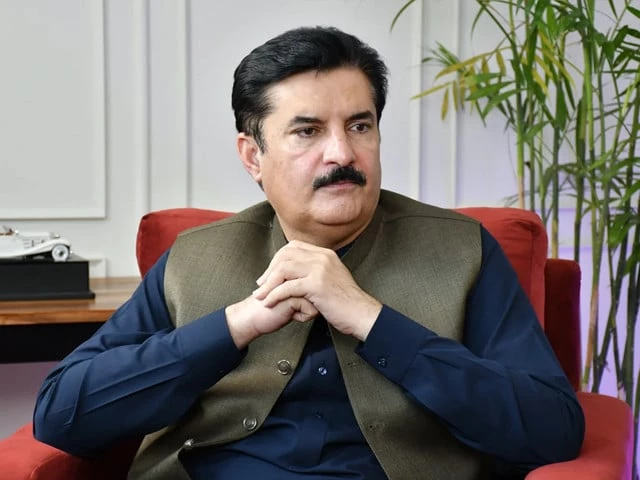
Kundi says no province should grant itself additional benefits while asking citizens to endure austerity measures.
Khyber-Pakhtunkhwa (KP) Governor Faisal Karim Kundi on Friday urged National Assembly Speaker Sardar Ayaz Sadiq and Senate President Syed Yousaf Raza Gilani to convene a meeting of the speakers of the four provincial assemblies to develop a “single and harmonized” law regulating salaries, privileges and rights of legislators across Pakistan.
The call comes amid renewed controversy over two laws passed by the KP Assembly on April 30 – the KP Province (Salaries and Allowances of Members) Act and the KP Assembly Powers, Privileges and Immunities (Amendment) Act 2026 – which have drawn criticism from public and political circles.
Although Kundi passed the legislation in early May and initially attracted little public attention, screenshots of the enacted laws began circulating online in July, reigniting debate over the extent of benefits granted to lawmakers and the implications of several new provisions.
In a post on
I urge the President of the National Assembly @AyazSadiq122 and the President of the Senate @YR_Gillani to immediately convene a meeting of the Presidents of the four Provincial Assemblies and agree on a single and harmonized bill regulating the salaries, privileges and rights of…
– Faisal Karim Kundi (@fkkundi) July 10, 2026
He stressed that “no province should legislate extraordinary privileges for itself” and called on the public to embrace austerity. “Salaries, security, official passports, allowances and any other entitlements should be uniform across the federation, ensuring a standard for all,” Kundi wrote.
In an apparent attempt to address public criticism, the governor also shared an undated but signed letter issued by the Governor’s Secretariat in Peshawar, in which he had “strongly recommended” that the KP Finance Committee implement the spirit of the prime minister’s 14-point austerity measures (including spending cuts, fuel rationing and the removal of unnecessary privileges) while enforcing the law.
According to Kundi, the recommendation was intended to ensure fiscal discipline despite its consent to the legislation, aligning provincial legislative practices with the federal government’s economic emergency framework introduced in response to the US-Iran war and broader global instability.
The letter concluded by recommending that the Finance Committee reconsider the implementation framework to ensure that these principles are carried out in their true letter and spirit.
Also read: ‘Political bribery’: Talal Chaudhry slams PTI over law giving benefits to KP legislators
Kundi also maintained that his reservations on the KP Privilege Bill had been on record since May. “My observations on the KP Privilege Bill have been on record since May 2026, when it was presented to me for approval,” he wrote on X.
He said he had made it clear that “no law should become a means of expanding privileges when the people of Pakistan, especially the people of KP, are asked to endure austerity and economic hardship.”
The governor added that he had called for the law to be implemented “in a true spirit of fiscal discipline” and the prudent use of public resources.
“A government that talks about financial restrictions cannot, at the same time, legislate greater privileges for those in power,” he said. “Public money belongs to the people, not to the perks of those who govern them.”
My observations on the KP Privilege Bill have been on record since May 2026, when it was presented to me for approval. He had clearly stated that no law should become a means of extending privileges when the people of Pakistan, especially the people of KP, were asked to… pic.twitter.com/4gcJmjRSCK
– Faisal Karim Kundi (@fkkundi) July 10, 2026
Separately, on Friday, KP Assembly Speaker Babar Saleem Swati announced that the provincial assembly would meet on July 13 to discuss the Members’ Powers, Privileges and Benefits Bill.
According to a statement issued to the media, the decision to review the legislation came after consultations between the president and the prime minister.
Swati said public interest, transparency and democratic values remained the government’s top priorities, adding that the views of civil society, journalists and other stakeholders would be duly considered during the legislative process.
He added that the legislature remained committed to ensuring that its laws were aligned with public expectations and constitutional requirements.
The outcry and response to the new law
Public criticism has mainly focused on the KP Province (Salaries and Allowances of Members) Act and the Powers, Privileges and Immunities of the KP Assembly (Amendment) Act, which expand the range of benefits available to legislators and extend certain legislative privileges.
Among the provisions drawing criticism are increased allowances and benefits for legislators, including access to government rest houses, airport lounges, exemption from toll tax, security provisions and the right to an official passport for members, with the same facility extended to their spouses for life, subject to applicable federal law.
On the other hand, the KP Assembly Powers, Privileges and Immunities (Amendment) Act has also come under scrutiny for its provisions relating to legislative privilege. One of its most debated clauses prescribes prison sentences of up to six months, a fine, or both, for publishing minutes or evidence that the Assembly has ordered kept confidential. The provision has fueled concerns about its potential implications for media reporting and transparency.
On July 8, KP Chief Minister Sohail Afridi ordered a review of the controversial amendments to the KP Assembly Members’ Powers, Privileges and Benefits Act, 2026, following widespread criticism from the public and media, and ordered that all controversial provisions be reconsidered in consultation with parliamentary leaders.
In a meeting of the provincial cabinet, CM Afridi said that the parliamentary privileges bill, which had been approved by the cabinet, was amended after being sent to the provincial assembly. He noted that the amendments have been the subject of constant criticism in the media over the past two or three days.
The chief minister said he met KP Assembly Speaker Babar Saleem Swati and directed him to call a meeting of all parliamentary leaders represented in the provincial assembly. “The meeting should thoroughly review all the provisions that have raised objections from the KP people and the journalistic community and make necessary revisions.”


