
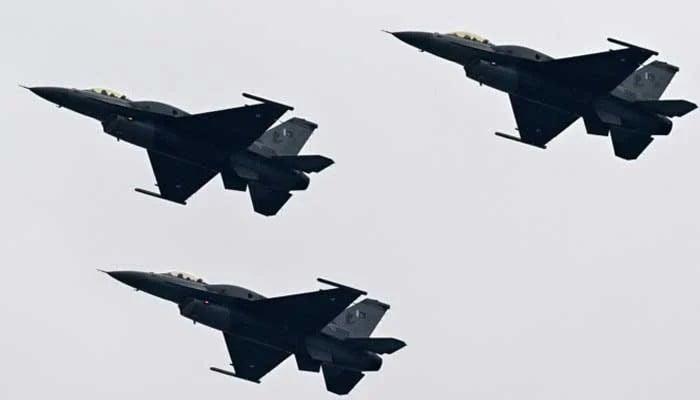
The 72-hour armed conflict called Marka-e-Haq was another of the greatest moments in the history of Pakistan after September 6, 1965, when the entire nation united to defeat the nefarious objectives of an aggressor, showing courage, cohesion and maturity as a proud nation that valued peace but also knew how to defend its sovereignty.
On May 6, under the cover of darkness, India attacked civilian infrastructure in Pakistan at six places: Ahmedpur Sharqia (Bahawalpur), Muridke, Sialkot, Shakargarh, Muzaffarabad and Kotli, martyring 36 innocent civilians, including men, women and children.
The attacks were launched by India using dual-use, nuclear-capable BrahMos cruise missiles in a conventional role – an extremely reckless and provocative act for a nuclear state – indicating Indian arrogance and disregard for acceptable standards of human rights as well as the laws of war. This gross irresponsibility as a nuclear State was accompanied by the judgmental rhetoric of the Indian leaders, who tried to justify the unjustifiable. India’s most egregious mistake was crossing the Rubicon of deterrence stability, introducing dangerous instability into the subcontinental nuclear balance.
By firing nuclear-capable cruise missiles across the international border, India had circumvented Pakistan’s nuclear deterrent. Nuclear scholars such as Bernard Brodie and Thomas Schelling have highlighted the need to make nuclear deterrence credible by convincing the adversary that nuclear weapons would be used if deterrence were ever breached. In fact, another nuclear commentator, Martin Van Creveld, had stated categorically that “nuclear strategy is not a strategy but pure deterrence.” Had Pakistan not responded effectively, Indian arrogance could have further widened the conflict.
Unfortunately, India is yet to learn from its humiliation at Marka-e-Haq and is busy reorganizing its armed forces for ground incursions through brigade-sized, combined-arms, terrain-optimized and mission-specific groups such as Rudra Brigades, Bhairav Light Commando Battalions, Shaktiban Artillery Regiments, Ashni Drone Platoons and Akash Air Defense Regiments. Prime, using the “Cold Strike” concept aimed at shallow territorial areas. raids to create an appearance of victory.
The casus belli of the Indian attacks on the night of May 6 was the alleged Indian false flag operation in Pahalgam, a tourist resort in Indian Illegally Occupied Jammu and Kashmir (IIOJK), where 26 tourists were shot dead by unnamed militants.
The objective of the Indian false flag operation and concomitant aggression against Pakistan was to project Pakistan as a state sponsor of terrorism and impose war to intimidate Pakistan into making concessions at the negotiating table. The assault was also intended to act as a shot in the arm for Prime Minister Modi’s electoral prospects ahead of the important state elections in Bihar.
India’s violation of international law by unilaterally suspending the Indus Waters Treaty (IWT) was also an ulterior motive, put into practice on April 23, following the false flag operation in Pahalgam on April 21, 2025.
The Indians, however, suffered the worst surprise when Pakistan responded forcefully through air and ground retaliation. The crowning glory of Pakistan’s response was the downing of seven high-performance Rafale jets on May 7. The shocked Indian military resorted to loitering munition attacks, targeting Pakistan indiscriminately, and on May 9 launched another wave of cruise missiles and drone strikes against Pakistan’s Nur Khan, Shorkot, Bholari, Jacobabad and Rafiqui air bases. Pakistan responded effectively, destroying 84 drones and disabling or diverting several missiles.
The main Pakistani response came on 10 May in the form of Operation Bunyanum Marsoos, during which 26 targets were attacked in IIOJK as well as mainland India, including Uri, KG Top, Nowshera Brigade Headquarters and air/military bases at Halwara, Sirsa, Ambala, Jammu, Mamun, Naliya, Kandla, Bhuj, Swatragh, Poonch and Rajauri, killing to 50 Indian soldiers in the LoC alone.
The PAF destroyed several much-vaunted Indian S-400 missile systems, exposing gaps in Indian air defense. After suffering severe losses and economic hemorrhage worth $84 billion, the embattled Indian leaders requested US mediation to end the conflict. The conflict resulted in an embarrassing defeat of India’s military-political objectives, as well as damage to its reputation after being branded an irresponsible nuclear state.
Pakistan has emerged as the undisputed winner in Marka-e-Haq, having effectively thwarted India’s war objective of pressuring Pakistan through accusations of terrorism and military coercion to extract concessions at the negotiating table under the dominance of international mediation. The military objective derived from this political objective was to attack suspected militant camps in Pakistan and inflict a devastating blow to Pakistan’s military and economic potential to weaken its resolve to stand up to Indian pressure.
Pakistan’s patient and responsible self-defense response, respecting international law, earned it international goodwill and support. Its powerful but measured retaliation using Fateh I and II guided artillery rockets restored the balance of nuclear deterrence and forced India to rethink its war objectives and ultimately accept US-brokered ceasefire efforts. The change in India’s stance was a consequence of Pakistan’s effective conventional military response as well as its diplomatic and media strategy.
Marka-e-Haq, undoubtedly, is a defining moment in the history of Indo-Pak conflicts, where a determined nation, brave leadership and a better-trained and motivated army leveraged technology-based network-centric warfare to defeat a much larger, albeit poorly connected and platform-centric, Indian army. Pakistan emerged victorious on multiple fronts – diplomatic, epistemic and military – to confront the aggression and provide a decisive response on the battlefield.
The strategic and diplomatic dividends of the Pakistani response, whose apotheosis was Operation Bunyanum Marsoos on May 10, are materializing in the form of greater international stature and greater influence as a “security stabilizer” in the region.
The writer is a security and defense analyst. He can be contacted at: [email protected]
Disclaimer: The views expressed in this article are those of the writer and do not necessarily reflect the editorial policy of PakGazette.tv.


