
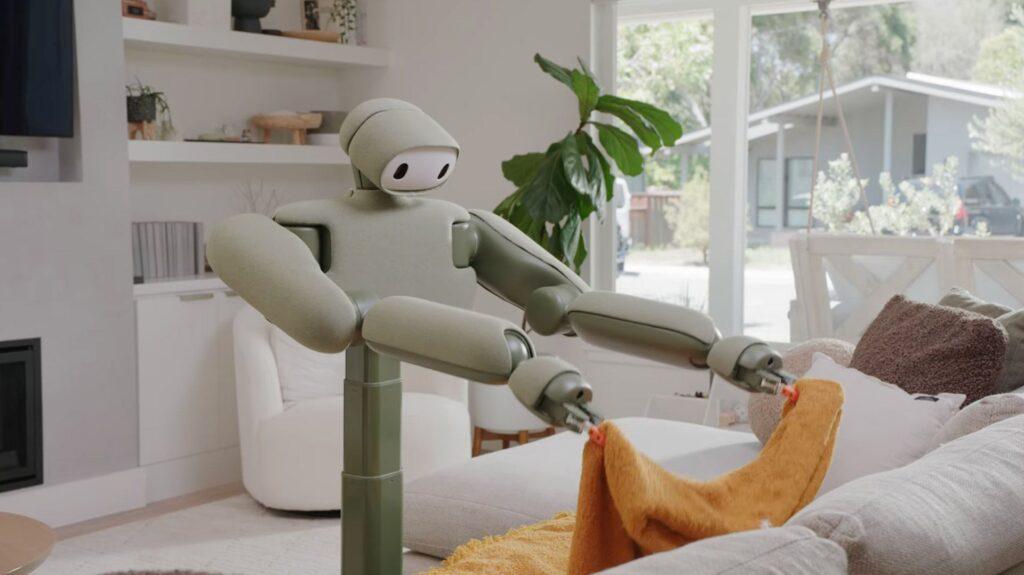
- Weave Robotics Isaac 1 is now on pre-order
- Promises to carry out basic household tasks independently
- The approximately $8,000 legless robot arrives first in the US.
With its Baymax-esque face, cool tones, and mostly soft body rolling on a wheeled base, Weave Isaac 1 cuts a distinct figure from most humanoid robots. It’s cute and homey enough to appeal to the robot-curious while avoiding the dangerous uncanny valley of, say, UBTech UWorld U1.
That’s probably a good thing. Weave, which has been building robots like this for a few years, is finally ready to fully commercialize its offerings with the $7,999 (around £6,000/AU$11,600) Isaac 1. Far from the overreach of many AI-backed robots that promise not only to take care of household chores but also to be your empathetic companions, Isaac 1 has smaller goals.
Its characteristics can be reduced to monotonous household tasks that you probably hate doing, including:

- Laundry
- Finding and collecting “dirty” clothes (it is not clear that he knows how dirty they are)
- duty to hinder
- Fold and put away clean clothes (here you need to set up and start the washing machine or dryer)
- can make your bed
- Move the pillows
- Clean up clutter (shoes, toys, etc.)
It’s a good list, but despite the autonomous capabilities of the Isaac 1, also limited. So much so that Weave Robotics promises teleoperation to help you complete some tasks. For anything you want it to do, launch it in a connected smartphone app. After that, it rises from a 3-foot-tall crouch position on its charging base to its full height of 5-foot-9 and unfolds to get the job done.
In the launch video, Isaac appears to move slowly and methodically, but he might be a bit more stable than, say, the Tesla Optimus, Neo Beta, Unitree G1, and Figure 03, all of which are designed to replicate human bipedal walking. These robots are getting better at walking, running and dancing, but, as we’ve seen, they can be more unpredictable.
Plus, all those extra actuators and sensors needed to walk tend to make these robots more expensive (they can cost $12,000 to $20,000 or more). With its wheeled base and sensors to autonomously navigate your home, Weave’s Isaac 1 appears more stable and is much cheaper than many of these potential home help or companion robots.
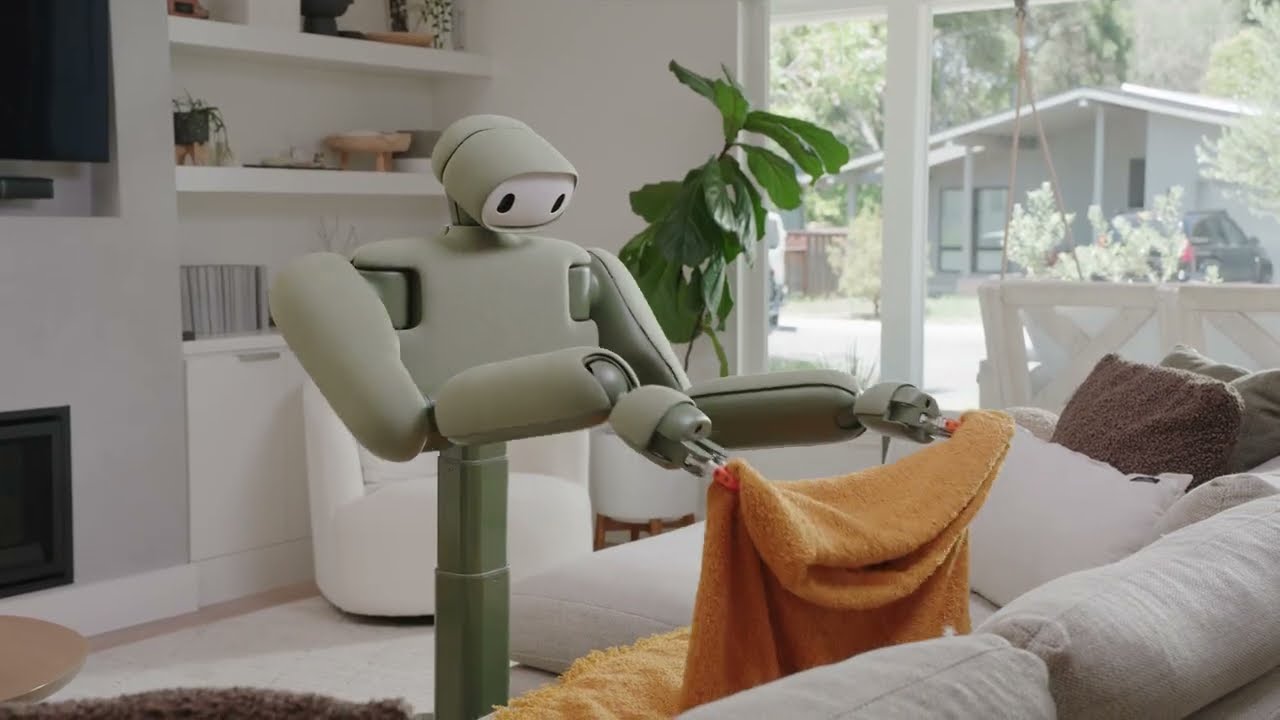
Look
While Isaac 1 is ready to fold laundry, he will do so without the use of his fingers. Instead, Isaac 1 will handle laundry and other tasks with a pair of orange claws (and will reportedly run for eight hours on a charge). The rest of the body is covered with soft, removable plates in muted colors such as Sage, Grey, Slate Blue, Terracotta and Vesper.
Like other robotics companies, Weave Robotics offers a subscription plan: $449 per month (which is equivalent to about £340 / AU$650 per month), which you would pay in perpetuity, but could also guarantee perpetual updates. However, getting one starts with a $250 deposit and deliveries are expected to begin in September, but only in California. Other areas in the US will follow, according to the company, in 2027.
Isaac 1 will never be mistaken for a human, but perhaps that’s the point. In the rush to recreate and automate humanity, most robotics companies seem to have forgotten that humans respond best to other real, flesh-and-blood humans, and, at a fundamental level, reject artifice and hardware that looks like us but can never be.

Follow TechRadar on Google News and add us as a preferred source to receive news, reviews and opinions from our experts in your feeds.


