- The US military reports its first deaths since hostilities resumed.
- Iran accuses the United States of attacking energy and water facilities.
- Tehran says it no longer limits retaliatory responses.
Iran’s supreme leader vowed to teach the United States “unforgettable lessons” on Saturday, as Washington reported its first military deaths since resuming hostilities with the Islamic republic.
A month after the enemies signed a now-abandoned preliminary deal aimed at ending their war, Tehran attacked infrastructure around the Gulf in retaliation for a week of escalating U.S. strikes, which Iran said had hit an airport, a railway station and bridges.
Iran attacked an oil facility in Kuwait as well as a power and water plant, authorities in the Gulf state said, while in Bahrain the military said air defenses repelled a wave of Iranian attacks.
Tehran also launched new attacks in Jordan, where the US military’s Central Command said two service members were killed on Friday while “defending against Iranian attacks with ballistic missiles and drones.” He said another service member was still missing in action.
That brought to 16 the confirmed number of US military deaths since the conflict began on February 28.
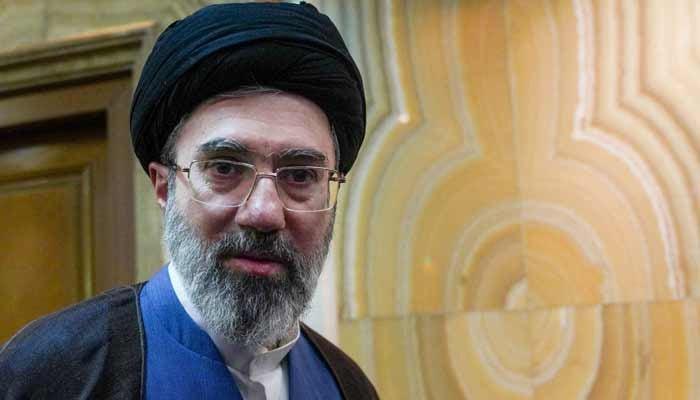
Iranian Supreme Leader Mojtaba Khamenei, who replaced his father after he was killed in the first volley of US-Israeli attacks, said the ongoing attacks on his country “once again demonstrated to everyone the futility of the American president’s signature.”
“Now that the American enemy seeks to incite war and bear its most serious consequences, it must know that the beloved Iranian nation and the axis of resistance have unforgettable lessons to offer it,” he added, in a statement broadcast on state television.
Maj. Gen. Mohsen Rezaei, Khamenei’s top military adviser, warned that Tehran would resume “large-scale offensive operations” if U.S. strikes continued in the coming days.
“Iran will no longer limit itself to equal and retaliatory responses,” Mohsen said, according to state media.
The latest episode of violence was sparked by Iranian attacks on ships in the strategic Strait of Hormuz, a vital shipping route for Gulf energy exports that Tehran seeks to control.
Iran closed the strait after the war broke out, and control over the route has become an advantage in negotiations with Washington, which recently reimposed its own blockade of Iran’s ports.
The Health Ministry said on Friday that 50 people had been killed since the new fighting broke out and more than 500 had been injured.
Kuwait accused Tehran of attacking civilian sites and vital infrastructure, and residents expressed fears that renewed hostilities could drag on.
“Demand for water and canned goods has increased since this morning amid fears that services or supply chains will be affected,” Kuwait resident Hassan Rayan, 61, said Saturday.
His companion Ali Mahmoud, 46, noted that “the streets and beaches were almost empty, even though it is a holiday.”
The Iranian military claimed it had attacked an air base used by the United States in Bahrain, another US ally in the Gulf, according to the state broadcaster.
And in Jordan, the Iranian state broadcaster reported that fuel tanks at the US Al-Azraq base were attacked. The day before, the Revolutionary Guard claimed to have attacked US aircraft stationed in the country with missiles and drones.
The Jordanian military said it had shot down 10 missiles on Saturday and at least three the day before.
Hope for a political solution to the war has fallen by the wayside, although mediators have tried to get both sides back to the negotiating table.
US President Donald Trump threatened this week to attack Iranian infrastructure, although there has since been no confirmation from Washington that US forces have begun doing so.
“The United States has violated and suspended all of its commitments under that memorandum of understanding, and we have also suspended all of our commitments,” Iranian Deputy Foreign Minister Kazem Gharibabadi told state television on Saturday.
Iranian state news agency irna reported Saturday that U.S. strikes killed three people and wounded eight in the southern province of Hormozgan.
In Khuzestan province, the provincial deputy governor said eight people had died in the past 10 days, according to the Iran report. Tasnim news agency.
Iran also said drinking water supplies had been cut off to several southern villages, accusing the United States of attacking power facilities and desalination plants in the village of Bonji, according to Tasnim.
Iran’s Energy Ministry urged citizens to reduce electricity use and turn off air conditioners at peak hours after the power grid was affected.