
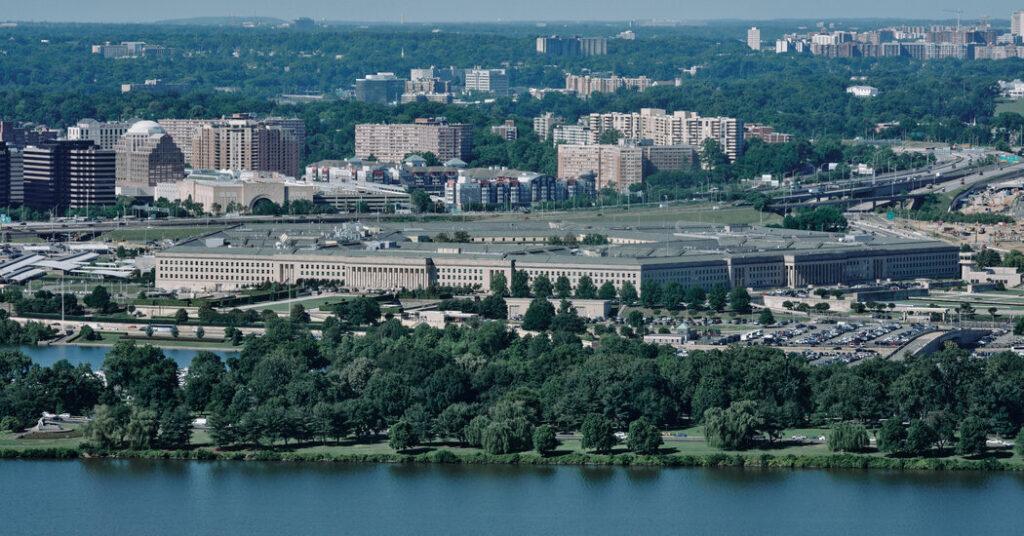
A federal appeals court ruled Thursday that the Pentagon could temporarily require escorts for all journalists visiting the building while The New York Times challenges the policy in court.
The decision reverses a June order that suspended the escort requirement during the litigation.
In their ruling, two of the three judges on a three-judge panel of the U.S. Court of Appeals for the D.C. Circuit wrote that the Pentagon’s escort requirement was “applied in a neutral and impartial manner” and lacked any “demonstrated distinctive harmful impact” on The Times. The third judge said he would have allowed the pause in politics to stand.
A Times spokesperson said in a statement: “While The Times is disappointed with this interim decision, we appreciate that the court expedited the appeal and look forward to litigating it on the merits.”
The origins of the court battle date back to October, when Defense Secretary Pete Hegseth instituted media restrictions that allowed the department to revoke the press passes of journalists it deemed “security risks” if they sought certain information from military employees who were not authorized to speak to the media.
In December, The Times sued to block the restrictions, arguing they violated the First Amendment. In March, Judge Paul L. Friedman ruled in favor of the Times. Days later, the Pentagon released a revised policy that included the escort requirement. He also appealed the ruling.
In May, The Times filed a second lawsuit seeking to overturn the escort requirement, arguing that it was retaliatory and against press freedom. In June, Judge Friedman temporarily blocked the escort policy, saying it should not be maintained while the case plays out in court. Thursday’s appeal decision overturns that ruling.
In court papers, the Pentagon has argued that without escorts, journalists could “maintain a persistent physical presence near sensitive spaces within the Pentagon,” according to an official’s court declaration. It has also said the requirement does not hinder journalists’ news-gathering activities.
The Times has responded that allowing journalists to move through the Pentagon unescorted does not pose a risk to national security and that their ability to navigate the hallways is essential to their mission. “The record that this is harming journalism is overwhelming,” Theodore J. Boutrous Jr., a Gibson Dunn attorney representing The Times, said at a hearing in June.


