
The diaspora is a valuable asset for the nation and the prime minister calls for a boost to ongoing projects
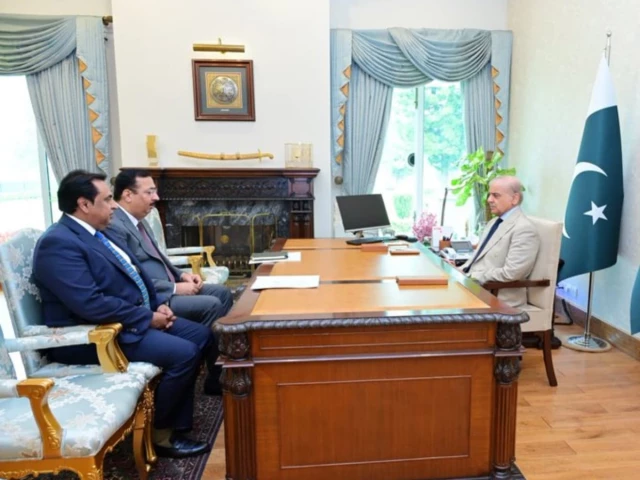
Prime Minister Shehbaz Sharif meets OPF Board of Governors Chairman Syed Qamar Raza and OPF Director General Mohammed Afzaal Bhatti in Islamabad on July 1, 2026. PHOTO: PMO/X
Prime Minister Shehbaz Sharif on Wednesday directed the Overseas Pakistan Foundation (OPF) to prepare and submit a comprehensive roadmap to further enhance the body’s initiatives.
According to a Prime Minister’s Office (PMO)
“Discussions were held on the foundation’s initiatives to address the problems of Pakistanis residing abroad,” the PMO wrote. He added that in his remarks, Prime Minister Shehbaz “declared that overseas Pakistanis are a valuable asset of the nation, contributing significantly to foreign exchange remittances by sending their hard-earned earnings back to Pakistan.”
The prime minister directed the OPF to “give greater impetus to ongoing projects and initiatives for the welfare of overseas Pakistanis.”
During the meeting with Raza and Bhatti, Prime Minister Shehbaz was briefed about the roadmap for further measures to promote the welfare of overseas Pakistanis and provide them with facilities, the PMO said.
OPF officials also paid tribute to the Prime Minister for Pakistan’s efforts towards global peace, while Prime Minister Shehbaz expressed satisfaction with the OPF’s initiatives and directed the body to prepare a roadmap.
Read: Foreign property protection law approved
Overseas Pakistanis contribute nearly $40 billion a year, helping support household incomes, finance imports and stabilize external accounts. At a time when exports remain largely stagnant and foreign direct investment fails to gain momentum, remittances are a reliable source of foreign exchange.
They have repeatedly cushioned the economy during periods of crisis and remain one of the few economic indicators showing sustained growth. In January, remittances were reported to have risen to a record $3.6 billion by December 2025. However, given the conflict in the Middle East, the Pakistan Institute of Development Economics warned in March that annual remittance inflows could decline by $3 billion to $4 billion.
He also noted that every year, between 700,000 and 800,000 Pakistanis travel to the Gulf countries in search of employment, and said that if the conflict continues, around 500,000 Pakistani expatriates may not be able to go abroad to work in 2026.


