
Questions about the motives grew louder, particularly given the government’s pressure to get it approved by both chambers.
ISLAMABAD:
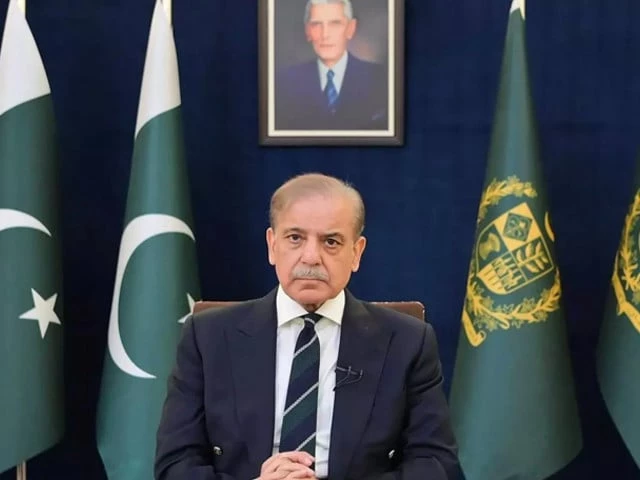
Prime Minister Shehbaz Sharif has constituted a committee to review the Telecommunication Reorganization (Amendment) Bill.
The committee will be headed by Law and Justice Minister Azam Nazir Tarar, while its members include Senator Sherry Rehman, IT Minister Shaza Fatima Khawaja, Economic Affairs Minister Ahad Cheema, Attorney General Mansoor Awan and experts related to the field of law and IT.
The bill, which seeks changes to a 1996 law and was introduced by IT Minister Shaza Fatima Khawaja, was passed by the National Assembly on June 11 by a majority vote. Subsequently, it was postponed by the Permanent Commission on Informatics and Telecommunications of the Senate, where it was referred on June 15.
Doubts about the motives behind the bill had grown stronger, particularly due to pressure from the government to have it passed by both houses of parliament.
After PTI senators objected and demanded that the proposed legislation be sent to the relevant standing committee, Senator Palwasha Khan, chairman of the Senate Standing Committee on IT and Telecom, called a meeting the next day, June 16.
The committee, which has been constituted to address concerns raised against some of its provisions, will review the Right of Way (ROW) Framework under Section 2(qb), 2(ma), Section 27A and 27B of the Telecommunications Reorganization Amendment Bill.
It will review the bill for creation of telecommunication facilities and deliberate on the operations related to the domain of private property and housing societies before submitting its recommendations.
The chief minister directed the committee to review the bill on priority basis and submit its proposals.
Earlier, the Ministry of Information Technology and Telecommunication clarified that the ROW Bill 2026 will not allow forcible acquisition of private land or unauthorized entry into private properties of citizens.
According to the ministry, landowners would retain all the right to raise objections, negotiate conditions and demand appropriate compensation before carrying out any work on their land. With APP input


