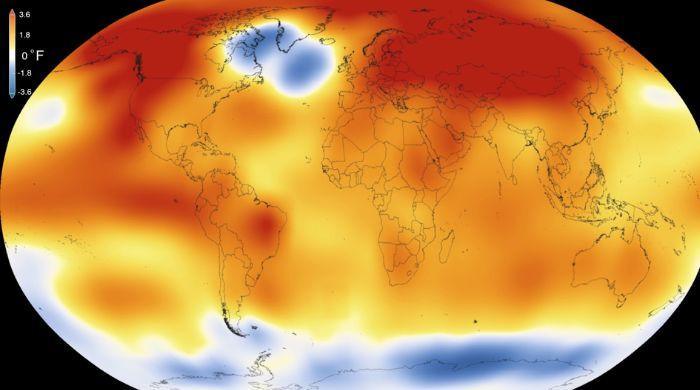
As Europe is gripped by the most severe heat wave ever recorded, scientists point to an unlikely accomplice: a patch of unusually cold water in the North Atlantic.
The region has been baking in temperatures above 100 degrees Fahrenheit: France has had its highest temperatures on record, hundreds of schools in Britain have closed and more than a thousand heat-related deaths have been recorded.
However, instead, just a few hundred kilometers to the west, between Greenland and Ireland, there is a strange blue patch that shows that temperatures are actually falling as the rest of the world warms.
Scientists believe the European heat crisis is exacerbated by the “cold spot.”
This phenomenon, known as the “cold spot”, could even be worsening Europe’s heat wave problem rather than offering a solution.
Scientists explain how melting Greenland ice ends up dumping fresh water into the oceans, thereby interfering with the Atlantic Meridional Overturning Circulation (AMOC), which is a key current that moves warm water from the tropics northward.
According to studies, the mass has cooled by up to 0.9 degrees Celsius since 1900, even as global sea surface temperatures increased by 1 degree.
Scientists now give a 50% chance that AMOC will close this century, which could bring dire consequences, such as an even more severe European climate, droughts in Asia and Africa, and rising sea levels.