
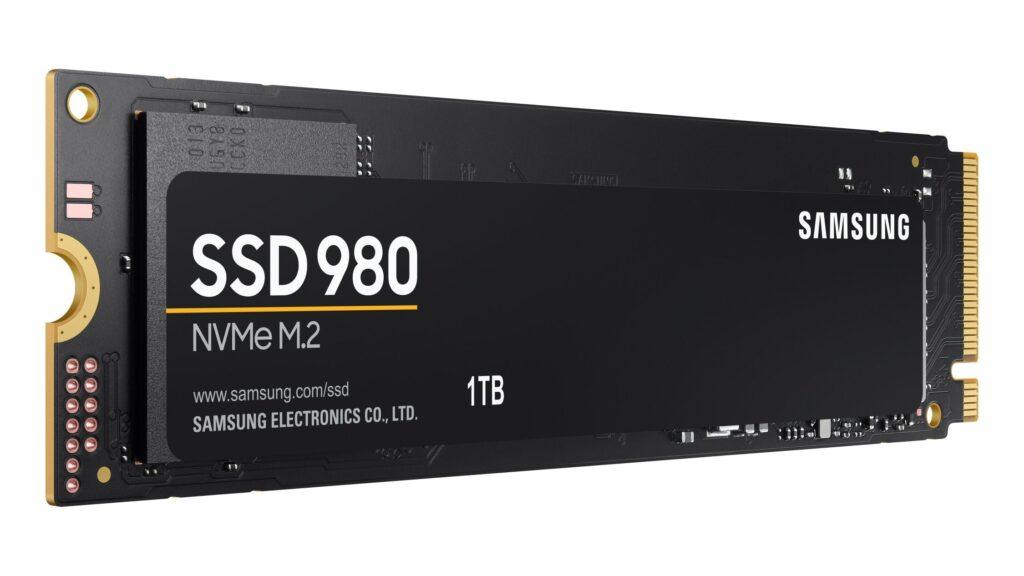
- Samsung helps move SSD virtualization from software solutions to hardware design
- New NVMe standard could transform storage management within AI data centers
- AI infrastructure demands are driving a major shift in SSD architecture
Samsung Semiconductor has confirmed its role in ratifying TP4193, a new NVMe technical standard called PCIe Exported NVM Subsystem Migration.
The company developed this specification together with Google and other major infrastructure players within the NVM Express organization.
It fundamentally changes the way NVMe solid state drives handle virtualization within large AI-powered data centers.

A shift from software tricks to native hardware design
Storage virtualization has traditionally been on top of the SSD itself, managed by hypervisor software running on the host server.
That software had to intercept every command from a virtual machine, disguise the drive’s true identity, and transmit modified instructions, a method known as trap and emulate.
This approach worked reliably, but consumed significant processing cycles and introduced latency in each input and output path.
As AI workloads tied to GPU clusters became more dynamic, these inefficiencies became much more noticeable in large-scale deployments.
TP4193 moves all that processing to the SSD hardware itself, allowing the drives to feature natively isolated and virtualized storage constructs.
The host server now functions as an orchestrator instead of a deployer forced to constantly intercept and rewrite commands.
This change significantly reduces hypervisor complexity while giving virtual machines direct access to administrative queues, reducing latency in the process.
Why This Likely Keeps SSD Prices High for AI Buyers
The standard introduces two primary capabilities: standardized creation of virtual storage objects and controlled masking of a drive’s underlying attributes and capabilities.
Together, these features allow a virtual machine to migrate between physical SSDs without noticing any changes to its underlying hardware environment.
That capability is hugely important for hyperscale data centers running ever-changing AI training and inference workloads on GPU-intensive infrastructure.
Since TP4193 compatible drives require new hardware capabilities built directly into the SSD controller, older inventory cannot simply receive a software update to comply.
Companies like Google, which have already been named contributors to the standard, have a clear incentive to upgrade storage fleets to realize these efficiency and migration benefits.
Combined with existing NAND supply constraints and growing demand tied to generative AI infrastructure, that upgrade cycle adds new upward pressure on enterprise SSD prices.
Multi-tenant environments benefit from secure isolation across multiple GPU endpoints, a feature increasingly in demand by AI infrastructure operators managing shared hardware.
Hyperscalers rarely delay the adoption of standards that reduce hypervisor overhead and simplify live migration between thousands of virtual machines simultaneously.
Whether this will translate into an immediate wave of hardware purchases remains uncertain, as standard ratification and actual product launch rarely occur on the same timeline.
What seems more predictable is that any short-term drop in enterprise SSD prices seems increasingly unlikely, given how directly this standard ties new capacity to new hardware.
Follow TechRadar on Google News and add us as a preferred source to receive news, reviews and opinions from our experts in your feeds. Be sure to click the Follow button!
And of course you can also follow TechRadar on TikTok for news, reviews, unboxings in video form and receive regular updates from us on WhatsApp also.


