
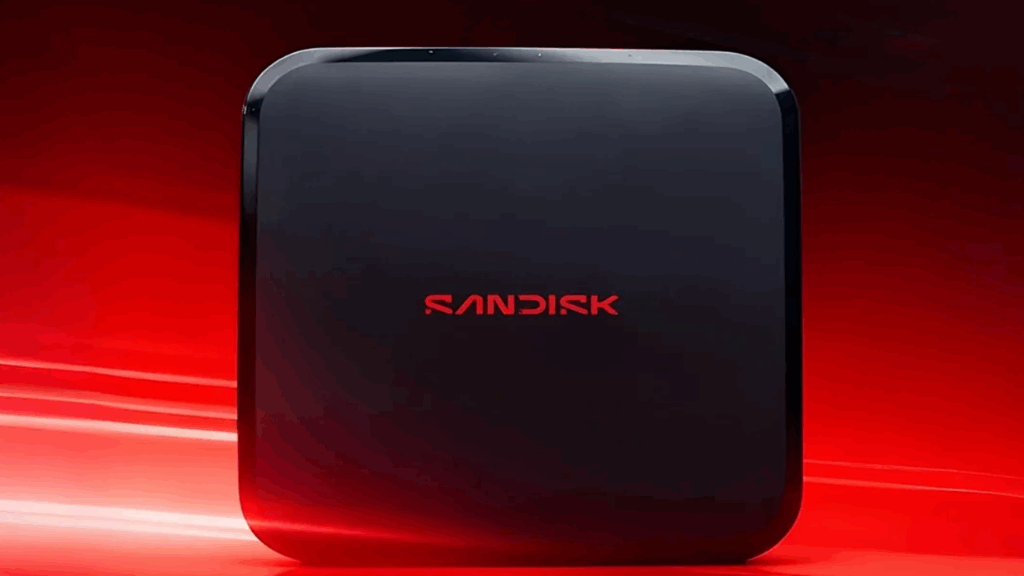
- Sandisk reduced SSD preconditioning times from days to just several hours
- SPRandom achieves steady-state performance using only a full write to the drive
- Open Source SPRandom Gives Hyperscalers Faster Deployment Options
Sandisk has open sourced a key algorithm that can dramatically speed up the solid-state drive (SSD) preconditioning process.
SanDisk Pseudo Random (or SPRandom) reduces the time required to prepare a drive for steady-state operation from over 160 hours to approximately 6.5 hours.
Traditional preconditioning methods require writing data two or more times the total capacity of the drive using sequential and random operations. But the new algorithm writes to each logical address only once, completing the entire process in less than five percent of the original time.

SSD preconditioning is important for data centers and AI workloads
SSDs straight out of the box show variable performance, until they go through a process called preconditioning that stabilizes their behavior.
During this process, the controller fills the drive, initiates garbage collection, manages wear leveling, and distributes overprovisioned blocks across the storage area.
This background activity must reach a stable state before the drive’s I/O performance is predictable and reliable for production use.
Traditional preconditioning of a 128TB drive takes more than 160 hours, or nearly seven days, but Sandisk’s SPRandom completes the same task in just 6.5 hours.
A 256TB drive requires up to 250 hours, about 10.5 days, using conventional methods, while SPRandom again finishes in just 6.5 hours.
These figures imply that Sandisk’s SPRandom reduced preconditioning time by 95% to 97.4%.
The SPRandom algorithm divides the drive into overlapping sections, and the amount of overlap corresponds to the expected overprovisioning for each section.
As physical addresses increase, the amount of overprovisioning gradually decreases across the unit.
The mathematics behind SPRandom calculates how over-provisioning is distributed after preconditioning, ensuring that steady-state performance is achieved in a single write pass to the physical drive.
Sandisk has released the SPRandom code as an extension to the FIO tool, which stands for Flexible IO Tester, making it available to the entire storage industry for free.
This is important for AI but not for your gaming PC
Hyperscale data centers and AI infrastructure operators purchase SSDs in massive volumes and need them ready for production as quickly as possible.
Reducing more than 150 hours of preconditioning time per unit directly translates to faster deployment and lower operational costs for cloud providers.
AI workloads are particularly sensitive to storage performance variability because training and inference tasks demand consistent I/O behavior across thousands of drives running in parallel.
But, for a typical single-drive gaming PC, spending an extra week preconditioning a new SSD is simply not relevant to the end-user experience.
The technology offers enormous value at scale, but the average consumer will never know the difference.
Sandisk’s decision to open source the algorithm is genuinely generous, but the beneficiaries are data center operators with massive storage arrays.
Simply put, the math is smart, the time savings are real, and the impact on AI infrastructure could be substantial.
However, your gaming PC will continue to function exactly as it always has, and that’s precisely the point.
Through blocks and files

Follow TechRadar on Google News and add us as a preferred source to receive news, reviews and opinions from our experts in your feeds.


