
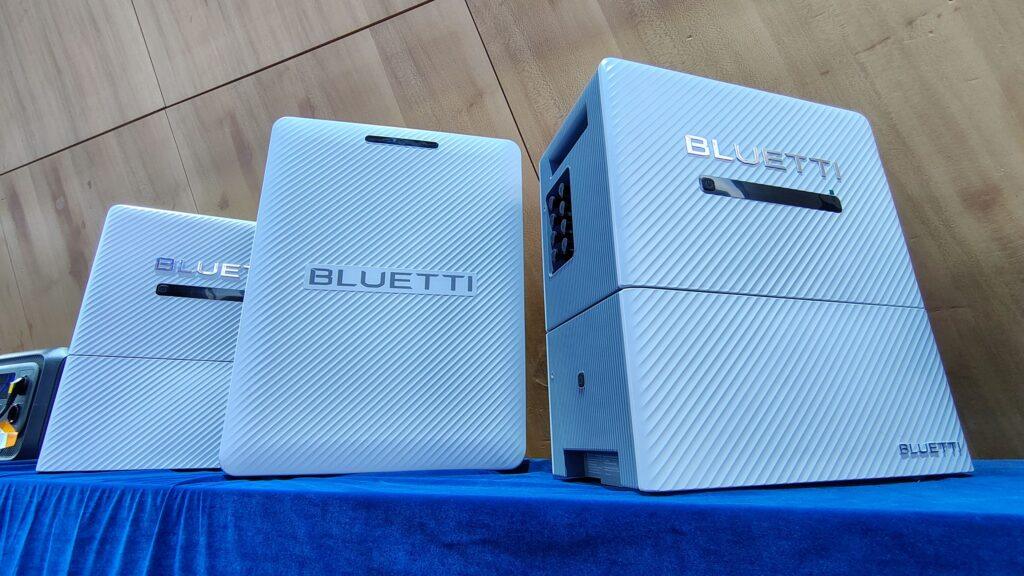
- We attended the launch of the Balco series by Bluetti in Paris
- The range brings simple solar power to homes and small businesses.
- These are the 6 things you need to know
Bluetti has introduced its new Balco series – if you haven’t heard of it before, it’s a new range of solar panels for balconies that basically allows anyone to convert a grid-powered building into a dual-grid and solar-powered one.
The launch is part of the current trend we are seeing in the energy storage space towards residential energy solutions. They may look like large portable power stations, but they offer much more than your usual camping companion.
Having been invited to the launch, I covered the main details on what to expect from the Balco 260, 500 and Transfer Hub here. But for me, these are the six key takeaways that most people should know.

1. It is a plug-and-play system
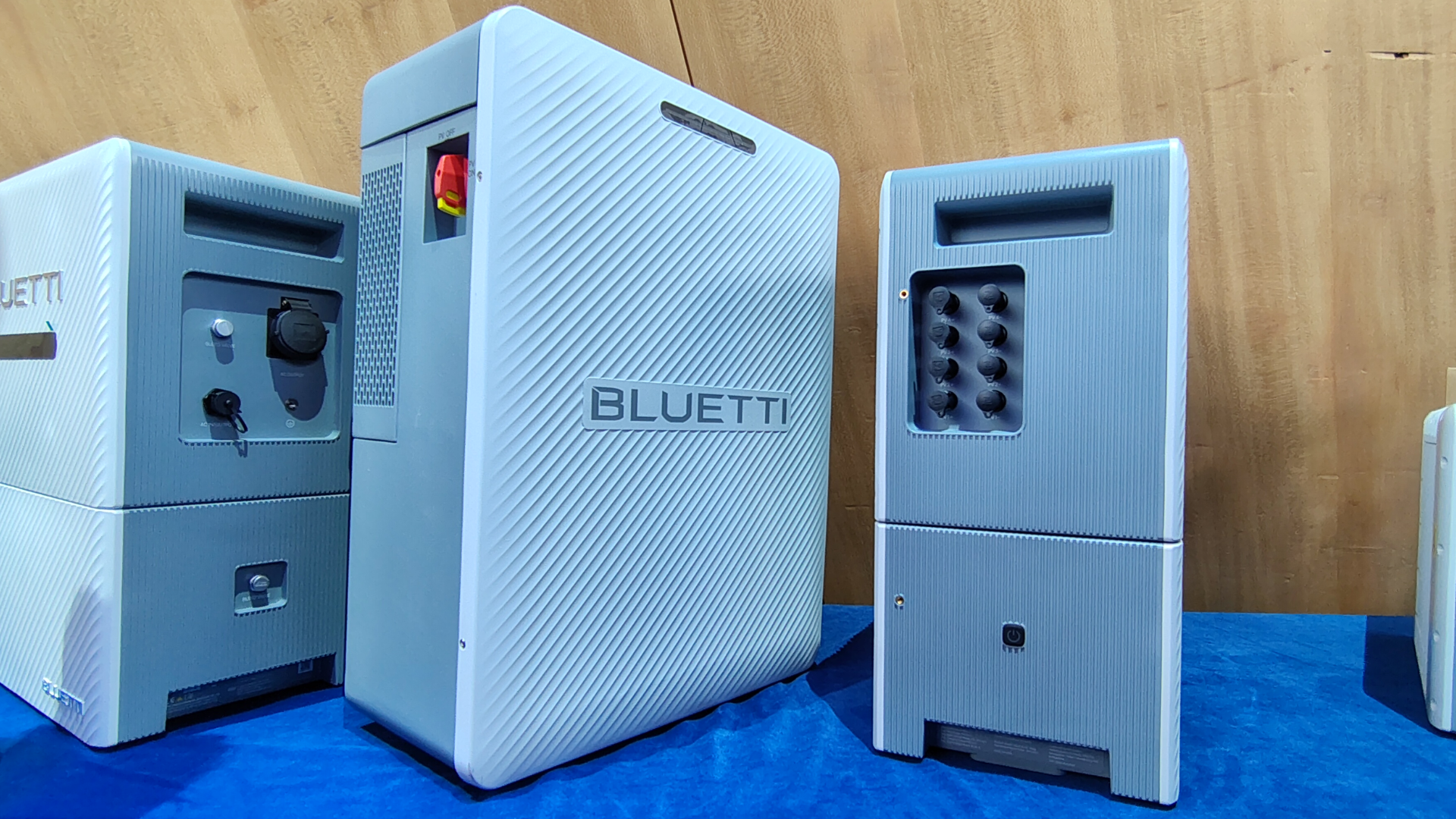
The big theme of the presentation was simplicity. Running a building on solar energy can be at best a daunting task or at worst unfeasible, especially for those who live and work in apartments.
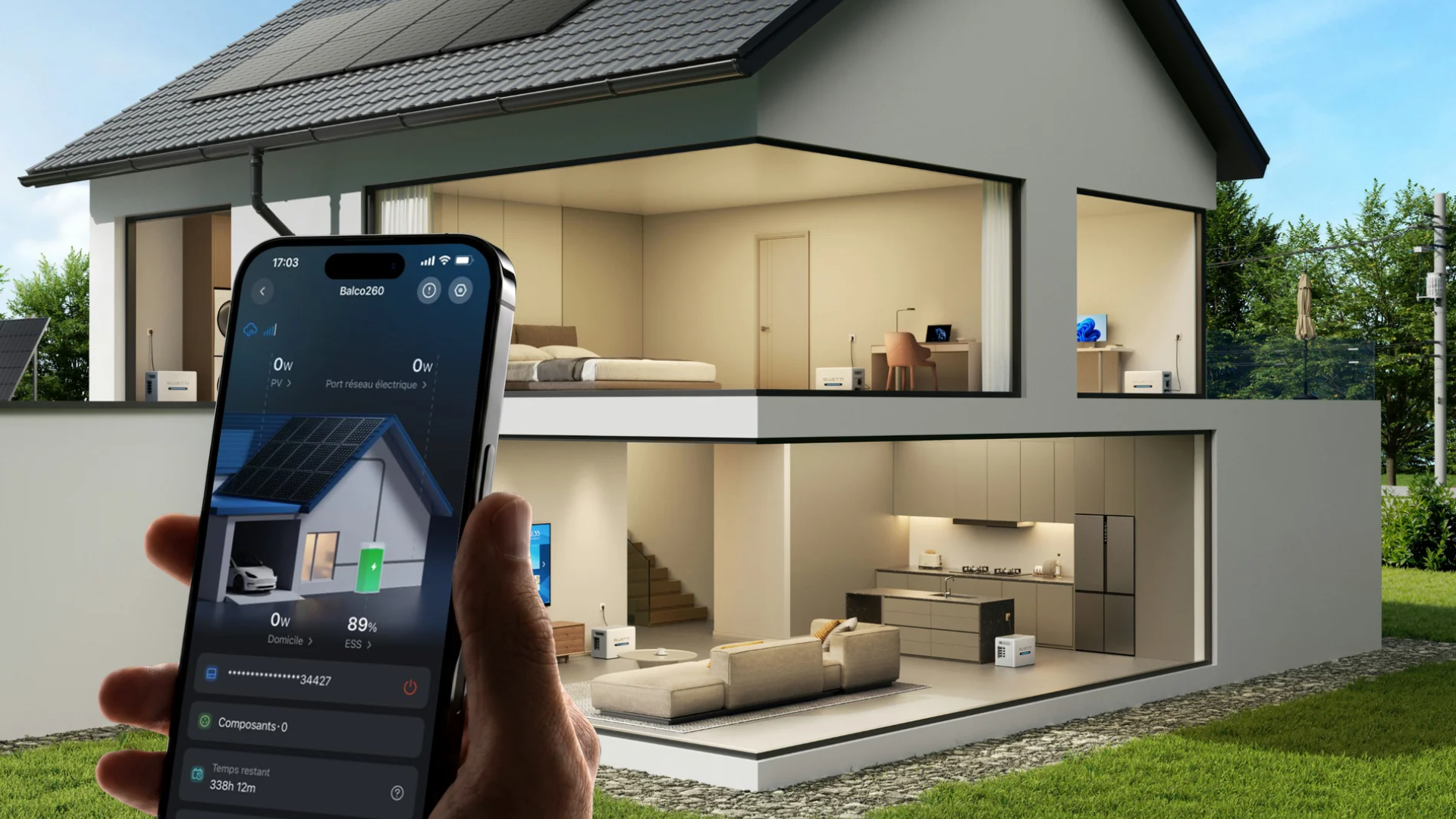
So the Balco series is Bluetti’s attempt to remove that barrier to entry. There is no drilling, no installation, no need to call electricians to set it up. Everything needed to capture and convert solar energy into electrical energy is contained in the Balco 260 and Balco 500 units, and users only need to attach the solar panels.
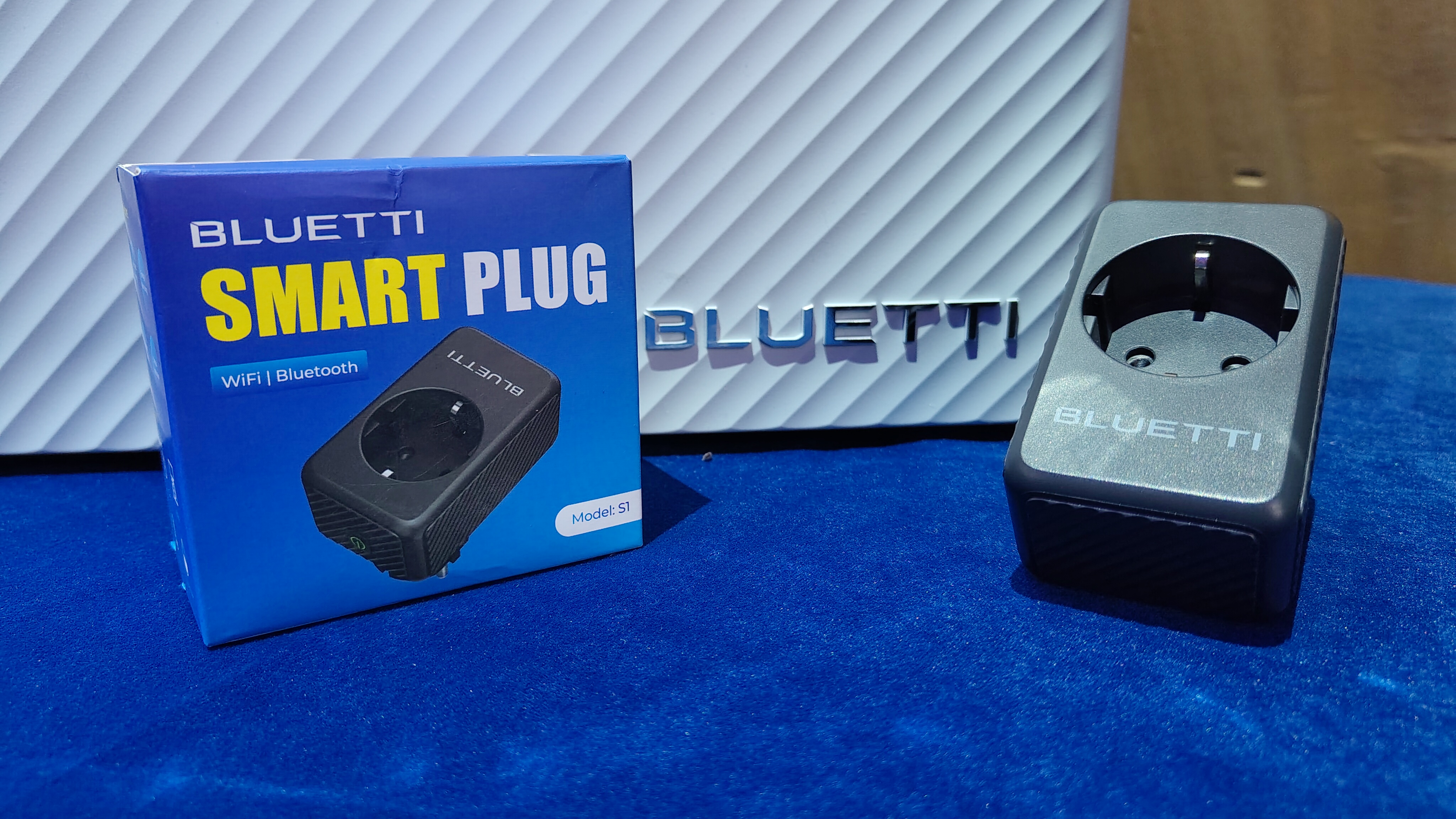
On top of that, the new S Meter is a smart magnetic meter: a CT clamp that connects to your power line. It communicates with Balco units and tracks power demands in real time so the system knows exactly how much power to deliver to offset grid usage.
2. Wireless scaling
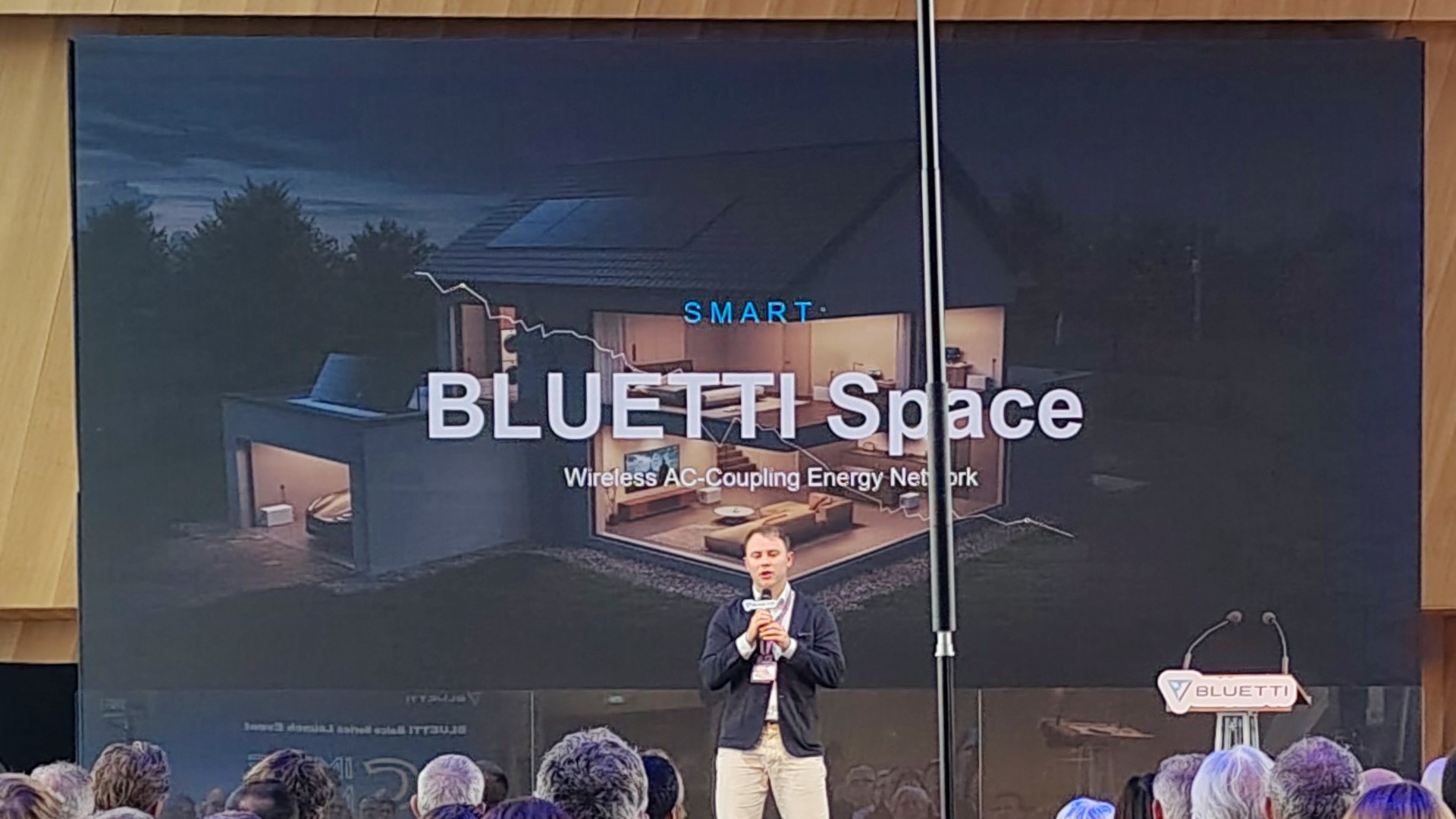
Bluetti Space effectively brings together all the power of six wirelessly connected units. Think of it as a mesh router setup, but for expanding home power projects.
This is part of the “plug-and-play” architecture here, as resources are managed over Wi-Fi, eliminating the need to run heavy cables through the facility.
This was the real highlight of the new range, and I’d love to see it in action at some point to see if the delivery lives up to the promise.
3. AI should save you more money
Saving money was another important theme of the event: Bluetti estimated savings of up to €9,792 per year under ideal conditions. I would expect general users to save less than that, unless they are maxing out Balco 500 units in constant sunlight and away from the shade.
Still, the idea here is to cut costs at a time when prices are volatile (which is my polite way of saying “totally out of control”). And the AI Energy Management System (AI-EMS) is at the heart of that system.
Bluetti’s AI-EMS monitors everything from weather to charging status. But what caught my attention is the way it tracks energy prices in real time.
What that means is that the AI monitors those prices, recharges the battery unit when prices are low, and then switches from grid to battery power during peak times of higher prices.
4. They will be launched first in Germany and France.
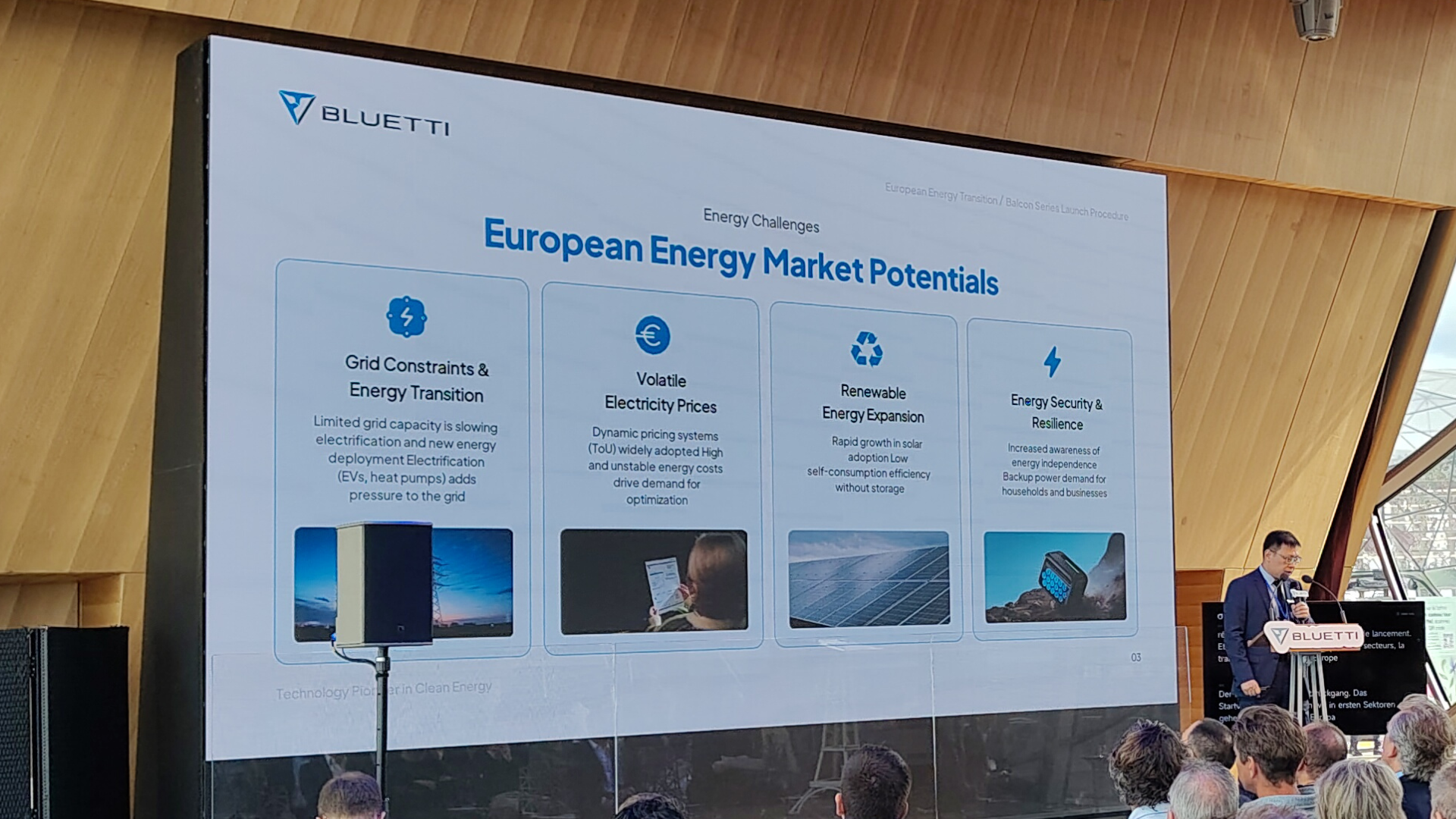
For starters, only France and Germany will be able to have the Balco series units with other countries coming online in the coming months.
Europe is the key market for these devices, for four reasons explained by Tommy Sung, Sales Director for Europe at Bluetti, during the presentation in Paris.
- Price volatility
- Grid restrictions slowing electrification projects
- Continental focus on renewable energy
- Energy security and resilience
All of which makes European countries a priority target for Bluetti’s solar home system.
5. You can still power appliances during power outages
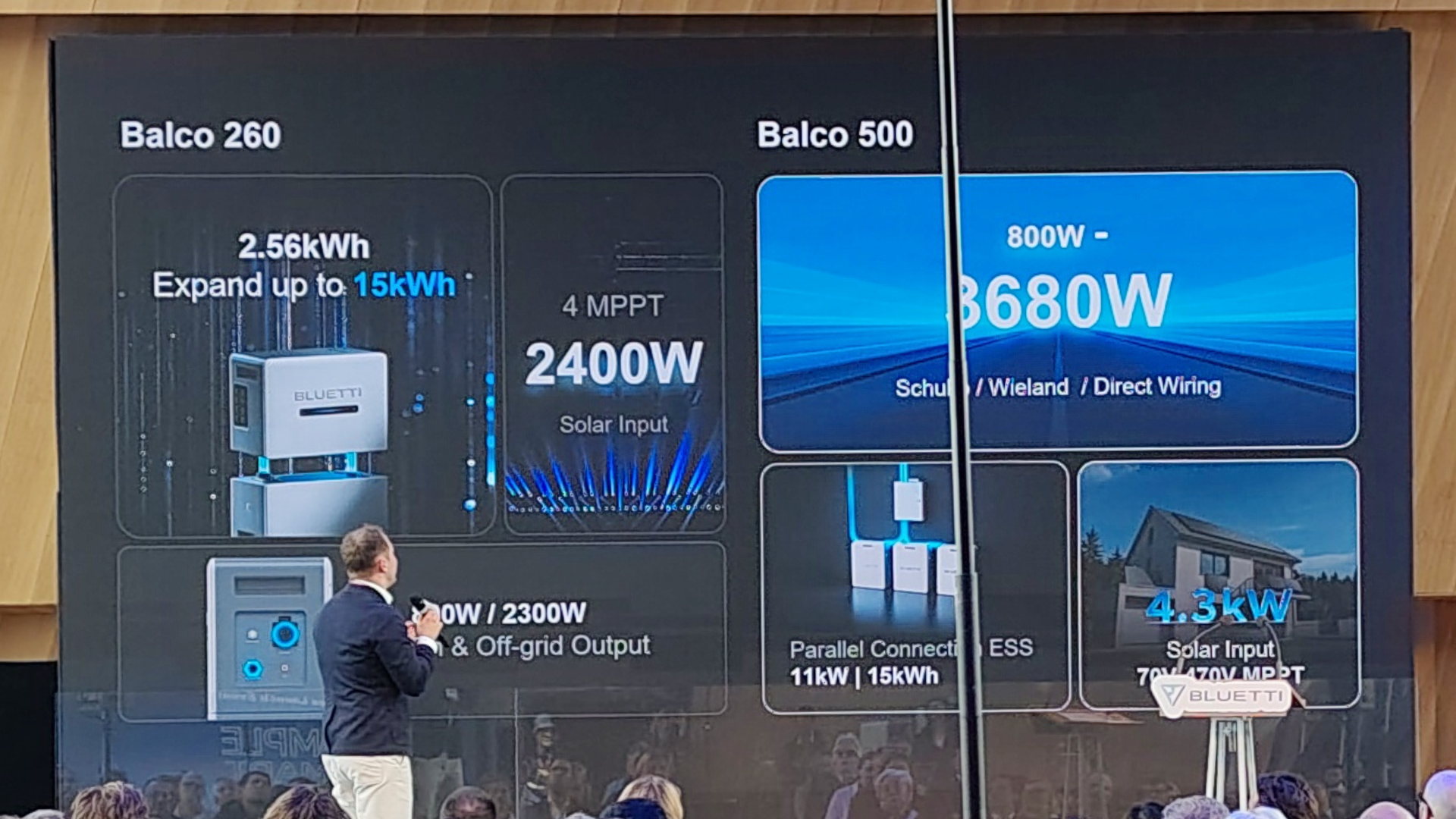
One of the problems with many full-size portable power stations is that they lack the power needed to power larger appliances. And those that do, like the Anker F3800 Home Power System, are limited by the existing battery charge.
Bluetti’s Balco range offers sustained, solar-charged production, with larger battery capacities and higher wattages that are designed to power a site even during outages.
With a capacity of 2.56 kWh (which can be expanded), the compact Balco 260 offers outputs of up to 2,300 W. The larger Balco 500 all-in-one unit can reach a maximum battery capacity of 30 kWh and reaches up to 3,680 W. That’s enough to power high-draining appliances like dishwashers and washing machines.
6. It is not a walled garden

When it comes to power plants, there’s nothing I hate more than proprietary cables. They are an anti-consumer tactic at a time when we are all trending towards standardization (hello USB-C). That’s why I liked that Bluetti has adopted extensive support for alternative systems for the Balco series.
Take the new Balco Transfer Hub for example. This plug-and-play control box sits between an outlet and a portable power station, turning it into a grid-tied solar power system that converts solar energy into electrical energy. Basically, there is no need to upgrade the entire system if you have a power plant lying around.
And not only Bluetti power plants. It is compatible with “almost any portable power station,” according to the company. That means first-party and third-party devices, removing a clear barrier to entry for those interested in home solar.
In addition, the range also supports smart meters from Everhome, Shelly and its own line, as well as its own solutions. On the smart home side, the system integrates with Google, Alexa, and Home Assistant.

Follow TechRadar on Google News and add us as a preferred source to receive news, reviews and opinions from our experts in your feeds.
For more off-grid power solutions, we have tested and reviewed the best portable power stations.


