
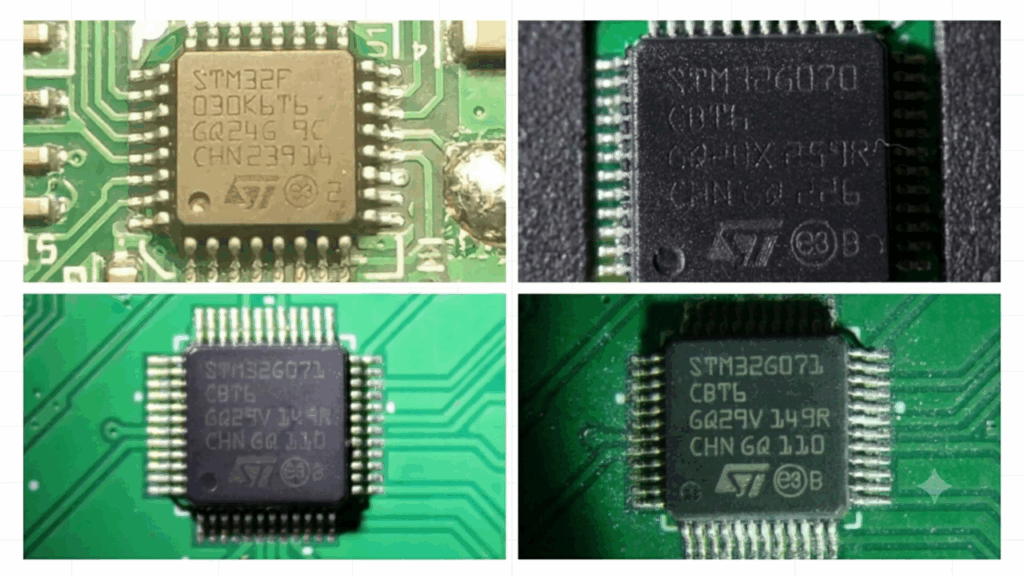
- STM32 chips continue to appear inside Russian drones despite sanctions
- Chinese supply chains help civilian components reach military applications
- Commercial networks make it increasingly difficult to track dual-use technology around the world
A microcontroller designed in Switzerland continues to appear in the weapons that Russia launches against Ukraine.
Ukrainian military intelligence recovered an STM32 chip manufactured by STMicroelectronics from a downed Geran-4 drone in May 2026.
As of that month, Ukraine’s database had recorded STMicroelectronics parts 270 times on recovered drones, missiles and warfare systems, a figure that is more than double the chip count of any other European manufacturer in the same database.
How a European chip reaches Chinese drone manufacturers
STMicroelectronics names Avnet, a Phoenix-based distributor, as a key partner for its line of STM32 microcontrollers.
Avnet’s Hong Kong subsidiary sold increasing volumes of these chips to Shenzhen Hobbywing Technology, a Chinese drone propulsion manufacturer.
Hobbywing’s purchases from that subsidiary grew from approximately $400,000 in 2024 to $1.95 million in 2025.
Hobbywing then sells electronic speed controllers built with those chips to Nanchang Sanrui Intelligence Technology, maker of the T-Motor brand.
Sanrui revealed that it purchased more than $7 million worth of Hobbywing controllers during the first half of 2025 alone.
Sanrui’s subsidiary, Jiangxi Xintuo, was later blacklisted by Washington for exporting drone technology to support the Russian military.
Trade records show that Xintuo shipped T-Motor products to at least six Russian buyers who were later subject to sanctions.
Samuel Bendett, a researcher focused on Russian military technology, said Beijing plays an important role in helping Moscow evade sanctions restrictions.
“There’s no easy way to stop it,” he said, describing how dual-use components move through civilian trade networks.
Analysts note that once a chip enters China’s manufacturing chain, tracing its exact origin becomes much more difficult.
Legal experts call this process substantial transformation, as components are incorporated into new products before reaching their destination.
The records reviewed do not confirm that any recovered chip followed this precise documented route.
Sanctions have done little to stem the flow
Western governments have imposed export restrictions against Xintuo and Sanrui, but both companies appear to have adapted quickly.
Sanrui’s recent presentations identified new trading partners and it now exports through what it called Eastern European networks.
A website linked to the sanctioned Xintuo continued to sell T-Motor products globally and, as of this month, still accepts major credit cards.
The supply chain of these companies appears to be deeply entrenched and a single ban can slow them down, but not stop them completely.
“The goal is not simply to build Chinese drones… It’s to ensure scale and strengthen a system that can absorb feedback from the real-world battlefield,” said Lilly Lee, a researcher at Taiwan’s DSET think tank who studies China’s drone industry.
He argued that a huge civilian drone industry, inherently dual-use, is harder to dismantle through sanctions or war.
This dynamic reveals why cutting off a single supply route rarely prevents tokens from reaching battlefields.
Even robust civilian trade between China and Russia can support military applications without any explicit government cooperation.
Via Kharon


