
- SpaceX admits global GPU shortage threatens its orbital AI computing ambitions
- Orbital data centers cannot function without huge volumes of advanced semiconductor hardware
- TeraFab remains uncertain despite huge investment and ambitious semiconductor production goals
SpaceX has filed paperwork for its upcoming IPO that reveals a worrying reliance on a handful of GPU suppliers.
The company’s Form S-1 document openly states that orbital AI ambitions require more chips than the market currently offers.
Elon Musk’s company purchases all of its GPUs by purchase order, without any long-term contractual agreements with direct chip suppliers.

Space ambitions collide with a brutal global GPU shortage
This purchasing approach leaves SpaceX vulnerable to all disruptions affecting semiconductor manufacturing, from natural disasters to geopolitical conflicts.
The company envisions putting computing infrastructure in the space, but that vision requires GPU volume far beyond what any vendor can currently offer.
Major buyers of AI chips, such as Nvidia, have already secured massive supply commitments totaling $145 billion, leaving smaller buyers even further back in the queue.
SpaceX admits that “manufacturing and supply of servers and networking equipment for our technical infrastructure, particularly for GPUs and other specialized components, is limited to a small number of qualified suppliers.”
“Our ability to achieve orbital AI at scale depends on our ability to access a sufficient number of AI chips, significantly more than we currently have at our disposal,” the SpaceX document reads.
Orbital data centers cannot launch without these components, and the current procurement strategy offers no protection against shortages.
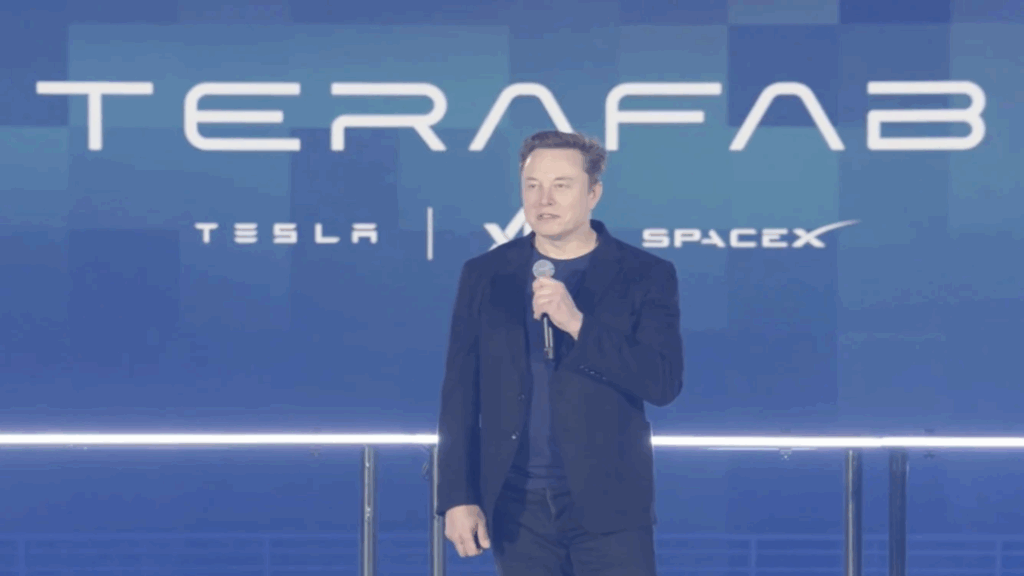
To escape this dependence, SpaceX, together with Tesla and xAI, plans to build TeraFab, a dedicated semiconductor facility in Texas that uses Intel’s 14A process technology.
The project requires tens of billions of dollars in investments, but the S-1 filing explicitly warns that TeraFab may fail.
“While we hope to build Terafab to address such supply constraints, Terafab may not be successful, in which case we may not have other sources of enough AI chips to meet our orbital AI computing demands,” the document states.
Even if the build is successful, the company expects to continue sourcing most of the hardware from outside vendors.
This means the orbital data center plan remains tied to the same unreliable market.
TeraFab still relies heavily on shaky partnerships and uncertain execution
At the moment, the partnership between SpaceX, Tesla and Intel on TeraFab remains rocky and neither party has a legal obligation to remain committed.
“While we have a framework agreement with Tesla, neither Tesla nor Intel are obligated to remain part of the project, and we cannot enter into any definitive agreement,” the S-1 form reads.
If any of the partners leave, TeraFab loses both an important customer and the process technology developer needed to manufacture the chips.
IPO risk factors often include unlikely disasters, so these admissions require measured interpretation.
However, SpaceX has identified a particular bottleneck: orbital data centers require chips that do not exist in sufficient quantities anywhere on Earth.
No amount of rocket repurposing or satellite engineering can overcome a foundry’s limited wafer output, and TeraFab remains a gamble rather than a guarantee.
Through tomshardware

Follow TechRadar on Google News and add us as a preferred source to receive news, reviews and opinions from our experts in your feeds.


