- S&P 500 futures fall, Nikkei and Kospi extend their retreat.
- The dollar rises as the market reduces the likelihood of the Fed raising rates.
- Federal Reserve Chairman to testify this week, US CPI in focus.
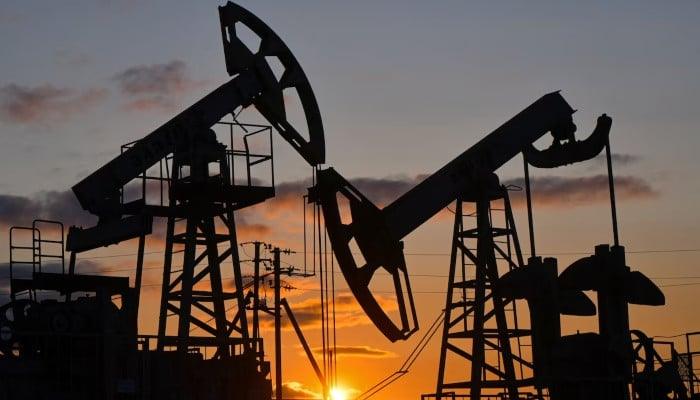
SYDNEY: Stock markets fell on Monday in Asia as fighting intensified in the Gulf and Iran claimed to have closed the vital Strait of Hormuz, pushing up oil prices and reigniting global inflation risks.
The dollar rose with bond yields as investors reduced the odds of an interest rate hike by the Federal Reserve, just a day before Chairman Kevin Warsh faces Congress for the first time in his new role.
Tuesday’s June inflation numbers could show some cooling in the headline rate of 4.2% as oil prices decline, although some of that will reverse now that oil is rising again.
Brent crude rose 4.1% to $79.11 a barrel, off a recent low of $70.14, while U.S. crude added 4.1% to $74.37 a barrel.
U.S. officials said about 20 ships had been escorted through the strait in the previous 24 hours, although ship tracking sites showed little moving traffic.
Stock investors are hoping the earnings season turns out to be as upbeat as forecast, with major banks set to begin trading on Tuesday, while Netflix and General Electric are also on the agenda.
“Technology continues to feature prominently in our models, supported by strong earnings growth/momentum and attractive valuations,” Citi analysts wrote in a note.
“While AI volatility may remain elevated over the next quarter, we maintain our overweight stance on global and US IT,” they added. “We combine these growth exposures with overweights in cyclical regions/sectors, including Japan, financials and materials.”
S&P 500 futures fell 0.4%, while Nasdaq futures lost 0.9%. In Europe, EUROSTOXX 50 and DAX futures fell 0.6%, while FTSE futures fell 0.1%.
Japan’s Nikkei fell 1.6%, after losing 1.7% last week, while MSCI’s broadest index of Asia-Pacific shares outside Japan fell 0.9%.
Testing the chip bubble
The previously red-hot South Korean market lost 5.4% and will be in focus after losing almost 8% last week as leveraged bets on semiconductor stocks came under pressure.
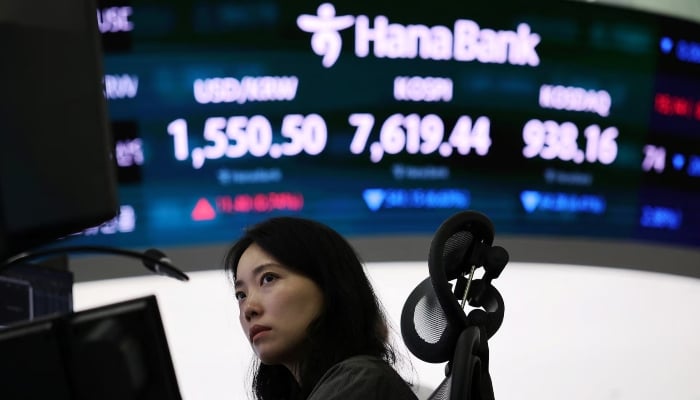
The market has become a key global barometer for confidence in the chip sector and further losses could have broader repercussions.
U.S.-listed shares of South Korean chipmaker SK Hynix rose nearly 14% in their Nasdaq debut on Friday. News that Apple had sued OpenAI and two former employees for theft of trade secrets emerged after the markets closed.
BofA analysts warned that the surge in AI capital spending was eroding cash generation, as hyperscalers had spent $234 billion this year and future free cash flow was expected to turn negative for the first time since at least 2007.
“In that context, many overlooked areas offer materially better value,” they warned in a note.
Rising oil pushed 2-year Treasury yields US2YT=RR to their highest level since early 2025, at 4.2393%, while Fed Fund futures 0#FF: fell 2 ticks, implying 39 basis points of policy tightening by the end of the year.
This, in turn, kept the dollar index firm at 101.13. The euro fell slightly to $1.1394 as Europe is much more dependent on foreign oil than the United States.
The dollar gained 0.2% against the yen to 162.03, regaining some ground lost on Friday when Japanese Finance Minister Satsuki Katayama floated an idea to encourage the $1.8 trillion Government Pension Investment Fund (GPIF) and other retirement vehicles to bring some of their money home.
“The GPIF currently allocates 50/50 between the domestic and offshore market and a pullback even to the pre-pandemic norm, closer to 60/40, would come with a large flow of JPY buying,” said Taylor Nugent, senior economist at NAB.
“However, it is worth noting that while allocations can theoretically be reviewed at any time, they tend to be slow and the investment plan for FY26 is already underway.”
The pound fell 0.2% to $1.3379 ahead of a crucial week in UK politics, as Andy Burnham is expected to be formally anointed Labor leader on Friday and named prime minister on July 20.
In commodity markets, rising yields weighed on non-interest-bearing gold, which fell 1.1% to $4,076 an ounce.