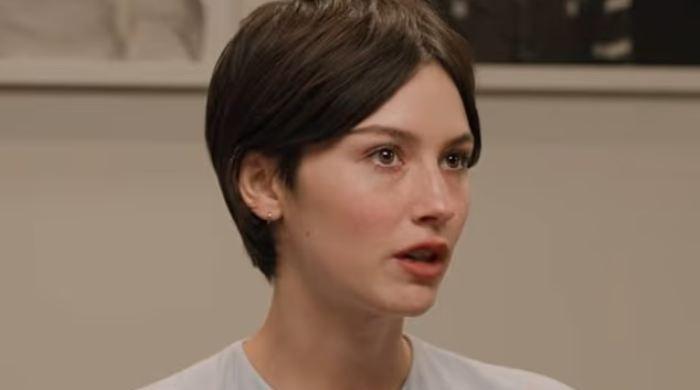
Gracie Abrams found herself at the center of an unexpected online debate this week, not over her music or her views on nepotism, but over her haircut.
The 26-year-old singer, a close friend of Taylor Swift and daughter of director JJ Abrams, was featured in the New York Times. pop transmission to talk about his experience as the so-called nepo baby.
However, several viewers found their attention diverted to her cropped pixie cut rather than her candid reflections on privilege.
The feedback on X was quick and creative. “Why does she always cut her hair like she’s an orphan from 1820 who was sold to a farm?” one user wrote.
Another tied to her boyfriend, actor Paul Mescal, who will play Paul McCartney in an upcoming film. Beatles biopic: “Is his hair like that because Paul Mescal is cosplaying John Lennon for method acting purposes?”
One observer compared her appearance to “the first lady of North Korea,” while others expressed concern about the trajectory of the cuts.
“Gracie Abrams, you are so talented, please don’t go bald,” one wrote, while another predicted she would soon be “bald Abrams because of the way she cuts her hair shorter and shorter.”
Not all of them were cruel.
Several fans came to her defense, with one calling the cut “the most endearing thing about her” and describing it as “embellishment.”
Another said that “short hair looks SO good on her though” and praised her for having the face to rock it.
A third agreed: “not many people have the credentials to look good even with that haircut, if you have it you have to show it off.”
For his part, Abrams has been completely intentional about the transformation.
she said Fashionon last month’s The Run-Through podcast that she’s been “cutting my hair over and over again” and that she “just loves low maintenance,” citing Winona Ryder, Gwyneth Paltrow, and 1990s Chloë Sevigny as her inspirations.
The popcast Her appearance also gave Abrams the opportunity to reflect carefully on the privileges she grew up with as the daughter of JJ Abrams and television producer Katie McGrath.
“Of course that’s been part of the conversation, and I think about what a privilege that is,” he said.
“I had a safety net, and that allowed me to experiment and focus, and I was gifted with having time to spend doing what I loved. I didn’t grow up in financial fear, and that’s the most important thing.”
He noted that his father was the son of television producers, making him a nepo baby in his own right.