
ISLAMABAD:
With the Gilgit-Baltistan Legislative Assembly elections just days away, accusations of pre-election rigging, selective administrative restrictions and institutional friction have intensified, raising new questions about the fairness of the electoral environment in this strategically significant region.
The controversy accelerated after former National Assembly Speaker Asad Qaiser warned that Pakistan Tehreek-e-Insaf (PTI) would take to the streets if the June 7 elections were not held transparently. He also described the party’s decision not to protest after the February 2024 general election as a “mistake”, signaling a more confrontational stance should the outcome of Britain’s election become questionable.
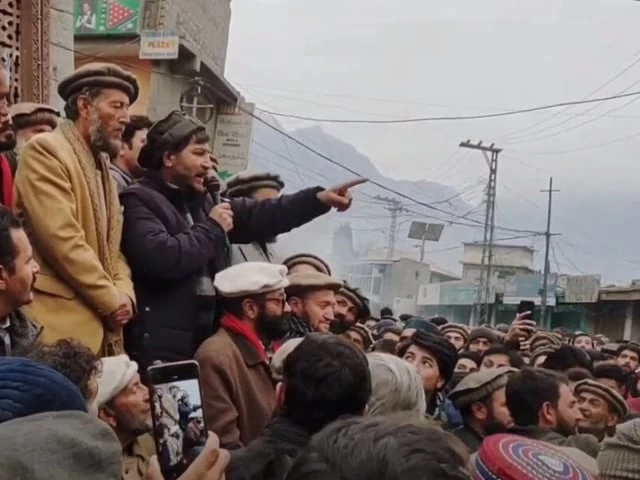
Tensions rose on May 29 when Khyber-Pakhtunkhwa president and PTI MNA Junaid Akbar Khan, along with party legislators Saleemur Rehman, Syed Mehboob Shah and Dr Amjad Ali Khan, were detained at a police checkpoint in Ghizer district while returning from election activities.
Authorities cited the absence of a no-objection certificate (NOC) required for public gatherings. The PTI denounced the move as targeted obstruction, while the police maintained that no arrests had been made.
On Saturday, former National Assembly Speaker Asad Qaiser alleged that the Punjab Police prevented him from reaching the Islamabad airport, causing him to miss his scheduled flight to Skardu.
He condemned the restrictions on the participation of PTI leaders in the election campaign.
By contrast, PML-N leader Khawaja Saad Rafique spoke at a series of public rallies across GB on Sunday as part of his party’s campaign.
Other senior leaders of the ruling coalition, including federal ministers Atta Tarar and Amir Muqam, have also remained active in the election campaign in multiple districts.
The PTI has cited the unrestricted movement and campaigns of rival political leaders as evidence of what it describes as unequal treatment during the electoral process.
In its formal response, the PTI went beyond individual incidents and alleged a broader pattern of pressure on candidates.
The party claims that election commission officials have approached some candidates and urged them to leave the PTI and contest for government-backed candidates.
He also cited a notice issued to former Prime Minister Khalid Khurshid’s mother for displaying election posters as an example of selective application of the law.
PTI candidates are largely contesting the elections as independents after they reportedly failed to bag the party symbol, a fact that has further complicated the party’s electoral prospects in Gilgit-Baltistan.
Meanwhile, the Punjab Police confirmed on May 31 that more than 5,000 personnel would be deployed for electoral duties in Gilgit-Baltistan.
While authorities insist the deployment is part of routine security arrangements, questions have been raised about its scale and whether similar deployments were made during previous elections in the region.
Minister of State for Home Affairs Talal Chaudhry rejected the PTI’s allegations and said the government had no interest in undermining the electoral process.
He attributed the restrictions facing Asad Qaiser to security considerations rather than political motives.
For its part, the UK electoral administration has rejected accusations of bias. Maintaining that the code of conduct was being applied uniformly across all political parties, Chief Election Commissioner Raja Shahbaz Khan said show cause notices had also been issued to Pakistan Muslim League-Nawaz (PML-N) and Pakistan People’s Party (PPP) candidates for violations.
Institutional tensions deepened further when Khyber-Pakhtunkhwa Chief Minister Sohail Afridi wrote to the Chief Justice of Gilgit-Baltistan, deploring the reported restrictions as “deeply disturbing” and requesting judicial intervention to ensure a level playing field.
The chief election commissioner responded harshly on Sunday, stating that the letter had no legal standing and constituted interference in the electoral process.
The public exchange between a provincial chief executive and the UK electoral authority, just days before the election, underlines the growing institutional tension surrounding the election.
The current tensions are rooted in a changing political landscape. The PTI won the 2020 Gilgit-Baltistan elections and formed the government under Chief Minister Khalid Khurshid.
However, his disqualification by the GB high court in July 2023 paved the way for a coalition government comprising PTI dissidents, PPP and PML-N legislators, which subsequently elected Haji Gulbar Khan as prime minister.
The PTI is now seeking a political comeback in the region without its party symbol, under what it denounces as stricter campaign conditions and amid accusations of administrative pressure.
The assembly completed its five-year term in November 2025. The elections, originally scheduled for January 24, were postponed due to severe winter conditions. It was later decided that June 7 would be the only feasible window before the start of Muharram in mid-June, which would otherwise have delayed the elections until late summer or early autumn.
As polling day approaches, the PTI has already signaled that it will not accept a controversial result in GB in the same way it claims to have done following the February 2024 general election.


