- Hydroelectric production increases to 6,000MW: Energy Minister.
- Leghari says the government uses expensive fuel to stabilize supply.
- Total electricity generation amounts to 32,000MW: minister.
Energy Minister Awais Ahmed Khan Leghari said on Friday that electricity load management had ended in the country following the arrival of liquefied natural gas (LNG) supplies, warning that dependence on expensive fuels could place a financial burden on consumers.
In a press conference, he said Pakistan received shipments of LNG a day earlier, allowing authorities to restore normal electricity supply.
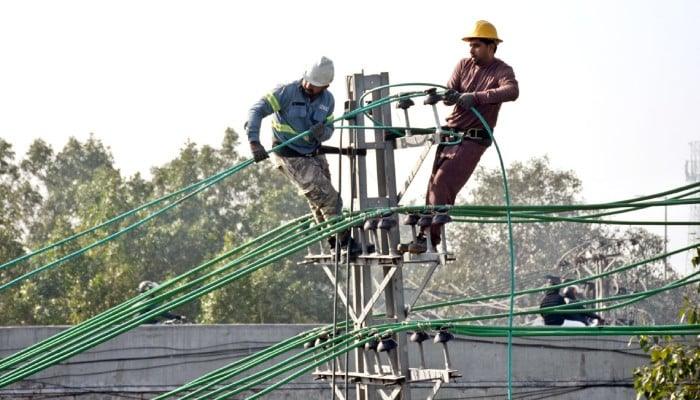
Leghari expressed confidence that unless unexpected technical problems occur in the transmission lines, consumers should not experience any more power outages.
The minister was referring to the LNG carrier Seapeak Magellan, which docked at the Pakistan GasPort terminal and began supplying regasified LNG (RLNG) to the national grid.
Carrying around 140,000 cubic meters of LNG, the vessel docked at the terminal operated by Pakistan GasPort Consortium Limited on Thursday morning. The news reported.
The shipment, arranged by TotalEnergies at a price of $18.40 per mmbtu, marks the first shipment of LNG to arrive in the country since a U.S.-origin shipment arrived weeks earlier.
Government sources revealed that efforts were underway to arrange another shipment of LNG for delivery between May 10 and 12, according to the report. The news.
Meanwhile, the Energy Minister said the government had to buy expensive LNG as gas supplies from Qatar were suspended due to the war in the Middle East.
Leghari said the recent blackouts were a temporary challenge faced by the public, mainly due to gas shortages.
He noted that consumers had experienced load shedding in the last 13-14 days due to supply constraints, but timely measures helped restore balance in the system.
Highlighting the improvements, he said hydroelectric power generation had increased to around 6,000 megawatts from almost 1,000 megawatts previously, helping to stabilize supply.
Leghari noted that water releases from the dams depended on the requirements determined by the relevant authorities and provincial needs.
Furthermore, he explained that expensive furnace oil plants and other fuel-based plants were also operated to overcome the deficit.
The minister said generating electricity through diesel or furnace oil to completely eliminate load shedding would have significantly increased costs, adding that the government would make every effort to protect consumers from expensive electricity.
Leghari also clarified that the country’s total electricity generation is around 32,000 megawatts, not 46,000 megawatts as is sometimes thought.
The minister expressed hope that transmission lines would remain fault-free to maintain uninterrupted supply and said future load shedding could be avoided through proactive planning.