
Google has been synonymous with search for over 25 years, so the way it reinvents search matters to the billions of people who rely on its powerful knowledge graph. Over the past few years, we’ve seen the constant invasion of AI overviews and AI mode into our search experience. Now, while the transition to inserting AI into search results seems complete, I’m concerned that this could disrupt Google Search in ways that no one wants or can reverse. Google, however, tells me that is not the case.
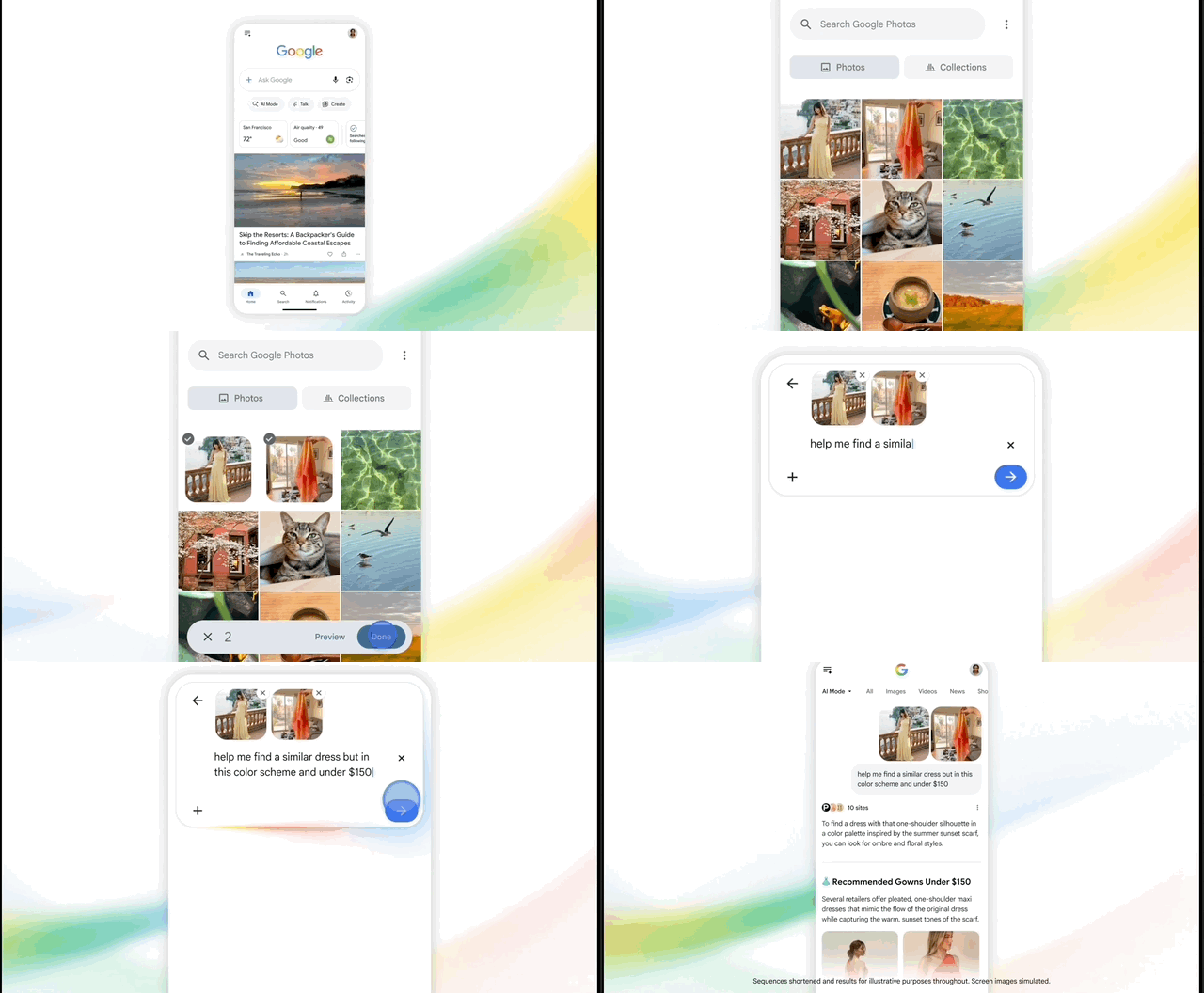
First, Google has now gone on record as saying that in this next chapter of search, the change it revealed during its Google I/O 2026 keynote is, according to Google Search leader Liz Reid, “truly the biggest update to our iconic search box since its debut more than 25 years ago.”

Google vs OpenAI
If Google’s long-term effort was to make AI, specifically various Gemini models, unavoidable in Search, I think the job is almost complete. I don’t blame Google for doing this. After all, OpenAI’s ChatGPT has surged in recent years, with some people saying they “chatted” instead of “googled.”
Verbal status aside, ChatGPT, although increasing, remains at less than 25% of the search market, while Google hovers around 80%. But ChatGPT’s track record is unmistakable in Google’s eyes. You have no choice but to deeply infuse traditional search with AI.
However, how much AI is too much?
There remains a large contingent that wants nothing to do with Google AI or ChatGPT. I wondered if they could opt out, and during a briefing ahead of Google I/O 2026, I posed the question to Google. Later, I received an email response from a Google representative.
“The AI dimension of the Search Box gives you quick access to AI tools and an updated query suggestion system that helps you ask long questions, where an AI answer is likely to be the most useful. Using this new search box doesn’t mean you’ll only get AI answers – you’ll still get a variety of results in Search.”
Using this new search box doesn’t mean you’ll only get AI answers.
What’s notable is that there’s no “No, I’d rather not” option here. You cannot opt out of the smart search box. But that doesn’t mean your search results won’t include some of the classic links and summary results you’ve known and loved since 1998. As a Google spokesperson promised, “No matter what you ask, you’ll still get a variety of Search results, just like you do today.”
However, those results are likely to be below the AI overviews that are already above those classic results. If anything, the overviews can be even richer and more precise thanks to the smart reference guide you received in the search box. Scrolling down below them may not make sense.
It doesn’t take much imagination to imagine a future where AI overviews are your Google search results, and there’s nothing underneath because it’s not as useful, or at least it doesn’t “speak” to you in the same way that overviews do. They seem to get you because they are designed to respond to your intent in a way that traditional search results never could.
For some, this is progress. For me? The jury is still out.
What about you? Share your thoughts on Google’s new smart search box in the comments below.

Follow TechRadar on Google News and add us as a preferred source to receive news, reviews and opinions from our experts in your feeds.


