
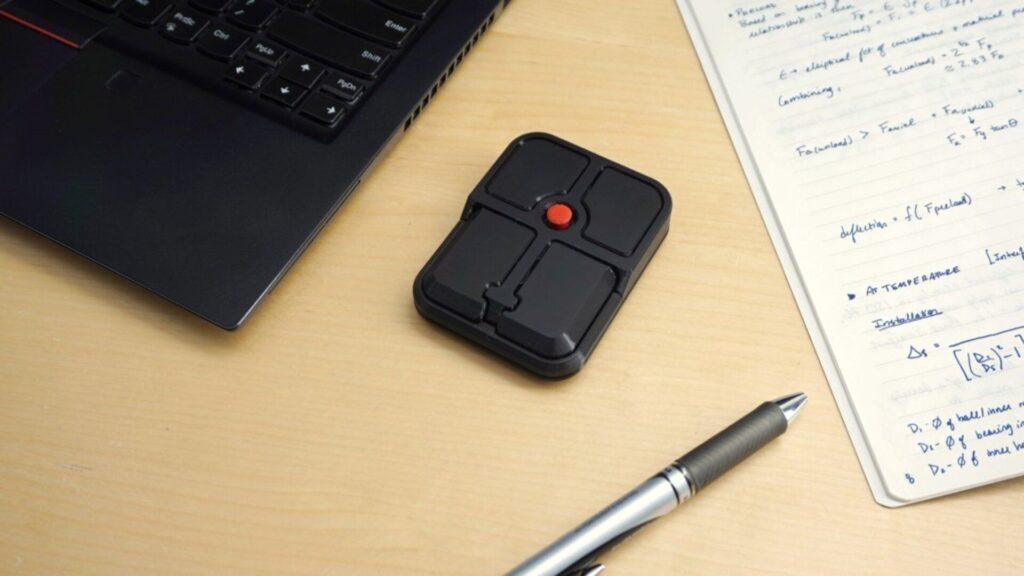
- Ploopy transformed the classic ThinkPad pointer into a standalone desktop controller
- Ploopy Bean uses magnetic sensing hardware and captures 20,000 samples per second
- Open source firmware allows for complete customization of every button and function.
The computer mouse has splintered into countless variations over the decades, but the pressure-sensitive pointing device has remained stubbornly obscure outside a devoted circle of users.
Canadian company Ploopy has now introduced a standalone device built entirely around this fingertip-controlled protrusion.
The Ploopy Bean houses a red pointing device, the same type famously associated with IBM’s and later Lenovo’s ThinkPad keyboards, within a compact chassis along with four programmable buttons.

How the signaling mechanism works
For anyone who’s spent years pushing that little red publication to navigate spreadsheets or code, the design creates instant recognition.
A pointing device relies on pressure rather than scrolling, translating small nudges with your fingertips into cursor movement across a screen, and Bean takes this principle and upgrades the sensing hardware beneath the bump.
Ploopy installed a Texas Instruments TMAG5273 high-precision magnetic sensor that captures 20,000 samples per second and can detect displacements of up to three microns.
The stick itself allows movement of up to eleven millimeters in each axis, which exceeds the range typical of laptop implementations.
This extended travel distance is intended to reduce finger fatigue sometimes reported by users who spend long hours with conventional stylus.
The four buttons around the device use Omron D2LS-21 switches and ship with default assignments for left click, right click, middle click, and click to drag/scroll.
Because Bean runs on a Raspberry Pi RP2040 microcontroller with QMK open source firmware, the functions of those buttons are never locked in place.
Users can reconfigure each button through the VIA web app, a free browser-based tool that requires no coding knowledge.
Anyone willing to do deeper modifications can install completely custom firmware, and Ploopy publishes hardware and software design files on GitHub.
That openness means that a broken component does not necessarily condemn the device to obsolescence, since replacement parts can be manufactured with a 3D printer.
Availability and early demand
Early access orders for Bean opened at CAD$70, but the entire initial batch sold out almost instantly.
Anyone who missed that first wave must now face an 8-week delay in Tier A or a 20-week wait in Tier B.
The question that lingers about this device is whether a standalone pointing device makes sense when placed on the side of a keyboard rather than embedded inside it.
Pointers gained a following precisely because they eliminated the need to move your hands away from the main row.
A separate box next to the keyboard may solve a different problem than the one that made the TrackPoint indispensable in the first place.
Via Liliputing

Follow TechRadar on Google News and add us as a preferred source to receive news, reviews and opinions from our experts in your feeds.


