
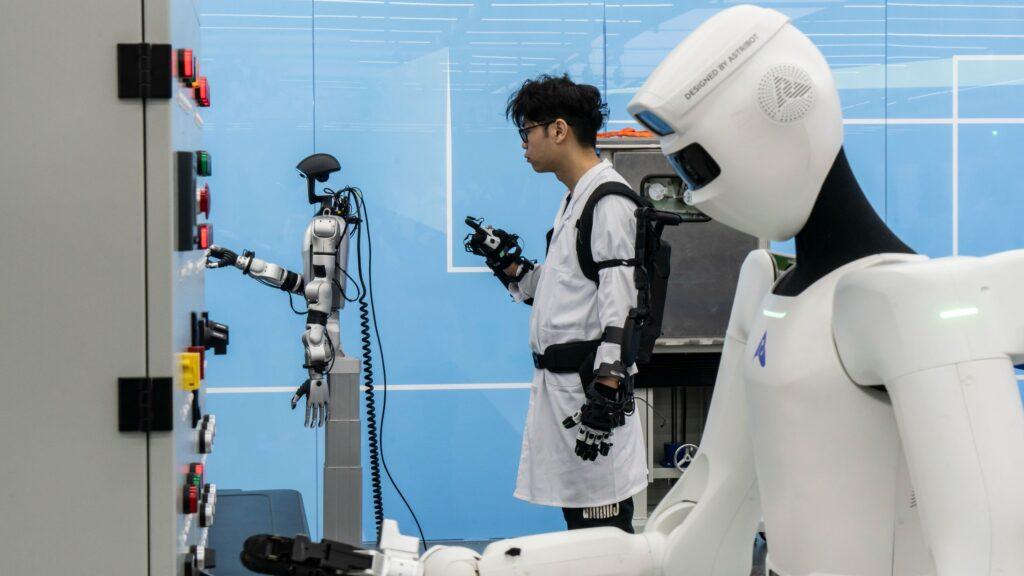
- Ukraine’s Brave1 opened first state subsidy program that treats humanoid combat robots as their own procurement category
- The move, which aims to capitalize on the advances of Ukraine’s already innovative robotics industry, is also mindful of the current limitations of the technology.
- The targets set by Brave1 are modest but offer support of up to £100 million for innovative projects.
Ukraine has become the first country to fund humanoid combat robots, but the move could prioritize future innovations over deployable solutions in the near future.
The devil is in the details: Its own battlefield data shows wheeled and tracked robots executing more than 66,000 missions in 2026 so far, while the only combat-tested humanoid lasted three hours on a charge.
This points to the much humbler beginnings indicated by Ukraine’s own moves in space, even as it continues to expand its bot deployments in the field.

What will Ukraine really buy in 2026?
Ukraine’s move comes in the form of the Brave1 Advantage event to be held in kyiv on July 2, 2026, where the company’s CEO Andriy Hrytsenyuk announced a grant competition for bipedal humanoid robots built in the country and designed exclusively for military tasks.
The move, spearheaded by Brave1, is part of Ukraine’s military push to innovate on a rapidly changing battlefield; Winning designs can receive more than £100 million (approximately $2.4 million) in grants.
Brave1 was founded in April 2023 by six ministries and is now being transferred from the Ministry of Digital Transformation to the Ministry of Defense; has become kyiv’s main mechanism for turning frontline needs into funded engineering projects.
CEO Andriy Hrytsenyuk described this as a must-have industry for Ukraine, saying: “We see how quickly the humanoid robotics industry is developing around the world, in China and the United States. We see that such robots have value in strengthening our military capabilities. That is why we are moving in this direction.”
The move appears to be a long-term robotics play, and Defense Minister Mykhailo Fedorov also weighed in earlier using three words: War must become a format in which “technology fights technology.”
However, the reason one should expect Wall-E instead of Terminator is that Ukraine already has the largest ecosystem of ground robots in any active war, and none of them walk on two legs.
Ukraine has also made significant progress, such as containing Russian attackers in key positions and capturing an entire fortified Russian position with the help of drones and ground robots, marking the world’s first total takeover of territory by robots.
For now, the only humanoid that has been in the war in Ukraine is the Phantom MK-1, built in San Francisco by a startup, Foundation Future Industries.
The MK-1 weighs only about 20 kg, has no waterproofing, and provides approximately two to three hours of battery life, compared to infantry missions lasting eight to twenty-four hours, making it somewhat unsuitable for the majority of combat operations Ukraine currently conducts on the front lines.
Thus, Ukraine’s investment in humanoids may not result in fruitful short-term gains, but rather indicate that it is bucking the trend, so to speak, even as Goldman Sachs projects nearly 50,000 to 100,000 shipments of non-combatant humanoids globally this year, even as military planners anticipate putting one in a trench in the near future.

Follow TechRadar on Google News and add us as a preferred source to receive news, reviews and opinions from our experts in your feeds.


