
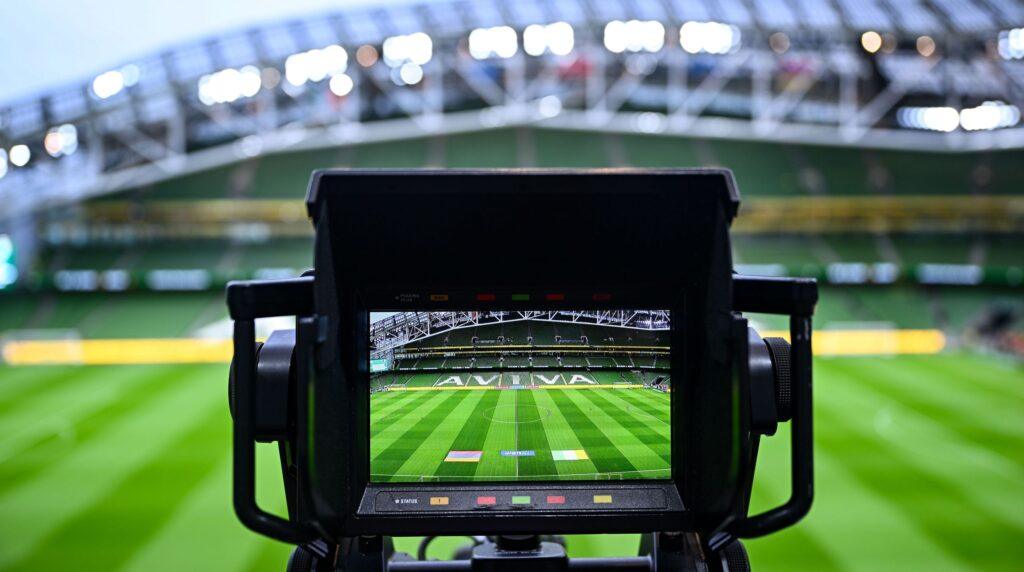
For football fans, the 2026 FIFA World Cup is shaping up to be the most accessible tournament ever – but only if you live in the right country.
As our infographic below shows, not all streaming services are created equal when it comes to free World Cup coverage.
While some countries will be able to watch each of the tournament’s 104 matches without paying a cent, others, like the United States, will have access to only a handful of free games, or none at all.
Because? Well, with the 2026 World Cup expanding to 48 teams and 104 matches across the United States, Canada and Mexico, those broadcast rights have become more valuable than ever: around $4 billion globally.
The biggest winners? As you can see in our infographic below, it is the United Kingdom, Australia, Brazil and Porcelain.
Where to find the most FREE World Cup streams
In the UK, football fans can watch all 104 matches for free thanks to the long-standing partnership between BBC and ITV, with games split between BBC iPlayer, ITVX and traditional TV channels. The broadcasters recently extended their World Cup rights to the 2026 and 2030 tournaments.
Australian viewers will also be in for a treat. SBS continues its tradition of comprehensive World Cup coverage this year, while creator-led Brazilian broadcaster CazéTV has secured the rights to stream all 104 games for free on YouTube, including something neither the BBC nor ITV offer: 4K coverage.
Germany and France also remain strong free-to-air television markets, although viewers will not watch every match. Public broadcasters ARD and ZDF share rights in Germany, while French and Spanish viewers get a mix of free and pay TV coverage.
The streaming revolution has arrived
One of the most fascinating trends coming out of the 2026 World Cup is how streaming platforms are becoming as important as traditional broadcasters.
In the United States, Fox remains the main English rights holder, but free streamer Tubi is playing a much bigger role than many expected. The service has launched a dedicated FIFA World Cup hub and will offer selected matches and extensive tournament content without a subscription required.
This is a major change from previous World Cups, when fans were largely tied to cable packages.
Brazil offers perhaps the clearest vision of the future of streaming football. Instead of relying entirely on conventional broadcasters, millions of fans will watch matches through YouTube-based creator channels, demonstrating how digital rights deals are becoming more widespread.
One word: regulation. In the United Kingdom, the FIFA World Cup is designated as a protected sporting eventmeaning live coverage must remain available on free-to-air television. That makes Great Britain one of the most fan-friendly World Cup markets worldwide.
So if you’re traveling outside the UK during the World Cup, make sure you get a good VPN to watch all the free BBC/ITV broadcasts. We recommend Norton VPN for the World Cup – prices start at £29.99 for a whole year, which is a very good deal. Or $39.99 if you buy from the US.
Elsewhere, broadcasters face different business realities. In North America, premium sports rights are typically tied to subscription services. In some regions, broadcasters focus on national team matches rather than purchasing rights to each match.
That’s why countries like New Zealand receive only a selection of free-to-air matches, while viewers in India and Canada currently have little or no free live coverage available through domestic rights deals. As the infographic shows, the gap between the most generous and least generous markets is enormous.
Can I watch the World Cup on YouTube?
Yes, but there is a great catch.
For 2026, FIFA has reached an agreement that makes YouTube a “preferred platform” for the 2026 World Cup. Under the agreement, official broadcasters around the world can choose to live broadcast the The first 10 minutes of each World Cup match for free on their YouTube channels.. It is the first time that FIFA allows it.
The idea is to bring football to as many screens as possible. But in reality, getting the first 10 minutes of the game for free and then cutting off the stream could be counterproductive. You can see how some angry fans may resort to illegal streams out of frustration.
The deal goes beyond the first 10 minutes. FIFA says broadcasters may also be allowed to broadcast a select the number of complete matches on YouTubealthough that will vary by territory and rights agreements.
It remains to be seen whether FIFA’s YouTube experiment will be a success. But the good news is that the general trend is moving towards greater accessibility to World Cup broadcasts, not just linear television.
And for the fans, that’s a victory regardless of who lifts the trophy.
World Cup 2026 Match Finder
Find your team in the chart below to find out when they play and which country has free streaming….
More about the 2026 World Cup…
We test and review VPN services in the context of legal recreational uses. For example: 1. Access a service from another country (subject to the terms and conditions of that service). 2. Protect your online security and strengthen your online privacy when you are abroad. We do not support or tolerate illegal or malicious use of VPN services. Future Publishing does not endorse or approve the consumption of paid pirated content.


