
He says Islamabad believes in coexistence and dialogue; The May conflict demonstrated the professionalism of the military
ISLAMABAD:
Pakistan has categorically rejected and condemned “the highly inflammatory, baseless and irresponsible comments” recently made by India’s External Affairs Minister Subrahmanyam Jaishankar on the Pakistani Armed Forces.
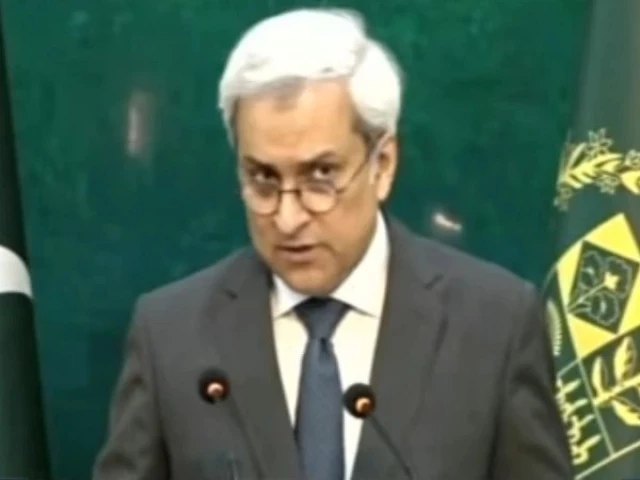
In a press statement issued on Sunday, Foreign Ministry Spokesperson Tahir Andrabi said Pakistan is a responsible State and all its institutions, including the armed forces, are a pillar of national security, dedicated to safeguarding the country’s sovereignty and territorial integrity.
The FO spokesperson was responding to Jaishankar, who, while speaking at a summit in New Delhi on December 6, said that most of India’s problems with Pakistan stemmed from its military establishment, which he claimed had cultivated and sustained deep-rooted animosity towards India.
“When you look at terrorism, when you look at the training camps, when you look at the kind of policy of almost ideological hostility towards India, where does that come from? It comes from the [Pakistan] army,” the Indian minister reportedly said.
His comments came months after Pakistan and India engaged in a brief but intense military confrontation, during which the nuclear-armed neighbors exchanged artillery and missile fire and deployed drones and fighter jets.
The four-day standoff began after India launched missile strikes inside Pakistan on May 7 in what it claimed was retaliation for a militant attack on tourists in the Pahalgam area of controlled Kashmir on April 22.
On May 10, Pakistan carried out a series of attacks against several military sites inside India. New Delhi agreed to a ceasefire the same day after the US intervention. During the clash, Pakistan shot down seven Indian fighter jets, including the Rafale.
The FO spokesperson said that the May conflict vividly demonstrated the professionalism of the Pakistan Armed Forces as well as its determination to defend the homeland and people of Pakistan against any Indian aggression in a proper, effective but responsible manner. No propaganda can deny this truth.
Andrabi said the Indian leadership’s attempts to defame Pakistan’s state institutions and its leadership were part of a propaganda campaign designed to distract from India’s destabilizing actions in the region and beyond, as well as state-sponsored terrorism in Pakistan.
“This inflammatory rhetoric only exemplifies the extent of India’s disregard for friendship, peace and stability in our region,” the spokesperson added.
He said that instead of making misleading comments about the Pakistan Armed Forces, India should investigate the fascist and revisionist Hindutva ideology that had unleashed a reign of mob justice, lynchings, arbitrary arrests and demolition of properties and places of worship.
“The Indian state and leadership have become hostages to this terror in the name of religion. Pakistan believes in coexistence, dialogue and diplomacy. However, it remains united and resolute in its intention and ability to safeguard its interests and sovereignty,” he added.
India and Pakistan have fought three wars since their independence in 1947. They have also been involved in countless border skirmishes and major military engagements, including the 1999 Kargil conflict.
The four-day conflict in May 2025 ended with a US-brokered ceasefire, after Washington said both sides had expressed a willingness to engage in dialogue.
Pakistan said it was willing to discuss all outstanding issues, but India rejected talks and unilaterally suspended the Indus Waters Treaty, a 1960 water-sharing agreement brokered by the World Bank that allocated three eastern rivers to India and three western rivers to Pakistan.


