
Accuses government of not inviting meetings, says commission should increase when fuel prices rise
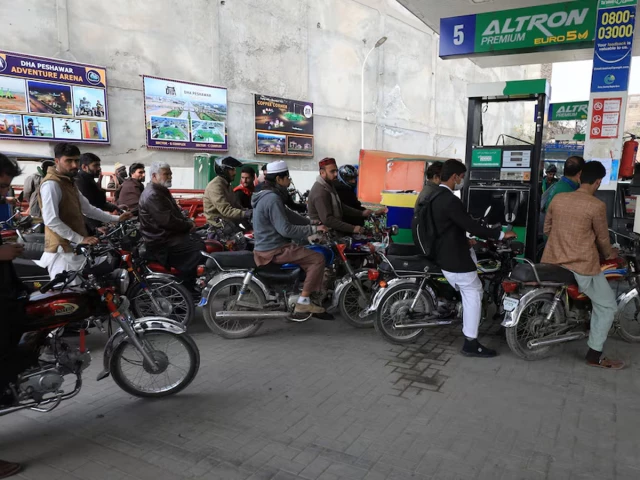
People wait their turn to fill up with fuel at a gas station in Peshawar. Photo: Reuters/ Archive
ISLAMABAD:
Pakistan Petroleum Dealers Association (PPDA) and Pakistan Petrol Pump Owners Association (APPPOA) on Tuesday warned of closure of petrol pumps across the country if their demands for increased commission are not met.
Addressing a press conference at the Islamabad Press Club, PPDA president Abdul Sami Khan said the association had considered a strike but had abstained in the public interest. He added that they were not invited to meetings or consulted.
He demanded that his commission be increased to 8 percent, accusing the government of trying to extract all taxes from the oil industry.
Khan said a strike call would be announced after their next meeting. He added that all gasoline pumps and distributors were united, warning that under such conditions, they could sell their pumps and close operations.
He further said that the Balochistan government had declared that petrol would be available at Rs 280 per liter in the province, alleging that Iranian petrol was entering the market and its price was being fixed locally.
APPPOA president Humayun Khan said their main demand was the introduction of proportional commission. He said his commission should increase when fuel prices rise, adding that his business was becoming unsustainable under the current system.
Humayun said they could not continue selling petrol at the existing commission rates and urged the government to address their demands before petrol pumps began to close.
He also claimed that several unrelated institutions in Punjab were inspecting petrol pumps, adding that the government was venting its frustration on traders under pressure from US President Donald Trump.
He said petrol pump owners were currently receiving a commission of Rs 8 per litre, adding that multiple taxes were deducted from this amount.
Humayun said his business was also being severely affected by the influx of smuggled fuel. He questioned why authorities tasked with curbing smuggling had not been able to stop it and asked who was responsible for controlling smuggling at the borders.
In addition, he stated that oil marketing companies were hoarding gasoline. He added that if distributors did not benefit at all, it would be impossible to continue the business.


