
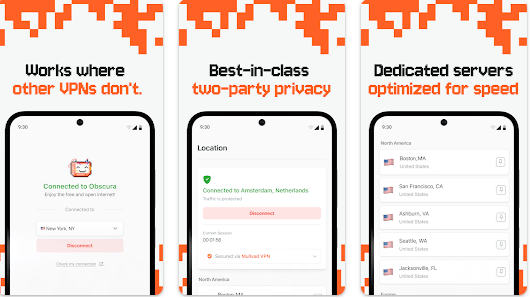
- Obscura VPN now available for Android users via Google Play, Obtainium
- Users can also claim a 25% discount for a limited time.
- Dedicated applications are currently being developed for Windows and Linux.
If you’ve been looking for the best VPN to protect your mobile device, a new and highly secure contender has just entered the chat. Obscura VPN has officially landed on Android, bringing its unique flavor of privacy to the world’s most popular mobile operating system.
Previously limited to iOS and macOS, the provider is now available for download on Google Play and the open source Obtainium app manager. It marks a major milestone for the privacy-focused company, which aims to protect the vast amounts of personal data and location history stored on our smartphones.
“Your phone contains more of your personal life than almost anything else you have,” the company said in a blog post announcing the launch. “You take it everywhere, which means apps and other services can create a detailed record of your location. That activity deserves to remain private, and that’s why we created Obscura.”
To celebrate the launch of Android, the provider is offering a 25% discount to all users for a limited time. You can secure the deal by using promo code ANDROID26 at checkout.
The development team noted that they are currently working on bringing the app to other alternative Android stores in the future. A company spokesperson also told TechRadar that native apps for Windows and Linux are officially in development, although no firm release date has been set.
Meanwhile, those on unsupported platforms don’t have to miss out entirely. Windows and Linux users can still connect to the network using a WireGuard manual guide provided by the company, ensuring they can benefit from its top-notch encryption while waiting for the dedicated software.
What makes Obscura VPN different?
If you are not familiar with Obscura VPN, the provider burst onto the scene in early 2025, promising to be “private by design” and “circumvent internet restrictions.” The goal was to address the inherent trust issues found in the cybersecurity industry as a whole.
Its notable feature is a two-party relay architecture. Traditional VPNs act as a single intermediary, meaning that, in theory, the provider knows both your real identity and your browsing history. Obscura promises to fix this by splitting the trip in two.
BIG LAUNCH: Obscura VPN is now on Android 🥳 To celebrate, we’re offering 25% off any Obscura subscription or recharge with code ANDROID26👇 Links below for Google Play or Obtainium (more stores coming soon) pic.twitter.com/gIlAiqWlC6May 19, 2026
Obscura manages the inbound hop and encrypts your traffic using the widely trusted WireGuard protocol. Your data is then passed to a separate outbound server operated by the highly respected VPN Mullvad, which ultimately connects you to the internet.
“This separates ‘who you are’ from ‘what you do,’ meaning neither party can link your identity to your browsing,” Obscura VPN founder Carl Dong previously told TechRadar.
Beyond its unique server configuration, Obscura does not ask for any personal information upon registration; no name, no email and no credit card details. It also takes advantage of the QUIC protocol to bypass strict Internet censorship. This new technology helps disguise VPN connections as normal web traffic without the performance drops associated with older methods.
The service’s strict privacy claims aren’t just marketing words, either. Late last year, Obscura VPN passed a comprehensive independent audit by leading security company Cure53. Auditors spent 20 days investigating the source code and confirmed that its architecture had “no significant security vulnerabilities.”


