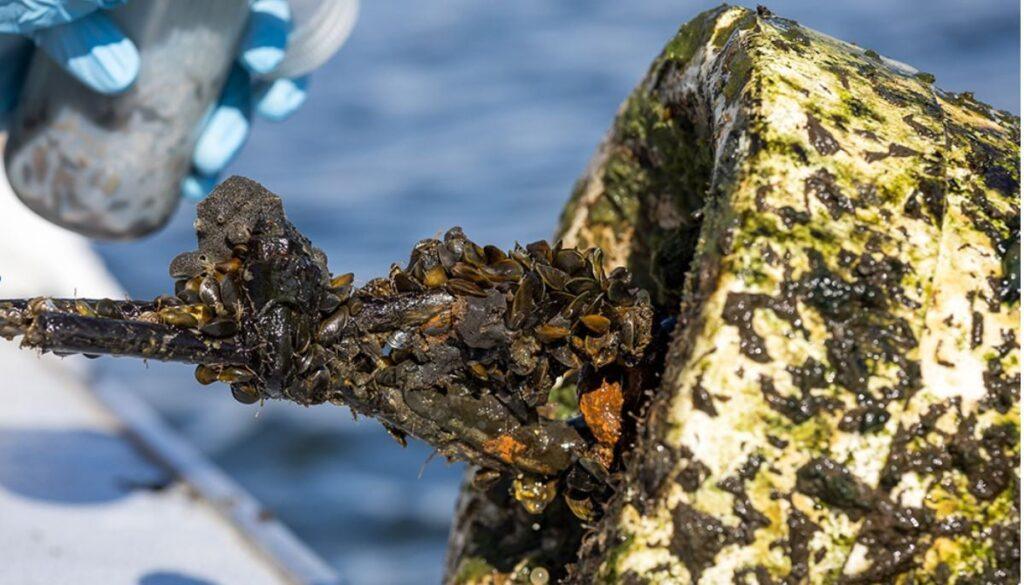
A rapid invasion of golden mussels is wreaking havoc on California’s water infrastructure, sparking local emergencies and prompting urgent action at the state Capitol.
First discovered in California in 2024, the invasive species has since spread throughout a water district’s entire distribution system in less than a year.
To address it, authorities have launched a 30-day chemical eradication campaign that costs around $3 million. Additionally, local emergencies have been declared in Kern and San Joaquin counties.
What are golden mussels?
Golden mussels, scientifically known as Limnoperna Fortunei, are freshwater mollusks native to China and Southeast Asia. They grow up to 1.75 inches and have wedge-shaped shells that range in color from golden yellow to dark brown.
Golden mussels adhere to hard underwater surfaces with the help of byssal threads. Due to their dense and sharp colonies, they clog water inlet pipes, dam screens, hydroelectric facilities and ship engines, causing significant damage to infrastructure.
They also consume significant amounts of microscopic plants and animals, starting an ecological disaster when native fish and shellfish starve.
It is not an isolated case either; Nationally, federal agencies estimate the cost of damage caused by invasive species at more than $120 billion a year. Nearly 14,700 non-native species have been documented in the United States.
Assemblywoman Rhodia Ransom at the California State Capitol introduced Assembly Bill 2032 to strengthen the state’s response. For now, agencies face lengthy permitting processes before they can even remove mussels from infrastructure.
Ransom said: “Water managers on the ground are ready to go.”
“They want to remove the mussels and try new treatments, but they can’t do it without a bill like this being passed.”
Officials are asking the public to help by thoroughly cleaning boats and equipment before moving between waterways, never releasing exotic pets into the wild, and avoiding transporting plants and firewood across state lines.