“There is There is no doubt that this is the most serious disruption in the response to HIV since the world came together to fight this disease.”said Winnie Byanyima, Executive Director of UNAIDS.
Every week, 3,000 adolescent girls and young women in sub-Saharan Africa contract HIV, one of the clearest signs that the world is failing to reach some of the most vulnerable populations.
“Funding cuts, combined with the reduction of civic space and the increased criminalization of marginalized populations have come together to create the The biggest storm the HIV response has ever seen“, said.
People cannot access treatment and the virus continues to spread, UNAIDS concluded.
Sharp drop in global attendance
Here are some key points of the World AIDS report: United to end AIDS:
- Global development assistance for multiple countries fell 23 percent in 2025, the steepest drop ever recorded
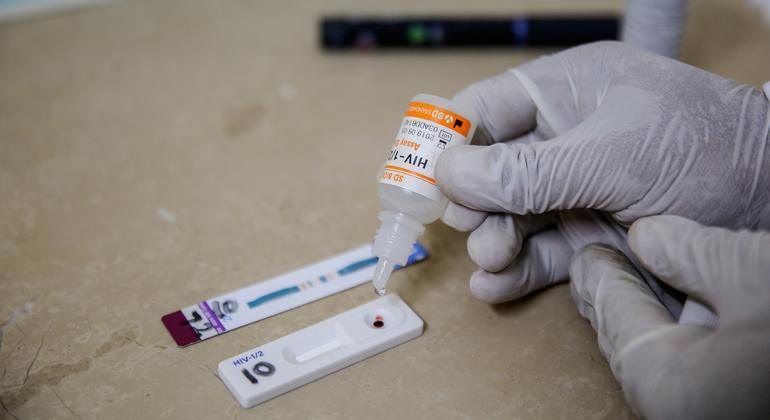
- HIV programs have been greatly affected, with Testing programs fell 22 percent. in high-load environments between 2024 and 2025
- Funding for condoms has been reduced by more than 90 percent in some cases.
- In 2025, two more countries introduced criminalization related to same-sex sexual activity, and one country increased penalties for same-sex sexual activity in 2026.
- PrEP (daily medication to prevent HIV) uptake fell sharply falling by 38 percent between 2024 and 2025 in 62 countries reporting to UNAIDS.
Read the full report here.
Rights recede as prevention and care are dismantled
The report also shows a dangerous rollback of rights, with criminalization of marginalized populations increasing for the first time since UNAIDS began tracking these trends.
Furthermore, HIV prevention is being dismantled at the very time the world needs to scale it up, especially as new, revolutionary, long-acting prevention innovations come to market.
Prevention was already underfunded: only 11 percent of total HIV spending in 2024 and that limited investment is now shrinking further with no sign that domestic financing will fill the gap, the report said.
Fragile success
The response to HIV has been the biggest success story in global health over the past 25 years:
- AIDS-related deaths have been reduced by 56 percent from 1.3 million in 2010 to 570,000 in 2025
- New infections have dropped by 43 percent since 2010 to 1.2 million
- 78 percent of the 40.9 million people living with HIV are currently receiving treatment.
But this success is fragile.
Almost nine million people do not receive treatment.
At a time when external funding is shrinking, treatment progress is also extremely weak.
Uneven progress amid funding cuts
A recent study of 79 community-led organizations in 47 countries and three continents (Asia Pacific, Latin America and Africa) showed:
- 50 percent drop in community support services for people living with HIV
- 82 percent reduction in services for sex workers
- Service reductions of 85 percent for men who have sex with men.
When communities lose funding, the entire response loses reach, confidence and effectiveness, according to UNAIDS, which also reported uneven progress alongside rising infections, including in Eastern Europe, Central Asia, the Middle East, North Africa and Latin America.
“We know how to end AIDS,” said Ms. Byanyima.
“The question now is political: will we invest or retreat??”
‘We can still end AIDS by 2030’
At the United Nations General Assembly High-Level Meeting on HIV/AIDS on 22-23 June, countries will adopt a new political declaration to end AIDS within the next five years.
The new declaration will contain new targets for 2030 of the Global AIDS Strategy.
The overall goals include reaching 40 million people on antiretroviral treatment by 2030, ensuring that 20 million people have access to HIV prevention medicines, and ensuring that all people receive services free of stigma and discrimination.
“If we follow the Global AIDS Strategy and UN Member States commit to adopting a strong political declaration to guide the response over the next five years, we can still end AIDS by 2030,” said the head of UNAIDS.
“However, If we do not act, we risk reversing decades of hard-fought progress..”