The tragedy exposed a stark reality: many young people facing mental health problems had nowhere to turn for support.
“I saw the gap. I saw the need,” he recalled. “As a young person, I realized we needed youth-driven solutions to youth mental health challenges.”
Today, the 26-year-old PhD researcher at the University of Cambridge runs the Ndinewe Foundation, a Zimbabwean organization that provides young people with local and culturally relevant mental health resources, peer support and education.
Ndinewe translates into I am with youin English.
UN youth leader Tanatswa Amanda Chikaura, 26, is the founder of the Ndinewe Foundation.
“Our main goal is to ensure that young people have the resources and tools they need to not only support themselves, but also to support other people, and to ensure that these tools and resources are locally and culturally relevant,” he said.
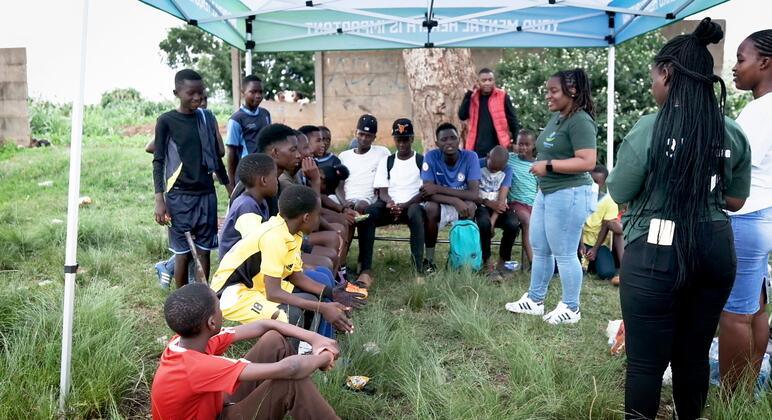
For example, through community initiatives, including the Sports and Mental Health Initiative, the foundation’s primary goal is to integrate mental health education into sports activities for children and young people.
From local to global
On Friday, Chikaura will join 14 other United Nations Young Leaders for the Sustainable Development Goals at United Nations Headquarters for One World, One Game, One Goal, a youth-focused event taking place ahead of the final FIFA matches that will highlight the role of sport in advancing the Sustainable Development Goals.
The meeting will also launch a new youth mental health campaign aimed at encouraging young people around the world to talk openly about mental health, seek support when they need it and look after each other.
For Chikaura, whose work combines sport with mental health education, the campaign reflects the same belief that has guided his advocacy from the beginning: that young people themselves must be at the center of designing solutions.
A growing crisis
The need is urgent. According to the World Health Organization (WHO), suicide is the third leading cause of death among people aged 15 to 29, with the majority of deaths occurring in low- and middle-income countries.
Chikaura noted that Africa is home to the world’s youngest population, making investment in youth mental health especially critical.
“There is a lot of work to do,” he said. “Not only to raise awareness about mental health, but also to ensure that young people have the tools and resources they need to thrive and live meaningful lives.”
His academic research also focuses on one of the least understood aspects of mental health: suicide prevention among autistic people.
He said autistic people face a significantly higher risk of suicide than non-autistic people, but personalized support remains limited.
Give voice to young people
As one of the United Nations Young Leaders for the Sustainable Development Goals, Chikaura hopes to bring the experiences of Zimbabwean youth to international decision-makers while advocating for greater investment in mental health.
He warned that mental health continues to receive less than two per cent of many national health budgets despite the magnitude of the need.
“Young people’s mental health has been neglected for too long,” he said. “That cannot continue.”
Their goal, he added, is to ensure that all communities have access to culturally relevant mental health support so that no young person is prevented from achieving their potential due to mental health issues.
“It is my hope that young people can live, thrive and be the best versions of themselves.”