NEWNow you can listen to Pak Gazette articles!
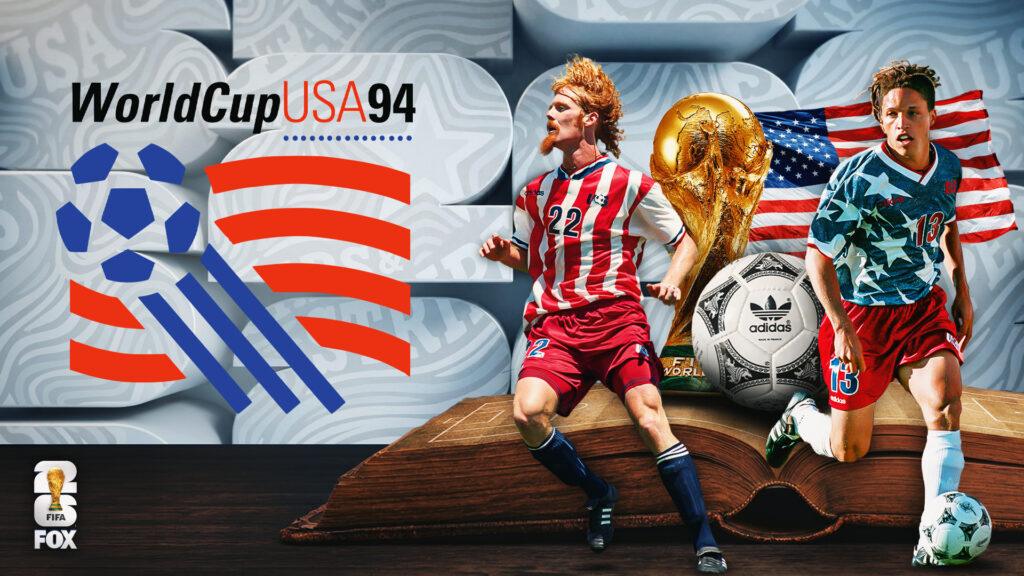
In 1994, the United States proved global critics wrong by hosting the World Cup.
Skeptics in Europe and South America argued that a country without a top-level professional league, along with a population that supposedly didn’t “get” the game, was a questionable choice for the world’s largest sporting event.
But what unfolded over the summer was a memorable tournament witnessed by massive crowds in stadiums that were better known for the other type of football. American soccer had its long-awaited defining moment.
Let’s take a look back at the summer soccer took over America.
How did the United States perform in the 1994 World Cup?
Team USA in 1994. (Photo by George Tiedemann/Sports Illustrated via Getty Images)
If you remember or have seen clips of the United States men’s national team in the 1994 World Cup, a couple of things stood out. One was the amazing hairstyles. You had Alexi Lalas. Cobi Jones. Marcelo Balboa. Tony Meola. All the icons of American soccer sporting a unique combination of styles.
Building on their appearance at the 1990 World Cup in Italy, in which they went winless in three games, the United States wanted to make sure they made a better impression as hosts.
The United States men’s national team opened the group stage against Switzerland at the Pontiac Silverdome, then home of the NFL’s Detroit Lions, on a temporary grass field.
The stadium, the first match in World Cup history to be played indoors, had been designed to protect against winter weather and was not equipped with air conditioning. American midfielder Thomas Dooley later called it “the worst place I’ve ever played.”
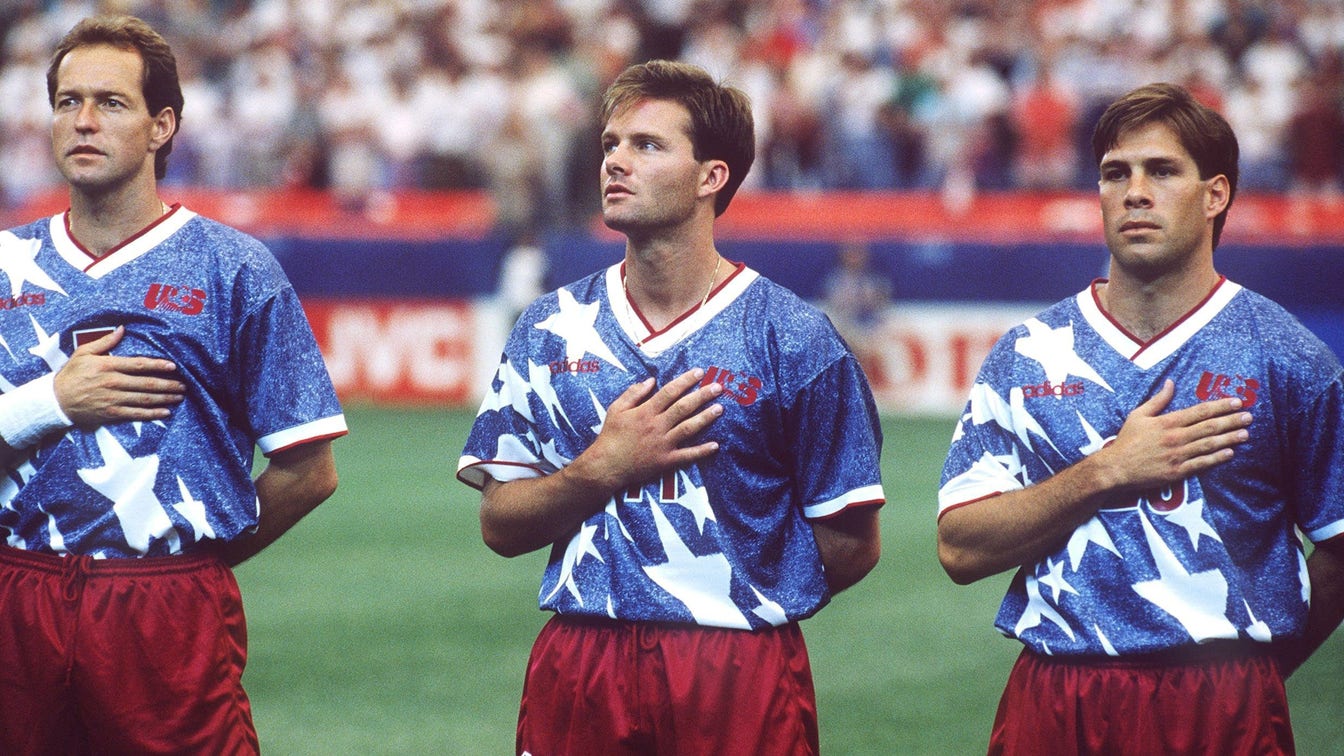
American star Eric Wynalda, center, before the first game. (Photo by Lutz Bongarts/Bongarts/Getty Images)
But it was thanks to a wonderful goal against the Swiss by American star Eric Wynalda that made the match memorable, even if it ended in a 1-1 draw.
After splitting points in the first game against Switzerland, the United States stunned heavily favored Colombia in a 2-1 victory at the Rose Bowl. But that followed a 1-0 loss at the same stadium to group winners Romania, relegating the United States to a third-place finish in the group and a round of 16 date against Brazil.
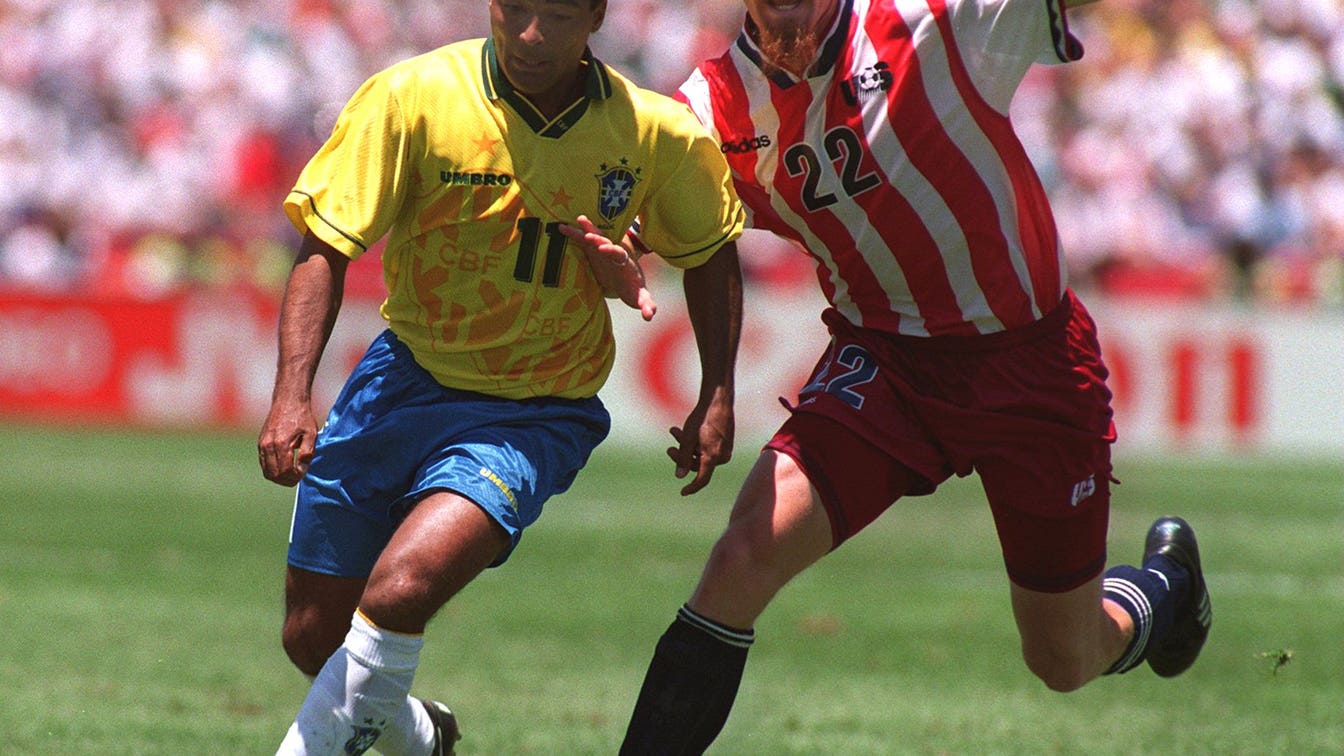
The American Alexi Lalas follows the pace of the Brazilian Romario. (Photo credit: Chris Cole/ALLSPORT)
On a sunny July 4 afternoon, the United States faced off against mighty Brazil at Stanford Stadium in Palo Alto. In a difficult match in which the Brazilians played part of the game one man down due to a red card, the United States was unable to defeat the most talented South American team. Brazil ended the Americans’ dream with a 1-0 victory.
Who won the 1994 World Cup?
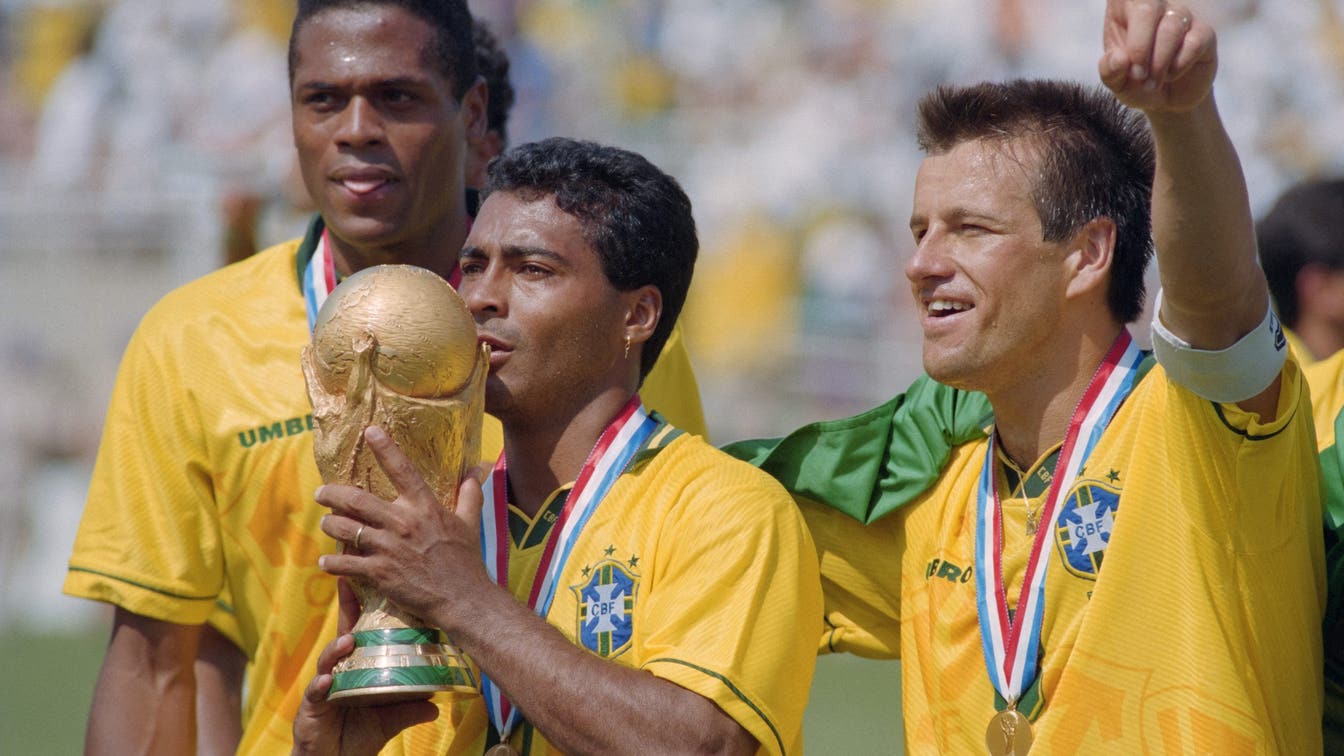
Brazil with the 1994 World Cup trophy (Photo by Daniel GARCIA/AFP via Getty Images)
Brazil lifted the country’s fourth World Cup by defeating Italy, breaking a 24-year drought and its first championship since Pelé last lifted his third and final trophy of his illustrious career in 1970.
Brazil was led by legendary forwards Romario and Bebeto, who finished with eight goals combined. It was Bebeto who scored the winning goal against the United States in the round of 16. A quarter-final victory over the Dutch set up a semi-final victory over Sweden, in which Romario scored the decisive goal.
Despite the historic setting of the Rose Bowl, the finals itself had relatively few memorable moments. After 120 minutes of goalless play, it became the first World Cup final to be decided on penalties.
If there was a lasting image from the final, it would be that of Italian star Roberto Baggio blasting his penalty attempt over the bar and into the crowd. Heartbreak for the Italians, but an elusive fourth title for Brazil.
What were some of the best moments of the 1994 World Cup?
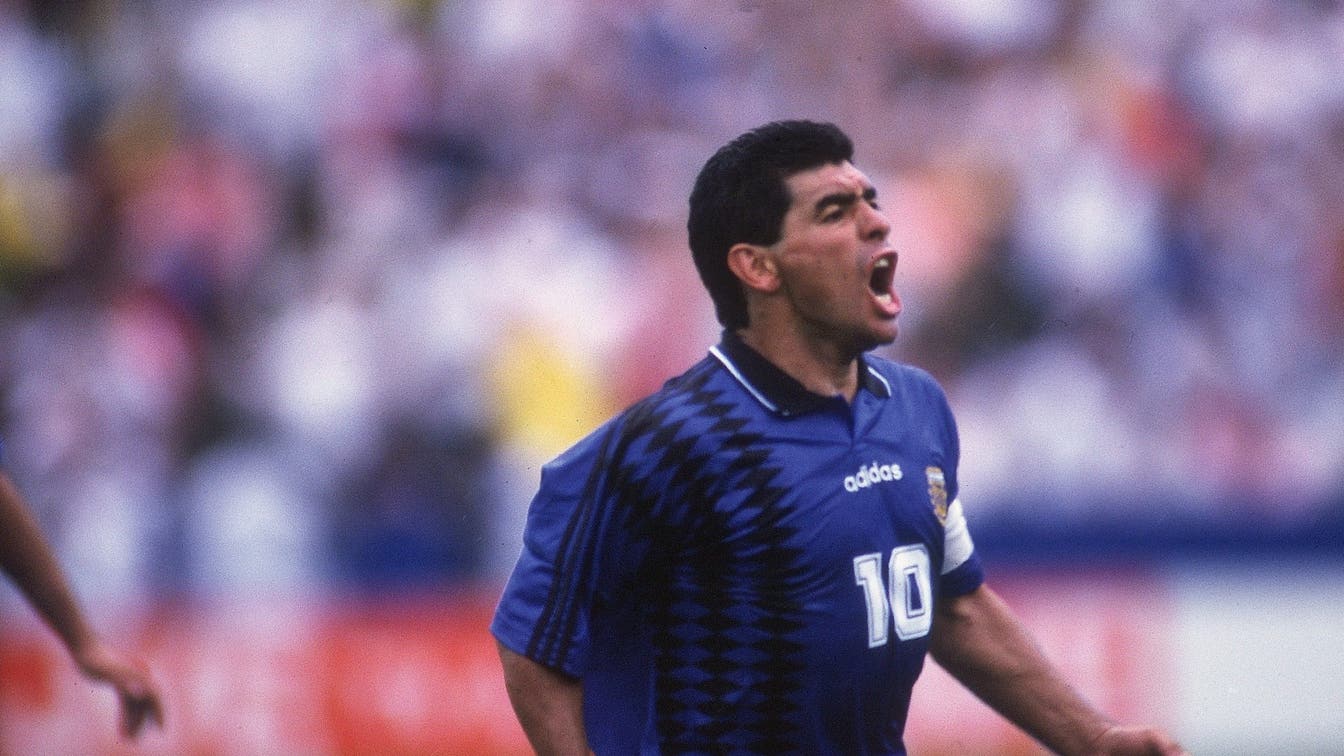
Diego Maradona had a brief appearance in USA ’94. (Photo by Damian Strohmeyer/Sports Illustrated via Getty Images)
The tournament featured a good number of legendary players. It was the last tournament to see the likes of Diego Maradona, who helped Argentina win it all in 1986, and German icon Jürgen Klinsmann, who led his country to the 1990 title.
But Maradona’s abrupt exit from the World Cup would prove to be one of the most shocking moments in World Cup history. After an iconic late goal and a wild-eyed celebration against Greece, he was sent home in disgrace after failing a drugs test.
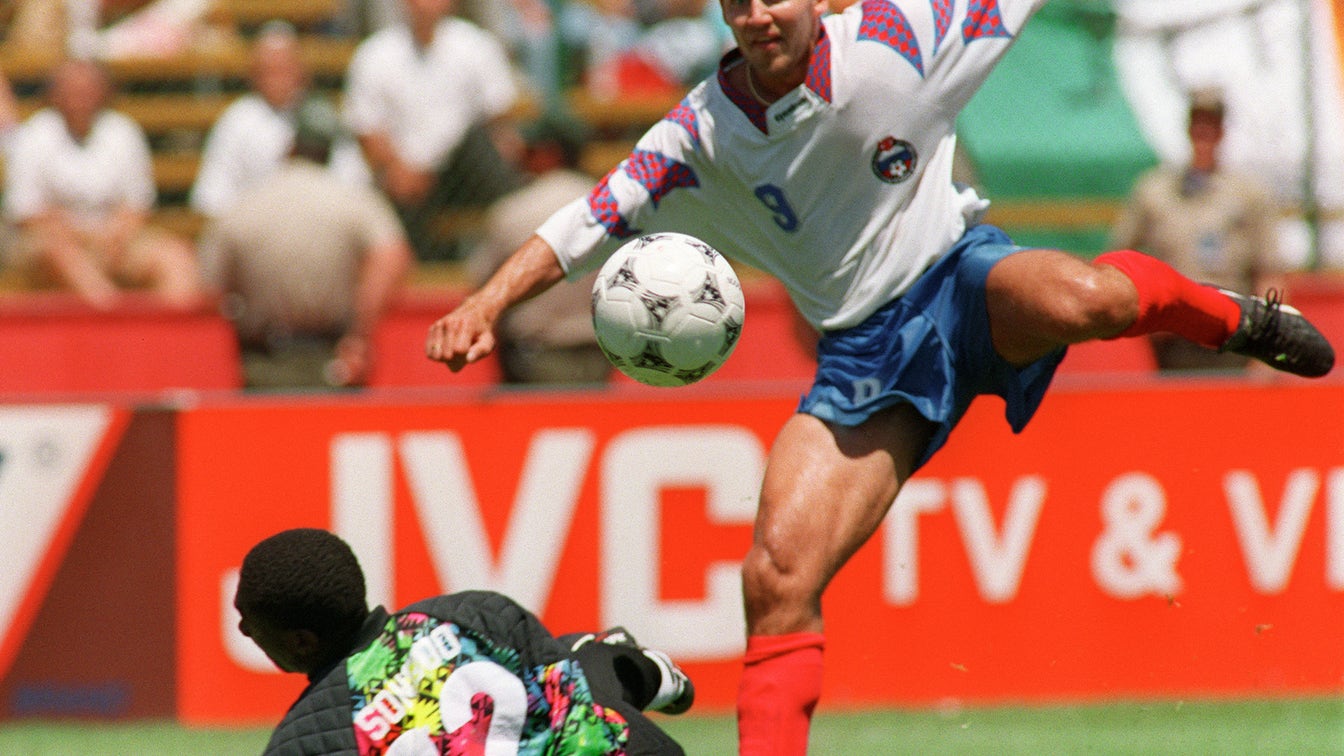
Russian Oleg Salenko scores FIVE goals in one match. (Photo by Patrick HERTZOG / AFP via Getty Images)
Just days after Maradona’s departure, Russian Oleg Salenko etched his name into the record books in a way no one expected.
In a group stage match against Cameroon at Stanford Stadium, Salenko scored a record five goals in a single match. To this day, he remains the only player in World Cup history to achieve that feat in a match. Ironically, despite this historic feat, Russia was eliminated in the first round.
Who won the Ballon d’Or at the 1994 World Cup?
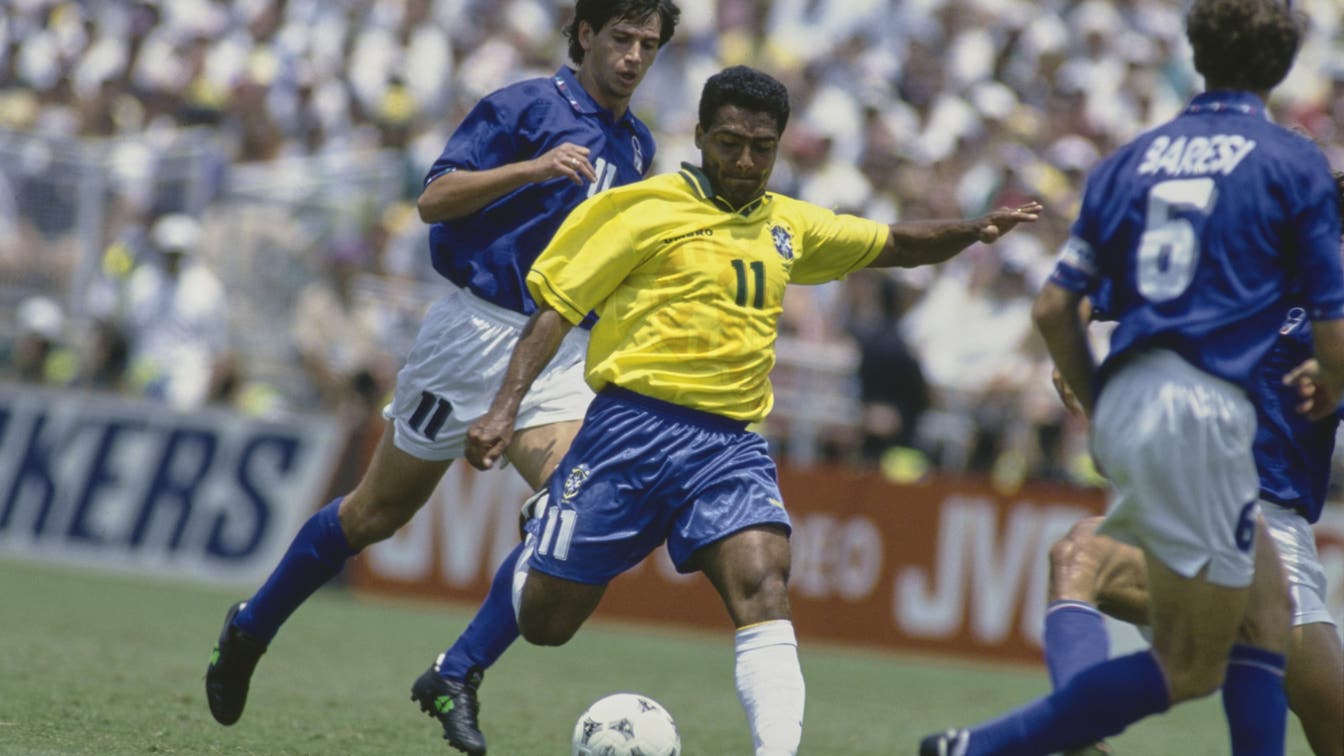
Brazil’s Romario targets Italy in the final. (Photo by Henri Szwarc/Bongarts/Getty Images)
The Ballon d’Or is awarded to the best player of the tournament and Brazilian Romario certainly deserved it. Scoring five goals throughout the tournament, he made his mark by scoring in each of the group stage matches and then two more during the knockout rounds. He also assisted Bebeto on the only goal in the 1-0 victory over the United States in the round of 16.
Who won the Golden Boot? Who won the Gold Glove?
The 1994 tournament remains the only time two players shared the Golden Boot, which is awarded to top scorers: Russia’s Oleg Salenko and Bulgaria’s Hristo Stoichkov. Both players finished the tournament with six goals each.
Salenko made history by scoring a record five goals in a single match against Cameroon, and added another against Sweden. Salenko’s record-breaking day contributed greatly to him becoming the only player in World Cup history to win the Golden Boot despite participating in only the first round. Not bad for a guy who played four fewer games than Stoichkov.
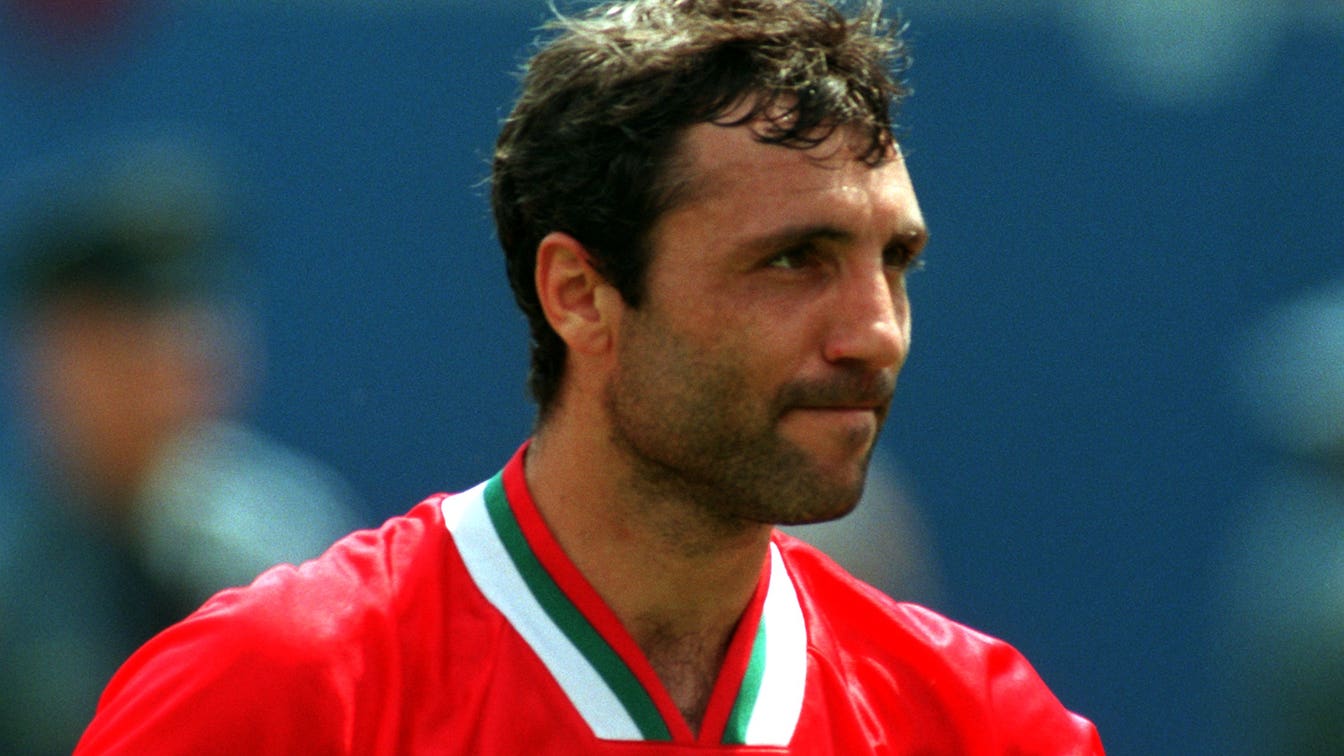
Bulgarian Hristo Stoichkov was a rising star. (Photo by Multhaup Oliver/Picture Alliance via Getty Images)
Stoichkov’s brilliance led Bulgaria on a fairytale run to the semi-finals, highlighted by a stunning free kick that helped eliminate defending champions Germany. He started the tournament with two penalties against Greece and also scored against Mexico in the round of 16.
Belgian goalkeeper Michel Preud’homme took home the first-ever Golden Glove (then known as the Lev Yashin Award) at the 1994 FIFA World Cup in the United States. Although the Belgians only reached the round of 16, Preud’homme kept clean sheets against Morocco and the Netherlands. He allowed one against Saudi Arabia before his team lost 3-2 to the Germans.
What was the legacy of the 1994 World Cup?
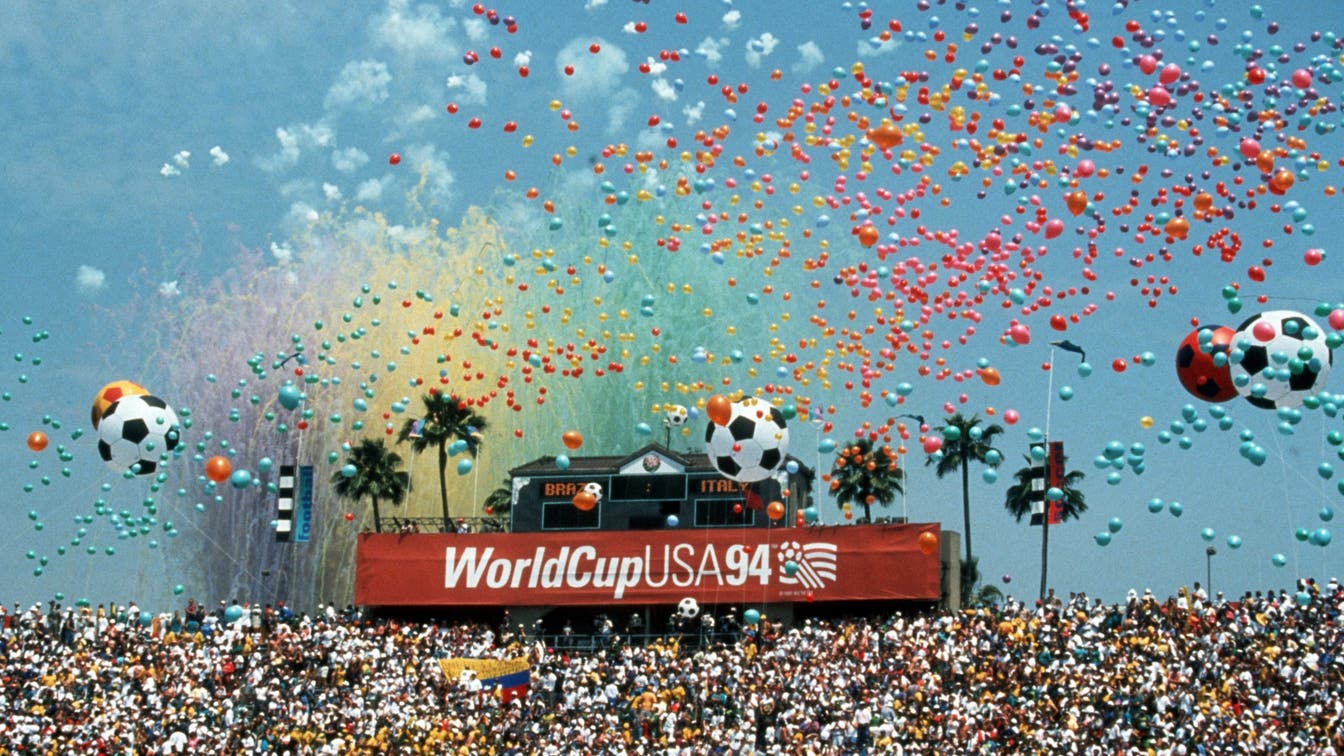
A generation of soccer fans grew up with USA ’94. (Photo by Lutz Bongarts/Bongarts/Getty Images)
The 1994 World Cup changed America’s sports culture and showed that soccer can draw big crowds in the land of the Super Bowl. It turned a “questionable election” into the highest-attended tournament in FIFA history, showing that the United States was ready to define the game on its own terms.
Before the tournament, skeptics predicted empty stadiums, cultural indifference and general confusion.
Instead, 3.6 million spectators filled venues from Los Angeles to New York, still the all-time World Cup attendance record.
The national popularity of the tournament led to the birth of Major League Soccer, a league that still stands today and includes 30 professional soccer teams in 25 American and three Canadian cities.
MLS provided the US Soccer Federation with a much broader talent pool than was available more than 30 years ago.
As the United States prepares to co-host the 2026 World Cup, it does so in a very different position than it did more than 30 years ago.
FIFA World Cup 2026: How to watch
The World Cup will take place from June 11 to July 19, 2026. Spread across three countries, the tournament will culminate with the final on July 19 at New York New Jersey Stadium in East Rutherford, New Jersey. The 104 matches of the tournament will air live on FOX (70) and FS1 (34) and each match will stream live and on-demand within the FOX One and FOX Sports apps. A record 40 matches, more than a third of the tournament, will be broadcast in prime time on FOX (21) and FS1 (19).