

- BOE has started mass production at its huge new factory in China
- It is producing OLED panels for use in monitors, laptops and other devices
- These OLEDs will be more affordable and offer price-cutting competition with dominant players LG and Samsung.
In a move that will usher in more affordable OLED monitors and laptops, BOE has officially flipped the switch to launch production lines for its Generation 8.6 panels.
The Elec reports that mass production of Generation 8.6 OLEDs began this week at BOE in China, and the manufacturer held an event in Chengdu to celebrate the milestone.
This was attended by some of the leading laptop and monitor manufacturers including Asus, Lenovo and MSI. As you can imagine, big names from the world of smartphones were also present, such as Honor, Nothing, Oppo, Vivo, Xiaomi and ZTE.

Chen Yanshun, president of BOE, said: “We will meet the growing demand for premium displays from customers in China and abroad and become a reliable partner through advanced technologies and high-quality products.”

The factory is capable of producing 32,000 substrates per month, which are large plates of glass that are cut into multiple individual OLED panels.
Wondering what the first product to roll off the assembly line was? Elec informs us that this was a 14-inch OLED for Lenovo laptops with a 2.8K resolution (as shown above).
Analysis: competition for LG and Samsung
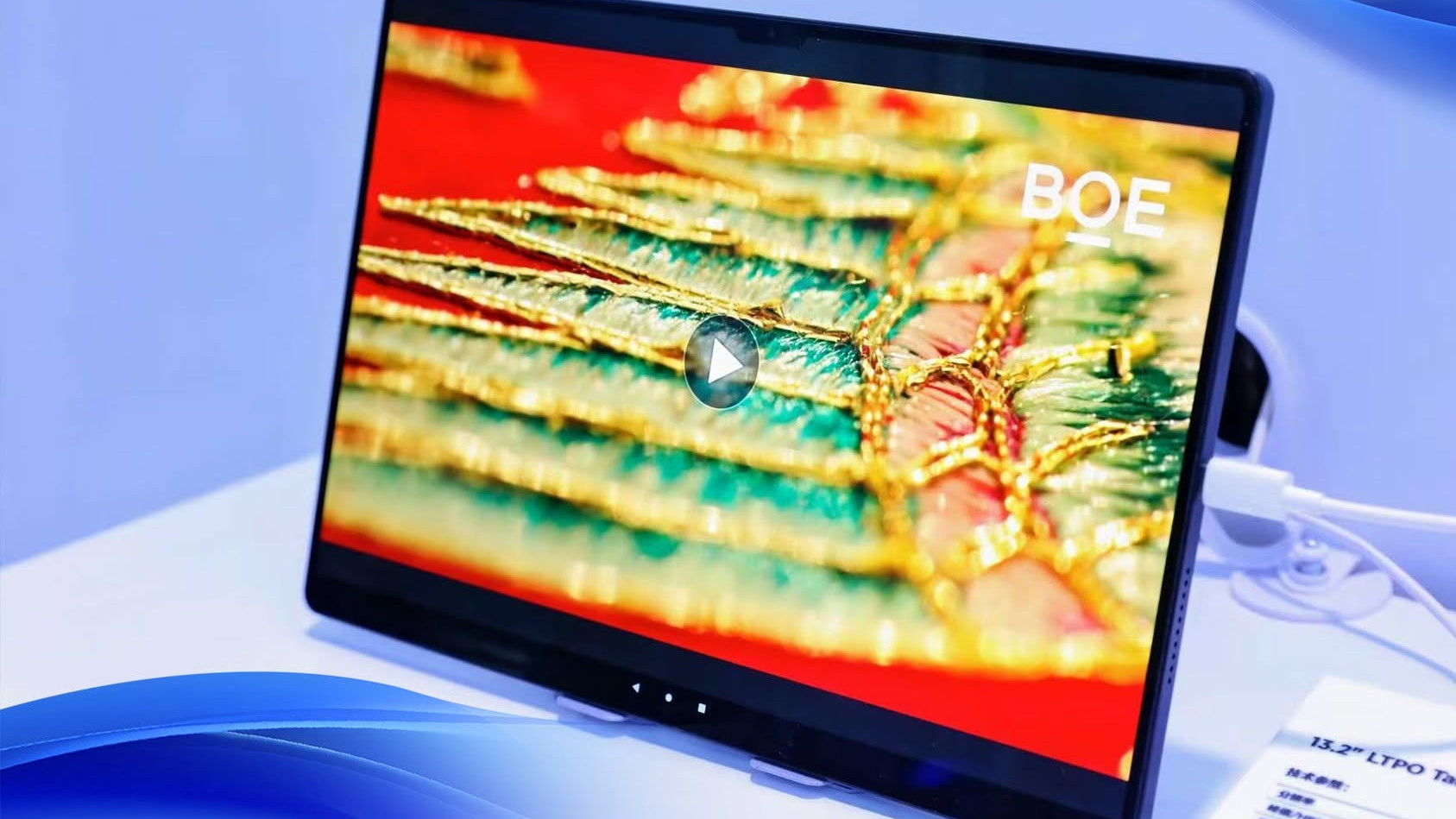
What’s the problem with BOE’s new Generation 8.6 panels? This technology allows for the production of much larger substrates than before, and that means many more OLED displays can be cut from that large sheet, with less overall waste (the extraneous parts around the edges). Therefore, production is more economical and the cost of the OLED panel is reduced, and these savings are in turn passed on to the manufacturer and the consumer.
The end result is cheaper, portable OLED monitors (or tablets and other devices) with OLED screens, for all of us in the future. Especially since this competition from BOE, which is taking a big step forward in the OLED space, will eventually force LG Display and Samsung to be more competitive with their prices.
Those two companies are the dominant players in OLED displays, so it’s good to see them challenged in this way. And not just by BOE, but also by TCL CSOT and inkjet-printed OLEDs, although that technology is still a ways off (and mass production isn’t expected to begin until late 2027).
BOE’s new panels aren’t just about cost savings either, as the facility is producing a tandem OLED (with two layers) that boasts a longer lifespan than a single-layer panel, three to four times longer, and better energy efficiency. (It consumes 20% to 30% less power, which is obviously crucial for laptops and battery life in particular.)

Follow TechRadar on Google News and add us as a preferred source to receive news, reviews and opinions from our experts in your feeds.
The best laptops for all budgets


