NEWNow you can listen to Pak Gazette articles!
Are you ready for the next battle in college sports? With Brendan Sorsby officially leaving Texas Tech for the NFL, attention now turns from the Lone Star State courts to Washington, D.C., where lawmakers are debating the future of college athletics.
When Senators Ted Cruz (R-Texas) and Maria Cantwell (D-Washington) introduced the bipartisan “College Sports Protection Act” earlier this month, the overwhelming thought process centered on the federal government finally coming up with legislation that would satisfy both sides of the aisle, along with those within college athletics.
After threats, lawsuits and chaos, Brendan Sorsby and Texas Tech go their separate ways
But, as we’ve seen in recent weeks, there are plenty of backlashes or shenanigans that have leaders in the SEC and Big Ten jockeying for position.
Would congressional leaders yield to ideas put forward by both conferences that would eventually lead to their support? Or would Cruz and Cantwell push their legislation without the leaders of both power conferences essentially supporting the bill?
That question was answered Monday night, when Pak Gazette obtained a revised bill, as there wasn’t much of a twist in the “College Sports Protection Act” that would lead one to believe the SEC and Big Ten recommendations were fully integrated into the new plan.
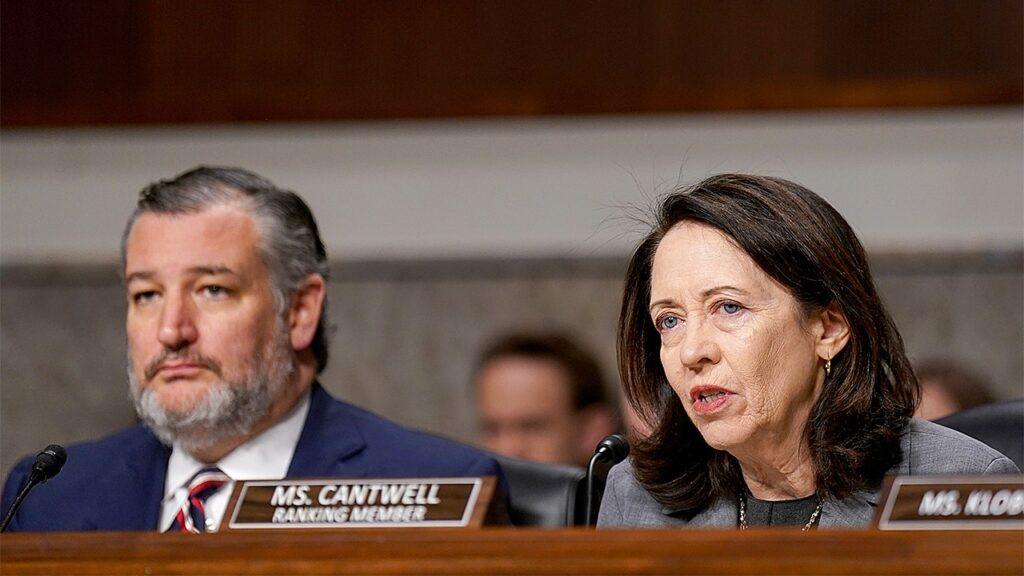
Senator Ted Cruz, Republican of Texas and chairman of the Senate Committee on Commerce, Science and Transportation, and Senator Maria Cantwell, Democrat of Washington and ranking member of the committee, attend a hearing in Washington, DC, on April 2, 2025. Kelly Ortberg, CEO of Boeing, is scheduled to testify about the company’s quality standards and cultural review. (Al Drago/Bloomberg via Getty Images)
Senators advance without changes in the SEC and the Big Ten
Going into the “margin” phase of the bill, which will take place from Tuesday evening, there was no deviation from the media pooling rights aspect of the legislation.
The revised version of the bill will still allow football teams at the FBS level to voluntarily bundle their media rights into one large package, if 75% of the teams reach an agreement on the action.
Ted Cruz and Maria Cantwell Introduce Bipartisan College Athletics Bill Amid NIL Chaos, Lawsuits and the ‘Lane Kiffin Rule’
This leaves the SEC and the Big Ten still in power over the matter, and Commissioner Greg Sankey mentioned in a letter to presidents and chancellors last week that this could still lead to court battles.
“Media pooling, as written, exposes the SEC to potential lawsuits forcing the conference to adopt the practice of media pooling… It forces the SEC and the Big Ten to play intraconference postseason tournaments or play only other conferences or universities that are not pooled in the postseason to replace the CFP (College Football Playoff).”
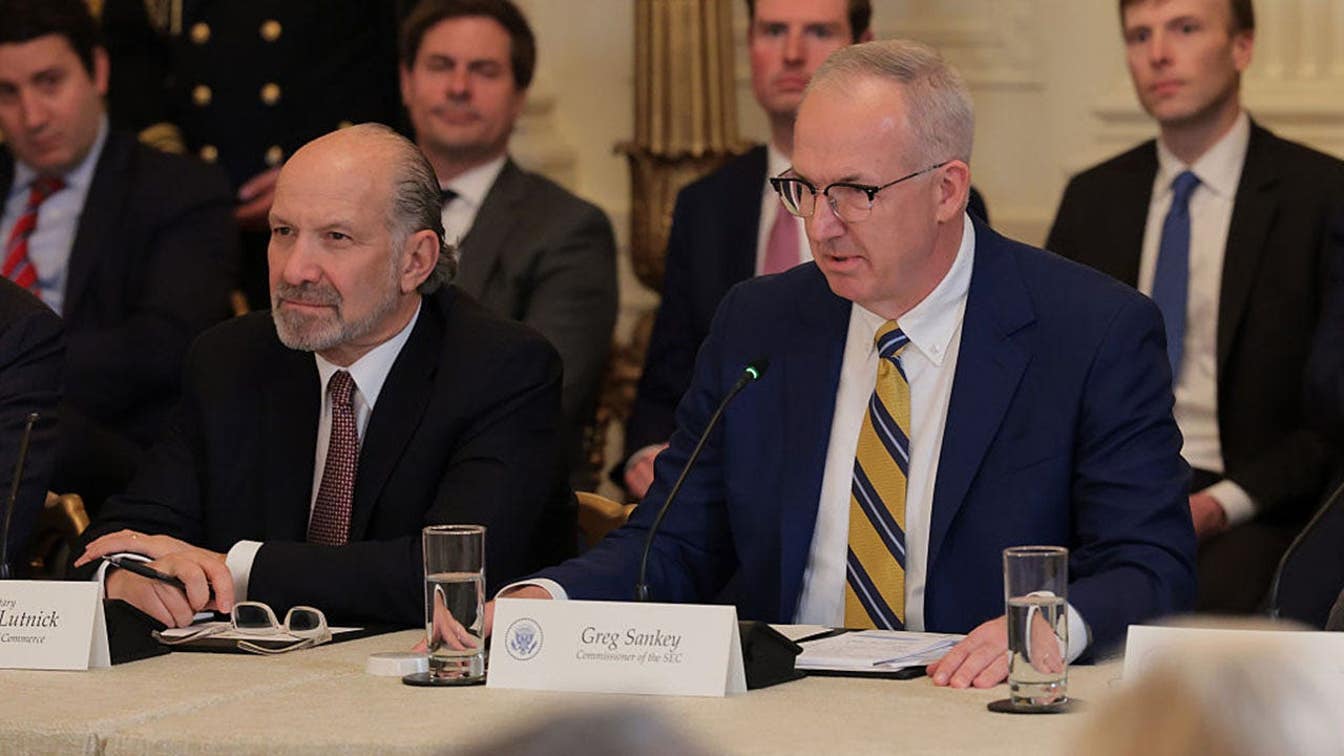
SEC Commissioner Greg Sankey speaks during a roundtable discussion on college sports in the East Room of the White House on March 6, 2026, as Commerce Secretary Howard Lutnick looks on. The Trump administration hosted the event titled “Save College Sports” with leaders from Power Four conferences, media executives and former coaches. (Anna Moneymaker/Getty Images)
Yes, this is a delay for both conferences to get behind this aspect of the bill, although it wouldn’t be the smartest move for either conference to split up and form their own postseason, at least in the eyes of fans.
Then, there was also the point of contention surrounding the “private right of action” aspect of the legislation, which would allow athletes to take their own schools to court over rules that would be actionable within the bill. And for that matter, the legislation does not have a review for the section that the SEC emphasized is too broad, allowing the opportunity for more battles within state courts.
A much-needed detour for Olympic and women’s sports in the legislation
But there was a change in legislation that many within the university athletics community expressed their opinion about the change. In the previous version of the bill, Olympic and women’s sports were tied to those who decided to pool their media rights into a single group. Essentially, schools couldn’t eliminate certain sports on a whim for the sake of revenue.
Now, under the bill, all schools that report revenue of at least $80 million per academic year will be required to maintain the minimum number of roster spots for each sport, which also provides peace of mind for those sports programs that are in the “oversized” category. Like, for example, when Arkansas decided to cut its tennis program last month, which was then resurrected by donors who came to its aid at the last minute to keep the sport alive in Fayetteville.
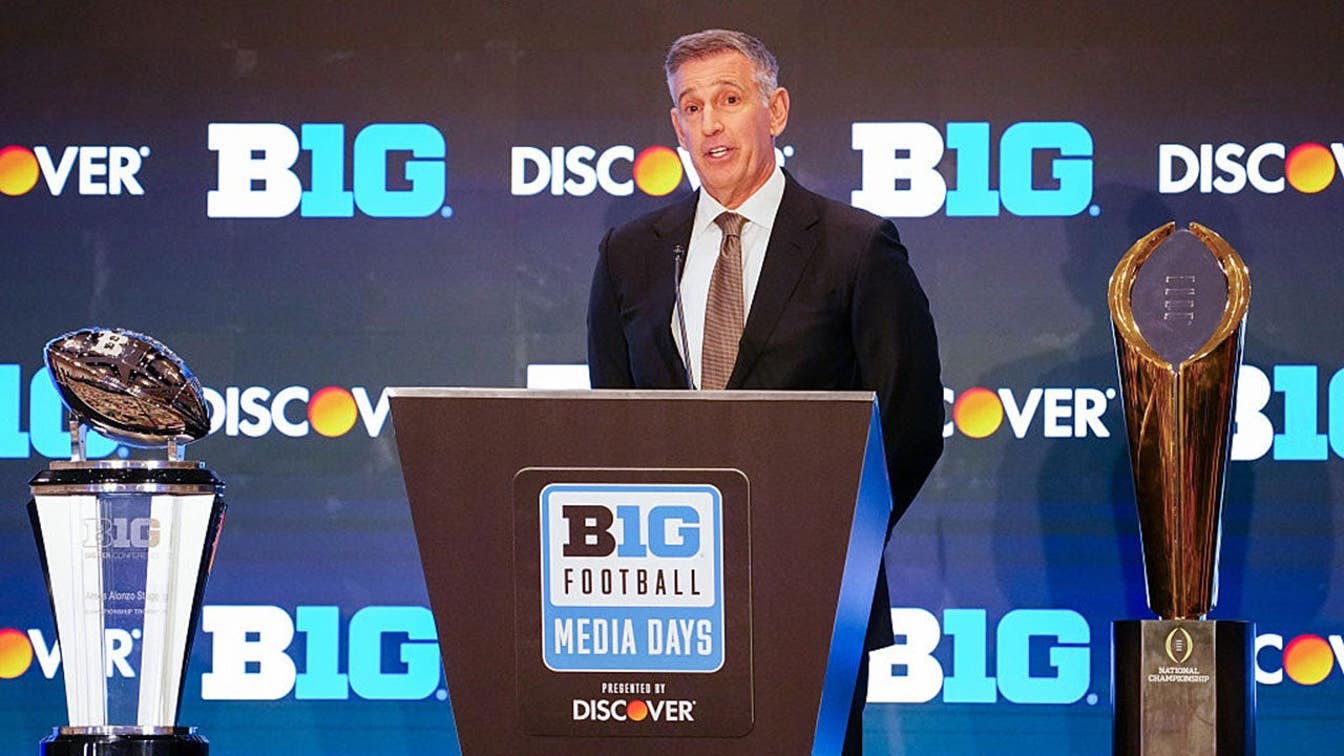
Big Ten Conference Commissioner Tony Petitti speaks during the 2025 Big Ten Football Media Days at the Mandalay Bay Convention Center in Las Vegas, Nevada, on July 22, 2025. (Louis Grasse/Getty Images)
It is obvious that lawmakers are not concerned about appeasing SEC and Big Ten member institutions in hopes of passing this bill. In reality, you’re not going to make everyone happy, so the idea of bowing to the demands of the two biggest conferences in college sports clearly isn’t a deal breaker for now.
NICK SABAN URGES SENATE TO PASS LEGISLATION TO FIX COLLEGE SPORTS, BUT COACHING CONTRACTS FOLLOWED
Of course, this could change in the coming days as amendments are voted on. But that would mean making waves with congressional leaders from states outside the boundaries of the SEC and the Big Ten. Senators Ted Cruz and Maria Cantwell want this bill to pass and even received vocal support from NCAA President Charlie Baker last week amid the debate over Brendan Sorsby.
There will be a lot of debate over the next few weeks and a lot of negotiations over what could be added or removed from the legislation to get it out of the Senate and onto the House floor.
CLICK HERE TO DOWNLOAD THE Pak Gazette APP
But time is ticking. An August recess is looming for Congress, and we’re about to find out how much power two of the biggest conferences in college athletics wield over federal legislation.
Here we go, the “College Sports Protection Law” is now officially in effect.