The United Nations World Health Organization (WHO) on Friday raised the national risk assessment for the Democratic Republic of the Congo to “very high,” although the global risk remains “low.”
So far, 82 cases and seven deaths have been confirmed in the Democratic Republic of the Congo, but the WHO says the true scale of the outbreak is likely much larger, with almost 750 suspected cases and 177 suspected deaths reported.
The outbreak is unfolding amid intensified fighting, mass displacement and deep distrust of external authorities, fueled by rumors and misinformation.
A hospital in Ituri province was set on fire on Thursday by angry relatives after authorities refused to hand over the body of a deceased relative for fear of contamination, according to reports.
How the UN system is responding
- WHO raises The risk of Ebola in the Democratic Republic of the Congo is “very high”; Regional risk remains “high” and global risk “low”
- The WHO deploys 22 international officials; UNICEF sends an emergency response team to Bunia.
- Health equipment Support contact tracing, treatment centers, risk communication and community engagement.
- UN aid chief allocates up to $60 million for response in DRC and neighboring countries; The WHO releases 3.9 million dollars
- WHO and Africa CDC create continental incident management support team
- MONUSCO airlifts almost 30 tons of emergency supplies – including medicines, tents and protective equipment
- The UN peacekeeping mission also manages an airlift and deploys vehicles to reinforce logistics
- WHO and its partners prepare clinical trials for experimental Ebola treatments and possible vaccines directed at the Bundibugyo strain.
- Red Cross volunteers carry out door-to-door awareness campaigns and mobilize safe and dignified burial procedures
Read more about the outbreak here and about ebola symptoms and prevention here.
Two cases in Uganda
Two cases (related to travel from the Democratic Republic of the Congo) have been confirmed in Uganda, including one death.
Two U.S. citizens, including a doctor and another person described as a “high-risk contact,” have been flown to Europe for treatment or follow-up.
The outbreak is caused by the Bundibugyo strain of Ebola, for which there are currently no approved vaccines or treatments. Only two previous outbreaks of the strain have been recorded: in Uganda in 2007 and in the Democratic Republic of the Congo in 2012.
Conflict complicates the response
The outbreak is spreading in the provinces of Ituri and North Kivu, regions long marked by armed violence and humanitarian crises.
“In both provinces, around four million people need urgent humanitarian assistance, two million are displaced and ten million face acute hunger.Tedros said.
Fighting has intensified in recent months, displacing more than 100,000 people and hampering health operations.
Emergency allocation of 60 million dollars
Also on Friday, UN Emergency Relief Coordinator Tom Fletcher announced the allocation of up to $60 million from the Organization’s Central Emergency Response Fund to support the response in the Democratic Republic of the Congo and neighboring countries.
“These are difficult operating environments for life-saving work,” Mr Fletcher said. “We are facing conflicts and a high population movement.”
He highlighted the importance of ensuring access for frontline rescuers, even in areas controlled by armed groups. “It is essential that there is no obstruction,” he said.
Ituri province (pictured) in eastern Democratic Republic of the Congo is among the worst affected areas.
Accusation of “manufacturing” Ebola
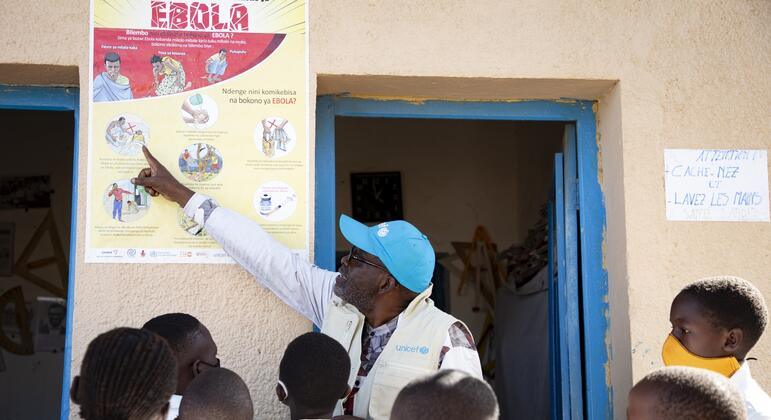
Aid agencies stressed that misinformation and mistrust could undermine efforts to contain the outbreak.
Gabriela Arenas of the International Federation of Red Cross and Red Crescent Societies (IFRC) said many communities still suffer from the trauma of previous Ebola epidemics.
“They remember the fear. They remember the rumors that spread through the towns,” he told reporters in Geneva from Nairobi. “They remember the neighbors who disappeared into the treatment centres.”
Although many residents seek information and treatment, others still believe “that Ebola is a fabrication,” he said.
The International Federation said Red Cross volunteers were already going door-to-door in affected areas to share information and support safe and dignified burials.
“During an Ebola outbreak, community trust and acceptance can mean the difference between containment and wider transmission.”said Mrs. Arenas.
Women at higher risk
The social dynamics driving transmission could disproportionately affect women, as they have in previous Ebola outbreaks, the agencies warn.
“Women are more likely to be infected first.”said Sofia Calltorp, Head of Humanitarian Action at UN Women.
During the 2018-2019 Ebola outbreak in the Democratic Republic of the Congo, women and girls accounted for approximately two-thirds of reported cases.
“This is because Ebola transmission follows social realities,” Ms Calltorp said. “The virus spreads through caregiving, domestic work, frontline health work and funeral practices.”
Pregnant women face particular risks, she added, while quarantines can increase gender-based violence.
A WHO staff at the agency’s response center in Nairobi prepares emergency supplies to be airlifted to areas affected by the Ebola outbreak in the Democratic Republic of the Congo.
Containment efforts intensify
The WHO said it had deployed 22 international staff to the field and released $3.9 million from its contingency fund.while creating a continental incident management team with the African Centers for Disease Control and Prevention.
The agency and its partners are also accelerating work on experimental vaccines and therapies for the Bundibugyo strain.
Tedros said the WHO’s research advisory group had recommended prioritizing two monoclonal antibodies for clinical trials, as well as testing the antiviral drug obeldesivir in high-risk contacts.
He also stressed the importance of restoring trust.
“Building trust in affected communities is critical to a successful response and is one of our top priorities.” said.