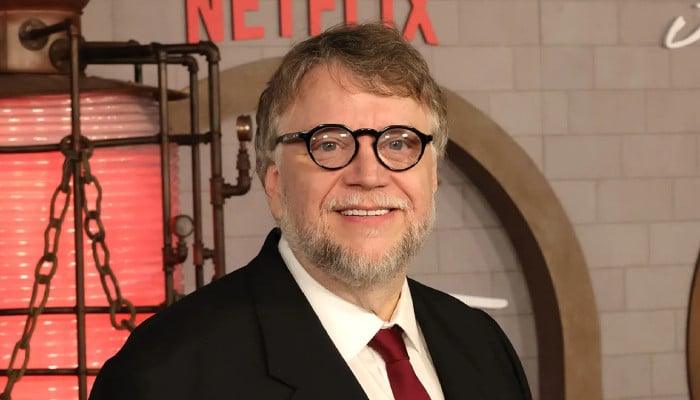
Guillermo del Toro has issued a stark warning about the future of cinema, describing artificial intelligence as a form of “natural stupidity” and warning that the film industry is approaching a crisis point.
The Oscar-winning director made the remarks Monday night while receiving the BFI fellowship, the British Film Institute’s highest honor, at a dinner in Hollywood.
Before a room full of industry figures, including Leonardo DiCaprio, Jon Favreau, Michael Mann and Netflix executives, del Toro made a passionate defense of film as a fundamentally human art form.
“We are on the verge of visual illiteracy. We are on the verge of cinematic illiteracy,” he told the crowd.
The creative impulse, he argued, is as old as the images painted on cave walls and cannot be replicated by machines.
“We are told that images can be generated by artificial means. The existence of an image is not just to be there. It is to connect us, to make us feel the beauty,” he said.
“The pact between man and image is sacred.”
His connection with the BFI dates back to his teenage years in Guadalajara, Mexico, where he would write to the organization requesting 16mm copies of films by directors such as Carol Reed to screen at their film club.
Receiving the scholarship, he said, moved him deeply.
Netflix co-CEO Ted Sarandos, who introduced del Toro, recalled their first meeting when del Toro was developing an animated adaptation of troll hunters for the platform.
“I walked into the meeting thinking, ‘Why is this master filmmaker directing what I thought was a cartoon for us?'” Sarandos said.
“And then I saw Guillermo create a universe in front of my eyes.”
Del Toro framed his current chapter as one of retribution, teaching, advocacy and preservation. “We are not gatekeepers. We are gatekeepers so that more people can enter and leave the church of cinema,” he said.
“Images have saved me so many times in my life.” On the permanence of great films, he was equally expressive: “These films are never from the past. When someone sees them for the first time, they are present.”