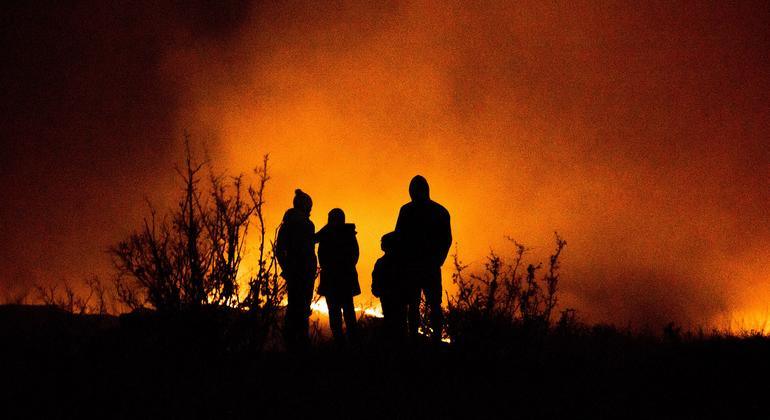
Forest fires destroyed 2.2 million hectares of land in the WHO European Region in 2025, up from 1.4 million hectares in 2022.
In Spain and Portugal alone, the number of forest fires has more than doubled since last year..
Madrid declared a national emergency on Friday as wildfires near the capital forced 10,000 people to evacuate. The head of the regional government said that these fires are the worst ever recorded.
In the south of France, some 63,000 people evacuated after multiple fires that have already destroyed some 80 homes, according to national authorities.
“Forest fires destroy homes and livelihoods, force evacuations and put enormous pressure on emergency services and health systems,” the WHO wrote in a press release. “Tragically, they also take lives.”
Fueling the fires
Climate change is intensifying forest fires and increasing their frequencysaid the WHO.
This is because temperatures are rising along with drier conditions and increasing urbanization, which in turn extends the length of the wildfire season.
Energy transition
Meanwhile, Simon Stiell, the UN’s top climate change official, said on Friday that the key to protecting people from escalating climate disasters – including wildfires – is accelerating the transition to renewable energy.
“Acting now is the foundation for long-term peace and security around the world,” Stiell said.
Impacts beyond the flames
Wildfire Smoke May Worse Heart and Respiratory Diseasesespecially for older people, children, pregnant women and those suffering from chronic diseases, the WHO warned.
According to the WHO, particles from wildfire smoke contribute to conditions including lung disease, liver disease and eye infections, as well as cognitive decline and memory loss.
Wildfires can also disrupt access to healthcare and other public services and affect mental health.
Smoke from a forest fire rises over a forest in Perpignan, France, in early July.
How to stay safe
WHO advises people living or traveling through areas affected by wildfires to follow official advice, stay away from active fires when safe, avoid unnecessary travel and wear a well-fitting protective mask if you must go outdoors.
Governments should provide timely weather alerts, clear health advice and accessible primary and emergency care, as well as special assistance for those most at risk, the WHO said.
“We are working with countries to assess risks, plan for emergencies, develop guidelines to protect people from smoke and extreme heat, and make health services and facilities more resilient,” WHO Europe wrote.
WHO public health advice on wildfires can be found here.