
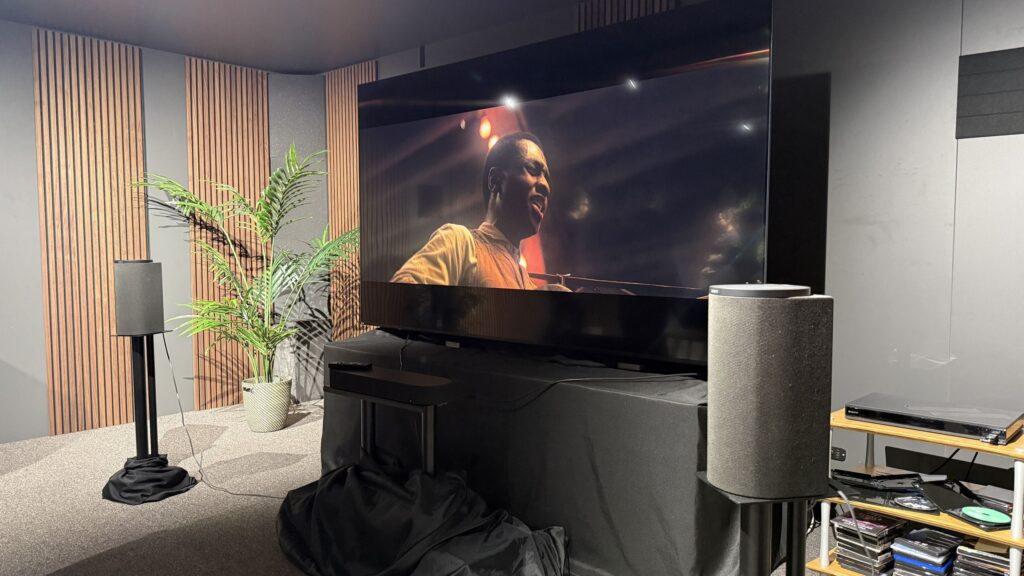
Sony has just announced the Bravia Theater Trio, which is a new wireless Dolby Atmos system that splits the difference between a proper surround system and a soundbar, and is specially designed with huge TVs in mind, to ensure the soundscape is wider than the TV itself, but will be tempting for anyone who wants more physically separated sound than the best soundbars alone can offer.
It can also be expanded to a fuller wireless surround setup and I was able to hear this system in full force in action. But first, let’s go over the basics.
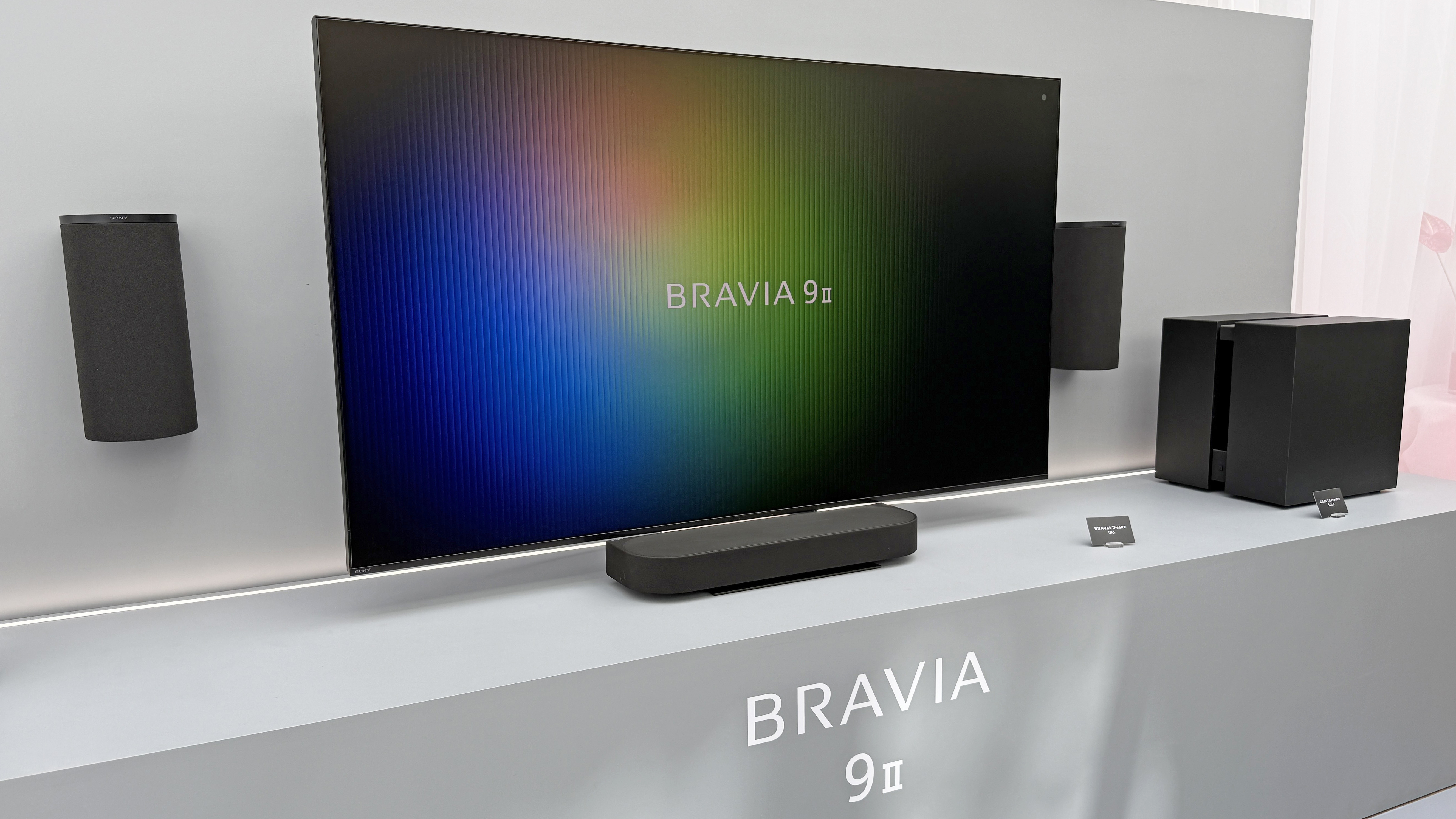
The Sony Bravia Theater Trio is, as the name suggests, three wireless speakers in one package. It’s what home theater fans call the ‘LCR’ system, meaning left, center and right channels.

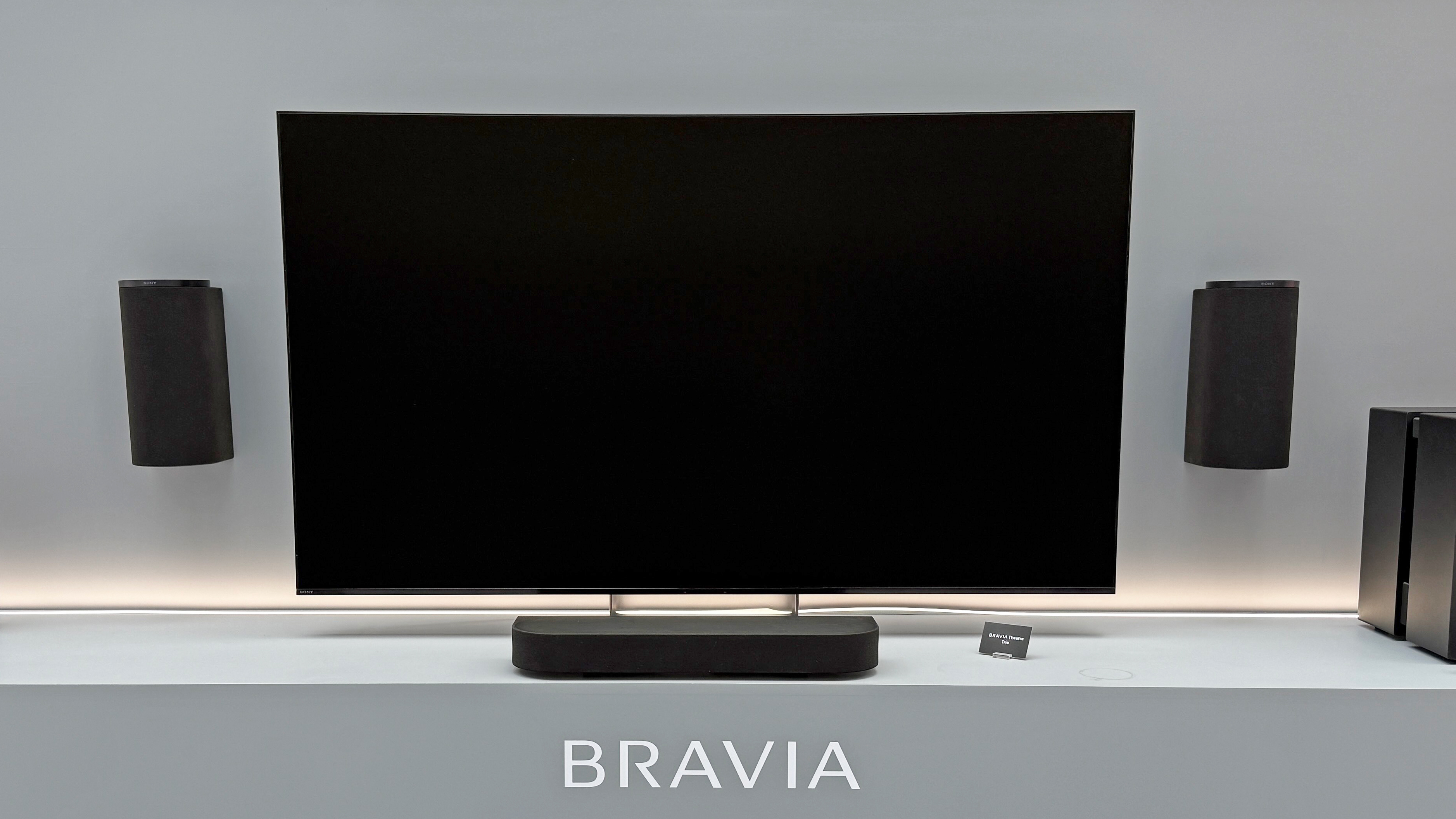
There is a center speaker that is like a mini sound bar, which connects to your TV via HDMI eARC. And there are left and right speakers that look like little pillars with a flat section added to the back, so they can be mounted on the wall.
The center speaker has two woofers and a tweeter, while each of the side speakers has a forward-facing woofer and tweeter, and then an 8cm upstream driver for Dolby Atmos height channels.
In the simplest terms, this is a 3.0.2 channel system, although Sony says the system relies heavily on virtualizing deeper speaker setups. This initial three-speaker system can apparently imitate 24 phantom channels.
Sony says it’s done some smart things with its virtualization technology in the Bravia Theater Trio, including rethinking how those phantom channels work: They’re now designed not only to mimic the placement of a more elaborate speaker setup, but also to mimic the “indirect sound sources” of a movie theater’s acoustic signature, including reflections.
So yes, for those following how psychoacoustic virtualization works, it may be the case that this system is using the reflections in your room to create the sensation of a different set of reflections…
To help the system do this as best as possible, it comes with a USB-C microphone that you can use for room calibration. Simply connect it to your phone or tablet, launch the Sony app and follow the instructions so it can work better.
As I mentioned earlier, this three-speaker center setup can be expanded with additional rear speakers or a subwoofer as well.
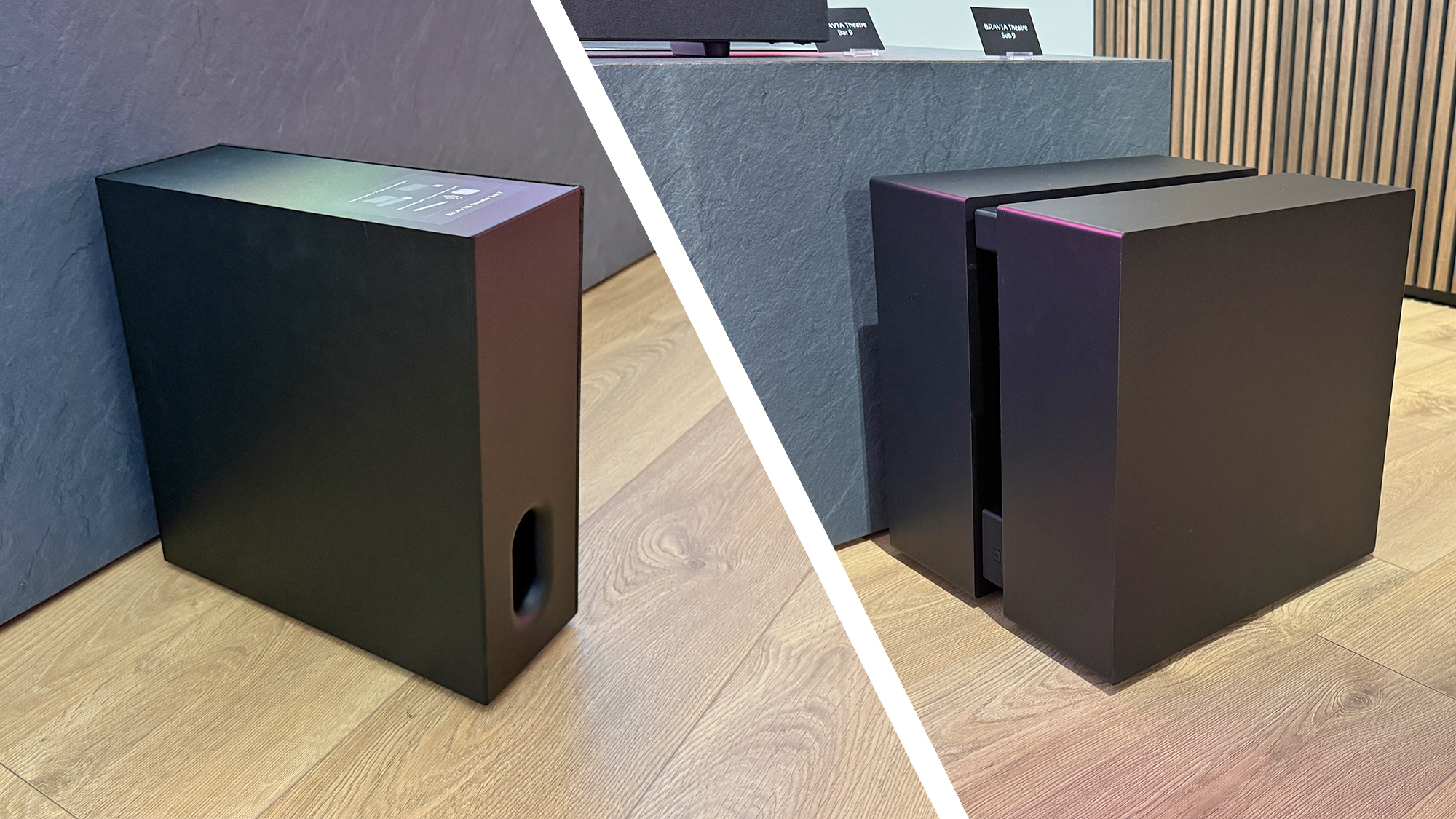
You have two subwoofer options: the new Sub 8 is a mid-range option, while the Sub 9 is a massive beast of a sub by lifestyle technology standards. They look like two Sub 8 units stuck together with a vent in the middle, and while Sony didn’t confirm the specs, I wouldn’t be surprised if that’s not far from the truth.
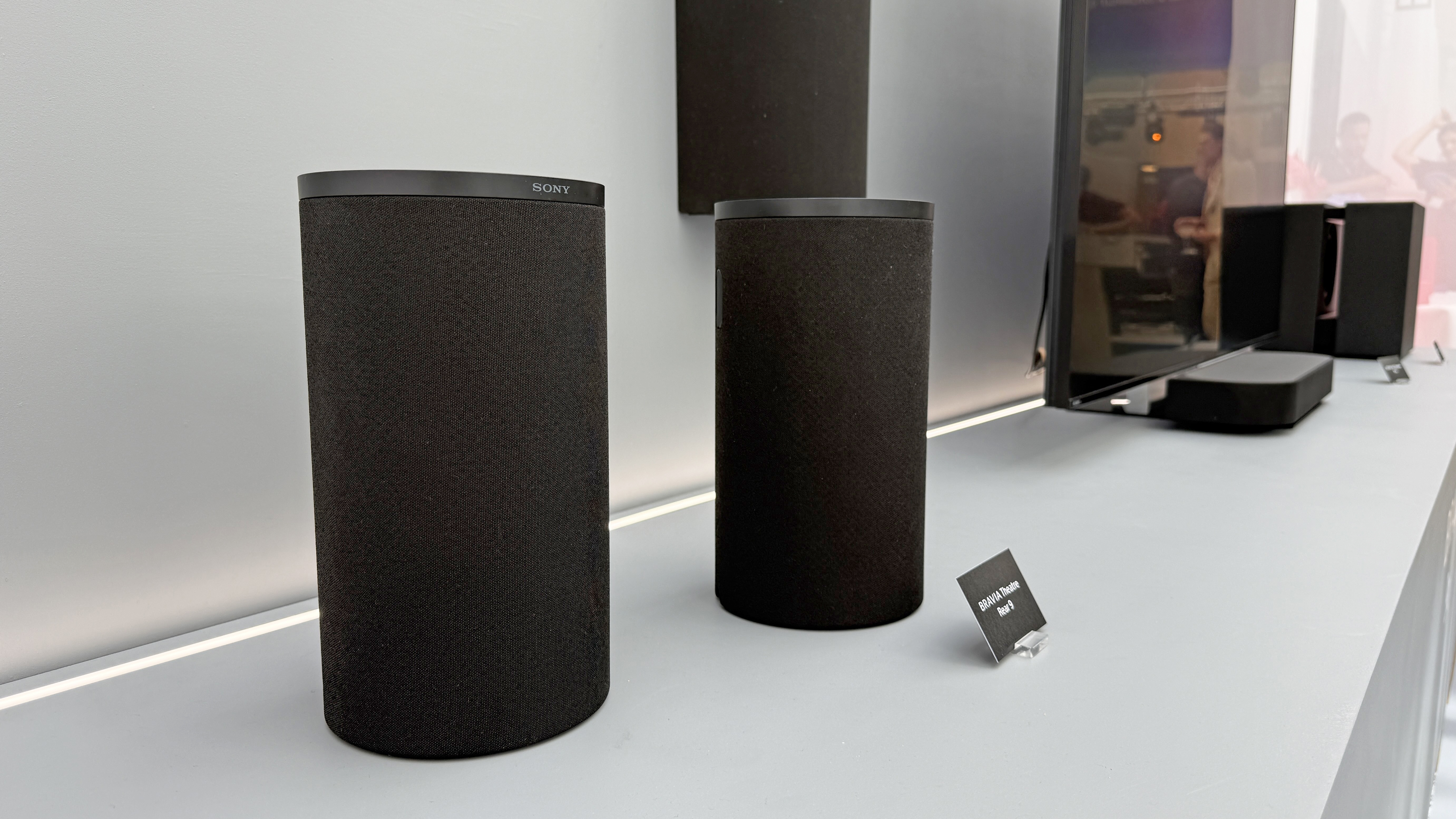
You also have two rear speaker options: there’s the existing Bravia Rear 8 or the new Bravia Rear 9, which are more or less the same speakers as the front left and right (combination of woofer, tweeter and upfirer, in the same design).
Of course, these add-ons will cost you, and the main Bravia Theater Trio package isn’t cheap either. Here’s the breakdown of all those options (Sony was only able to provide UK pre-release pricing, but we’ll update with other prices as we get them):
|
Product |
Price |
|---|---|
|
Bravia Theater Trio |
£2000 (around $2700 / AU$3800) |
|
Bravia Rear 9 (pair) |
£700 (around $950 / AU$1,300) |
|
Bravia Rear 8 (pair) |
£449 / $499 / AU$699 |
|
Bravia Sub 9 |
£900 (around $1,200 / AU$1,700) |
|
Bravia Sub 8 |
£650 (about $875 / $1200) |
Sony eats Sonos’ lunch
Before I get into my experience of the performance of these speakers, something that immediately caught my attention is that this type of setup is what Sonos users have been begging from the company for years.
Since Sonos is dedicated exclusively to wireless satellite speakers, its users have asked many, many times (directly and on the r/sonos subreddit) to be able to use separate front left and right speakers in an LCR setup with their soundbars.
There is even a third-party app that allows this called SonoSequencr, which is quite popular among Sonos home theater enthusiasts.
It seems crazy that Sony offered this before Sonos, and with a better spec list than Sonos can offer, because the Bravia Theater Trio offers Dolby Atmos and DTS:X support (Sonos lacks DTS) and has an HDMI pass-through port (4K 120Hz support) so you don’t lose an HDMI port when using it.
Of course, if Sonos ended up offering a configuration to compete with this, it could have a significant price advantage. You can get a Sonos Beam Gen 2 (as a center channel) and two Sonos Era 300 speakers (as spatial audio side speakers) for £1,077 at the time of writing, compared to £2,000 for the Sony system.
And there’s also the small problem that in my demo of the Sony system I found it to be quite hit and miss…
Mixing it up
I didn’t get to hear just the Bravia Theater Trio’s main setup at the Sony event; Instead, I heard the fuller setup, with the original trio, two rear 9 speakers, and two Sub 9 subwoofers (although, interestingly, these were placed side by side rather than spaced apart for even bass distribution).
In terms of pure physical channels, this is a 7.2.4 setup, but Sony couldn’t confirm exactly what the virtualized channel setup it creates using the phantom channels would be, although Sony did confirm that you get 24 phantom channels regardless of how many physical speakers are involved.
First we saw the great musical performance in sinners at the music club. What was immediately obvious is that the system delivers a really powerful and warm sound, which adapts very well to hitting the drums and making the tonality of the guitars feel solid and electric.
However, I wasn’t all that impressed with the separation of the different elements in the mix, despite all the Dolby Atmos power, and in particular felt that vocals were thinner than I expected, especially for a system with a separate center speaker.
Moving on to the car shootout There is no time to diesurround and positioning effects were given a special opportunity to shine. The rear effects were solid, but the side effects were especially impressive considering there are no real speakers there.
Going off of that, I thought the way the sound moved from the front, to the sides, and back was especially impressive: it felt like the sound moved smoothly all the way through and didn’t jump from the front to the back, which is what you can feel on some simple five-channel systems.
But this demo also showed the same apparent weakness with vocals, with dialogue soft and a little fuzzy even in the quietest moments, and even some of the mid-frequency effects seemed to not sound as loud as they should (I’ve seen this scene a lot in demonstrations).
The final demo was the first racing scene in Ready player oneand the system produced a lot of sound and fury around me here… but I thought there was a slight softness in the fine details that held it back – very sudden sounds didn’t seem as dramatically sudden as they should, which took away a bit of impact, scale and spectacle.
This last point wasn’t helped by the fact that in all three demos I noticed that the sound and visuals weren’t entirely in sync. This is not at all uncommon on HDMI ARC based systems, but I usually don’t notice it as strongly as here, and I think it made a difference when experiencing the crackles of Ready player one If you see the impacts before you hear them.
Of course, this is far from a review, and I’m really interested to see how the main Bravia Theater Trio ensemble performs on its own. But at this early stage, I’m a little torn: I love the overall concept and design, but I’m concerned about the high price based on the performance I’ve heard so far.
The best sound bars for all budgets

Follow TechRadar on Google News and add us as a preferred source to receive news, reviews and opinions from our experts in your feeds.


