
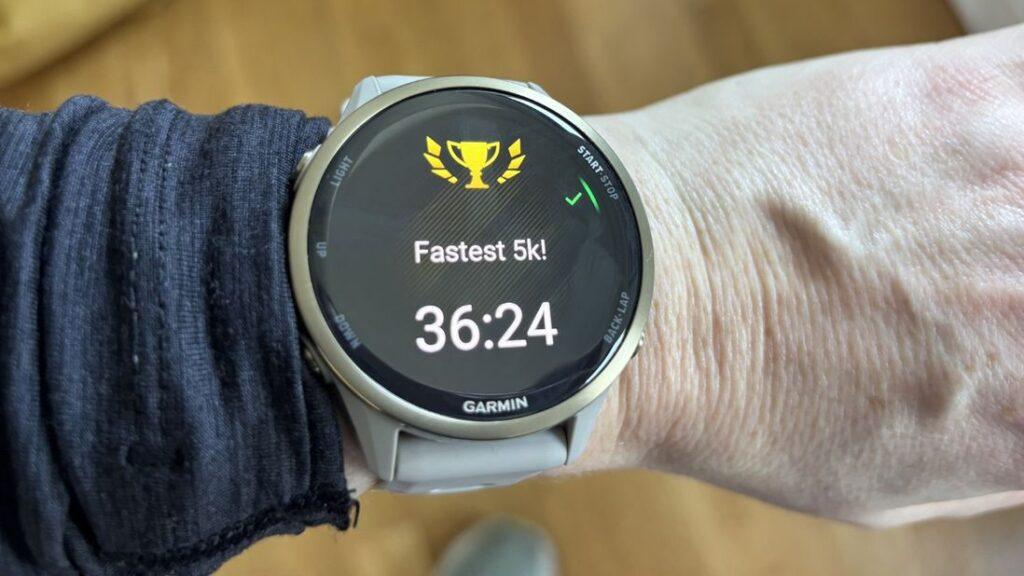
- Garmin has just published a report on ‘trends in running’
- It tells us that Garmin Connect users age 50 logged the longest distance with an average of 5.1 miles.
- We also learn that runners sleep better, have a lower resting heart rate than non-runners, and have a good VO2 max.
Garmin has just published a ‘running trends’ report, which has revealed some surprising data.
Based on statistics pulled from the Garmin Connect app globally, we’re told that the average race distance among all users was 4.82 miles, but if you had to guess which age range ran the furthest, you probably wouldn’t choose the 50-59 category.
However, people in their fifties accumulated the greatest distance with an average of 5.1 miles. The 20-somethings ran slightly shorter routes averaging 4.6 miles, just ahead of runners over 70 who clocked an average of about 4.57 miles.

Would you mind guessing the day of the week on which the most miles were collectively logged? Perhaps unsurprisingly, it was a Saturday and, in terms of the month with the most runs, that was August.
The race time was 46.3 minutes on average. As for weekly mileage, the majority of Garmin runners (nearly 40%) covered between 6 and 10 miles on average. The second largest group, representing 28% of runners, achieved between 11 and 20 miles.
What about the average pace? Among all runners, that was 9:21 per mile for the men and 10:11 for the women.
Dream success
Garmin also noted that runners generally had a better sleep score compared to non-runners. A runner’s average sleep score was 73 for those who ran less than 10 miles and 74 for those who went further, compared to those who didn’t run at all, reaching a score of 70 on average.
Resting heart rate was also better for runners, with non-runners averaging 62 bpm, compared to 59 bpm for those who ran 0 to 5 miles per week and 55 bpm for runners who pushed more than 31 miles per week.
Curious what the average VO2 max was for runners? Garmin says it has 50 across its entire user base. Not bad at all, by the way! If you’re unfamiliar with the VO2 max recorded by a smartwatch, check out our handy explanation.

Follow TechRadar on Google News and add us as a preferred source to receive news, reviews and opinions from our experts in your feeds.


