
ISLAMABAD:
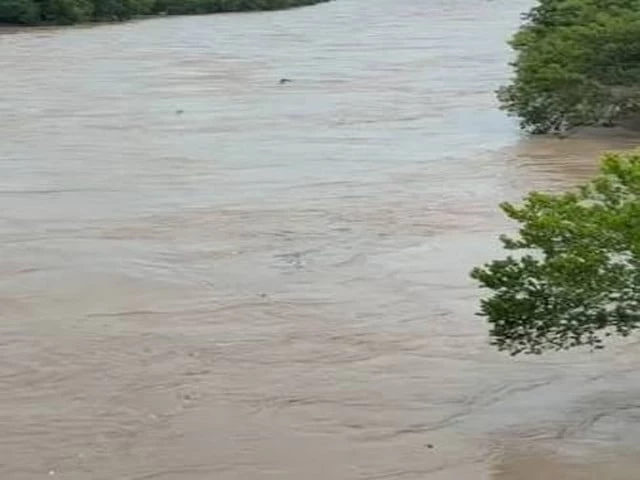
The Pakistan Meteorological Department (PMD) on Wednesday issued a high flood advisory for the Chenab River, warning that high flood levels are expected to persist for the next six to eight hours before gradually receding as rainfall over major basins continues to decline.
A strong monsoon incursion interacting with an approaching westerly wave is expected to affect the basins of all major rivers between July 22 and July 24, 2026. Widespread rainfall, including isolated heavy rain, is expected over Gilgit-Baltistan, Khyber-Pakhtunkhwa, Azad Jammu and Kashmir, Balochistan and Punjab. This can cause rapid increases in river flows, flash flooding in hill torrents and seasonal streams, and urban flooding in vulnerable cities.
According to the Flood Forecasting Division of the PMD, heavy rains observed over the Chenab river basin, coupled with hydrometeorological conditions and Sialkot weather radar data, have led to major flooding.
Although rainfall has decreased in major sub-basins, river flows are expected to remain high for the next six to eight hours before gradually decreasing.
The advisory said the Chenab River at Marala is expected to remain at high flood stage for the next six to eight hours, while water levels are likely to gradually recede thereafter if the current rainfall trend continues. He added that Khanki and Qadirabad are also expected to reach high flood levels during the next 10 to 18 hours.
The Flood Forecasting Division said it would continue to closely monitor hydrometeorological conditions, river flows and weather radar observations, and would issue updates if the situation changes.
Meanwhile, increased monsoon rains have increased water flows along Punjab’s river network, prompting authorities to issue flood warnings as low to medium level flooding was reported in several places, while residents living in vulnerable riverine areas were urged to move to safer locations.
The Provincial Disaster Management Authority (PDMA) said the second spell of monsoon rains is expected to continue until July 24, warning that additional rains in upper catchments could further increase river flows.
The authority reported low-level flooding in the Indus River at Kalabagh and Chashma, where water flows of 317,000 cusecs and 295,000 cusecs, respectively, were recorded. Water levels in the Ravi, Sutlej and Jhelum rivers remain within normal limits, while Nallah Baein is also experiencing low-level flooding.
The Chenab River is also experiencing high flows, with low level flooding at Marala and Qadirabad and medium level flooding at Khanki. The water discharge was measured at 128,000 cusecs at Marala, 152,000 cusecs at Khanki and 157,000 cusecs at Qadirabad.
Also, the Indus River System Authority (Irsa) said it released 391,900 cusecs of water from various riverine stations on Wednesday, against a total inflow of 597,500 cusecs. Irsa data showed water releases of 284,200 cusecs in Kalabagh, 195,700 in Taunsa, 122,300 in Guddu and 53,000 cusecs in Sukkur.
Irsa also reported releases of 60,800 cusecs from the Kabul River at Nowshera and 122,800 cusecs from the Chenab River at Marala as authorities continued to monitor the evolving flood situation across the country.
The water level of Tarbela dam stood at 1,514.11 feet, 112.11 feet above its dead level of 1,402 feet, with inflows and outflows recorded at 306,700 and 181,400 cusecs, respectively. The water level of Mangla Dam reached 1,181.60 feet, 131.60 feet above its dead level, receiving 90,300 cusecs and releasing 10,000 cusecs.
The monsoon and western disturbances are the two main factors altering the climate in Pakistan; Continental air predominates during the rest of the year.
Western disturbances occur mainly during the winter months and cause light to moderate rain in the south of the country, while moderate to heavy rain with heavy snowfall in the north of the country. These westerly waves lose most of their moisture when they reach Pakistan.
Fog occurs during the winter season and remains for weeks in upper Sindh, central Khyber Pakhtunkhwa and Punjab.
The southwest monsoon occurs in summer from the month of June to September in almost all of Pakistan except western Balochistan, former FATA, Chitral and Gilgit-Baltistan. Monsoon rains bring the long-awaited relief from the scorching summer heat.


