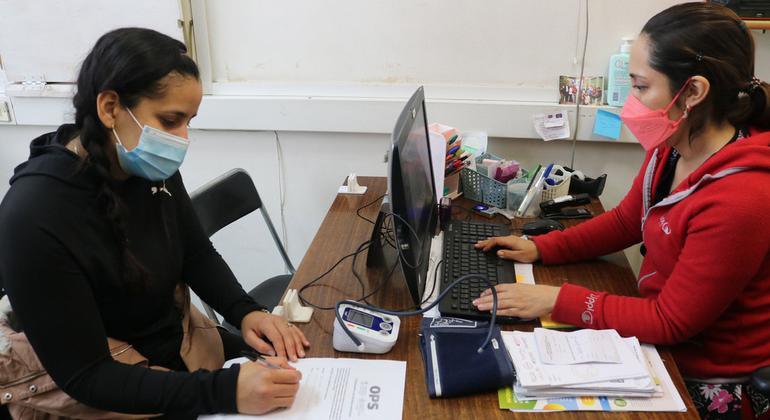
A *new analysis found that while countries have made significant progress over the past decade, funding shortfalls, humanitarian crises and persistent inequalities are widening gaps in care for those most at risk.
“This report tells two stories,” said WHO Director-General Tedros Adhanom Ghebreyesus. “It demonstrates what is possible when countries invest in health, communities and science. But it also shows how quickly progress can be undone by funding disruptions, humanitarian emergencies and persistent inequalities..”
Millions left behind
By the end of 2025, an estimated 32 million people living with HIV were receiving treatment worldwide. Since 2010, new HIV infections have decreased by 42 percent and AIDS-related deaths by 57 percent.
However, around nine million people still lack access to life-saving HIV medications, while infections continue to rise in several regions, particularly among populations facing stigma and discrimination, including sex workers, people who inject drugs, transgender people and people in prison.
The picture is equally uneven in the case of viral hepatitis.
Annual hepatitis B infections have decreased by almost a third since 2015, and hepatitis C-related deaths have decreased. Despite these advances, viral hepatitis remains one of the world’s deadliest infectious diseases and is estimated to claim 1.3 million lives by 2024.
Meanwhile, progress against sexually transmitted infections has slowed.
Although more pregnant women are being screened for syphilis and HPV vaccination coverage has modestly improved, infection rates continue to rise in many countries, while there is growing resistance to antibiotics used to treat gonorrhea.
Funding pressures
The WHO warned that reductions in international donor funding will disrupt HIV prevention programs in several countries during 2025, affecting access to pre-exposure prophylaxis (PrEP), a medication that significantly reduces the risk of acquiring HIV.
Some governments have intervened to maintain services, but early data suggests that PrEP use has already declined in several countries and communities.
The agency also highlighted persistent barriers to diagnosing and treating hepatitis B, despite the availability of highly effective medications capable of preventing millions of deaths.
Integrated health systems
WHO said integrating HIV, hepatitis and STI services into primary health care is one of the fastest ways to expand access while building more resilient health systems.
The report also highlights innovations such as long-acting HIV prevention drugs, better diagnostic tools, and stronger digital health systems as key opportunities to accelerate progress.
Among the most promising developments is the twice-yearly injectable lenacapavir, recommended by the WHO, which is now being introduced in 10 countries and is planned for launch in another 14.
talking to PakGazette Last month, Mandeep Dhaliwal, director of the Center for Prosperity and Wellbeing at the United Nations Development Program (UNDP), described the drug as a potential game-changer.
“Lenacapavir is a highly effective HIV prevention tool. Administered as an injection just twice a year, it has the potential to transform the response to HIV by preventing new infections, especially among higher-risk populations,” he said.
WHO also highlighted the importance of strengthening community leadership, ensuring that people most affected by HIV, hepatitis and STIs help shape health programs and monitor whether services reach those who need them most.
“Over the next five years, we must build integrated and resilient health systems that reach those furthest behind,” Tedros said.
*Tuesday marks World Hepatitis Daythe birthday of the Nobel Prize-winning scientist who discovered the hepatitis B virus