- Iranian media reports attacks on desalination pumps.
- Kuwait says Iran attacks energy and desalination station.
- UN concerned about attacks on civilian infrastructure.
Iran launched new attacks on US allies in the Gulf on Saturday after a seventh straight night of US attacks on Iranian military sites, including logistics infrastructure, escalating the war a week after a fragile ceasefire deal fell apart.
Both sides also targeted maritime traffic: The United States said it was imposing a naval blockade, while Iran said it was targeting ships that violated its rules on navigation through the Strait of Hormuz, the vital waterway for a fifth of the world’s oil supply.
Oil prices rose more than 4% on Friday to their highest level in more than a month, putting political pressure on US President Donald Trump as his Republican Party tries to stay in power in November’s midterm elections.
Washington and Tehran have been testing the limits of escalation since their ceasefire agreement collapsed last week, raising the possibility of a return to all-out war.
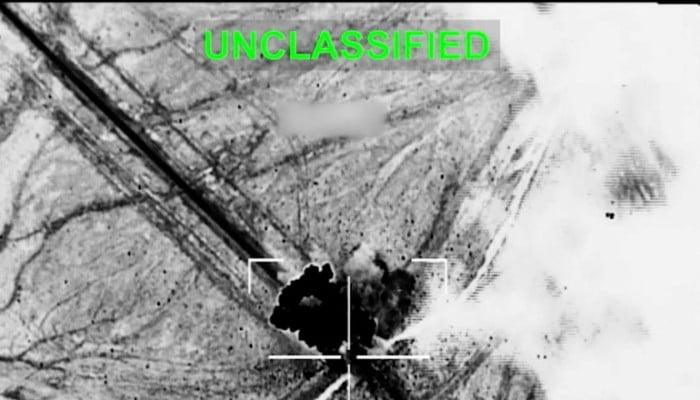
The US military’s Central Command said it concluded its latest round of strikes by attacking surveillance sites, military logistics infrastructure, underground weapons storage and maritime capabilities.
“US forces employed fighter jets, aerial drones and warships, in addition to other assets,” Central Command said in a statement. “More than 50,000 US military personnel are operating throughout the Middle East and remain vigilant, lethal and prepared.”
Iranian media reported on Saturday that several missiles hit electrical installations and desalination pumps in the southern Iranian city of Jask, citing a local official. The official said drinking water had been cut off in Jask villages due to the attack.
The United States said its forces rerouted four commercial ships, disabled one and boarded another to impose its naval blockade on Iran.
In turn, Iran’s Revolutionary Guard said four ships violating its maritime traffic rules were prevented from passing through the strait with a combined missile and drone operation.
Additionally, Iranian media, citing Iran’s Revolutionary Guard, reported that two oil tankers exploded and caught fire after passing through a mined route south of the strait. The US military called that report false.
Gunmen seized another ship off Yemen, raising concerns about security at the other major chokepoint for Middle East oil shipments at the mouth of the Red Sea.
Iranian state television quoted the Revolutionary Guards as saying that until US “aggression” comes to an end, it will not be possible to export chemical fertilizers or even “a single drop of oil and gas” from the region.
Mohsen Rezaei, an adviser to Iran’s supreme leader, warned on Friday against a US escalation or any attempt to seize Iranian territory.
Concern about infrastructure
U.N. Secretary-General Antonio Guterres was concerned about the escalation, particularly “attacks on civilian infrastructure in Iran and across the region,” his spokesman said.
The U.S. military’s Central Command said its targets included “military logistics infrastructure,” the first time it has mentioned infrastructure in more than a week.
Iranian media reported enemy attacks early Saturday in the coastal province of Hormozgan, on the Iranian side of the Strait of Hormuz. State television said three people were killed and eight injured, while two bridges and a road tunnel were damaged.
Iranian media reported explosions or attacks carried out in Sirik, Ahvaz, Yazd, Jask and Khorramabad on Friday night or early Saturday.
Trump has threatened to launch broad-based airstrikes against Iran’s infrastructure and has also refused to rule out a ground attack against Iran’s coast or islands. U.S. officials have said the strikes on southern Iran are designed in part to give Trump options.