NEWNow you can listen to Pak Gazette articles!
In Driver’s eye with James Hinchcliffesix times INDYCAR The winner will take you into the mind of a racer as he breaks down the nuts and bolts of the sport for fans.
Wow. Whoa, whoa, whoa, whoa.
I’m not sure what you were expecting from this year’s Indianapolis 500, but I have to be honest: an unprecedented, hair-raising drag race with a crowd screaming until the end was much more than I thought we had in store!
As always, the Indy 500 had no shortage of stories. From the weather being a constant threat all day, to multiple red flags, to a split fuel strategy and a one-lap fight for all the glory, the 110th edition of racing’s greatest spectacle had all the dramatic bases covered.
But I want to focus on something very specific. I want to talk about the last lap.
I want to talk about how tough, dangerous and terrifying it is to race around the outside of the four turns at the Indianapolis Motor Speedway, inches from another car going 220 miles per hour… with the added complication of your teammate being in that other car.
Enter Félix Rosenqvist and Marcus Armstrong.
Let’s start by running side by side for a full lap. It’s not uncommon on a restart, when you’re still gaining speed, to see a car go through Turns 1 and 2. Then, when you get to Turn 3, there may be a big line controlling the bottom lane, and you may still be able to hold on there.
But when both cars are in fairly clean air (the leader had a solid gap on them at this point), trying to hit the driver on the inside is mind-boggling. Indy is a single beat track once you’re up to speed, but I guess no one told Felix!
There’s a reason every driver who raced around the 2.5-mile track applauded that move on the final lap. We all know how incredibly difficult it is to do.
Rosenqvist not only had to trust his car and his abilities, but he also had to trust the driver he was competing with.
(Photo by James Gilbert/Getty Images)
The golden rule in motorsports is not to hit your teammate. When you and your teammate have the desire to win the biggest race on the planet, things get complicated.
Rosenqvist and Armstrong know the rule. But they also know that an Indy 500 victory within your reach doesn’t happen every day and that you have to give it your all. The respect both guys showed for each other was truly spectacular to see.
Instantaneous, fast-paced, future-determining decisions were made several times a second at more than 200 miles per hour.
As impressive as Felix’s final lap was, you have to give Armstrong tremendous credit for how he ran those last 2.5 miles.
But the racing gods were on Felix’s side. Indy, they say, picks the winner. Felix was the chosen one.
There was nothing Marcus could have done differently to come out on top. And making sure he didn’t wreck his teammate ensured he wouldn’t have to answer any tough questions from the bosses when he returned to the pits.
[WHO IS? Indy 500 Winner Felix Rosenqvist On Fatherhood, Being Too Nice]
TALKING ABOUT NOTHING, YOU COULD HAVE DONE DIFFERENTLY…
How about David Malukas? When he took the lead into the first corner of that final lap, he would have looked in the mirrors and seen the two Meyer Shank Racing teammates chasing him.
And that would have been exactly what I wanted to see. Cars running side by side won’t catch up to you as quickly as a single towed car.
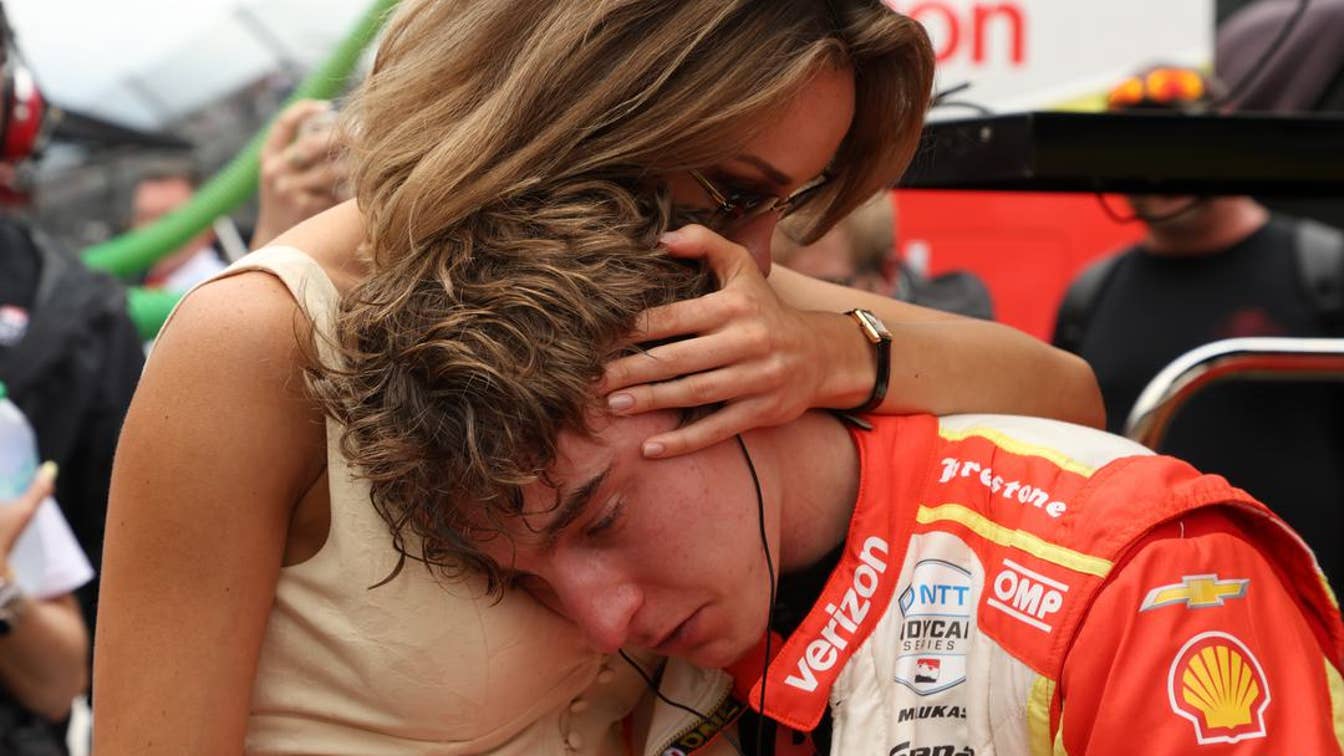
David Malukas after finishing second by 0.0233 seconds in the 2026 Indy 500. (Matt Fraver/INDYCAR)
Even with that ideal scenario, it wasn’t enough to keep Rosenqvist at bay. David did everything right, everything he could do given the situation he found himself in, to win that race. But when it’s not your day, there’s nothing else you can do.
You’ll rewatch that last lap 100 times, trying to see if there’s anything you can do differently. But for a young driver fighting at the front of the world’s biggest race, he kept his composure and executed to perfection, but it still wasn’t meant to be.
Malukas should (eventually) sleep well knowing it wasn’t his time, but a performance like that means his time will surely come.
The bad news for Malukas is that the repetition of the ending is part of history and will be a prominent topic in the coming decades.
We’ve never seen a final lap like that in the history of the Indy 500. We’ve never seen a finish this close in 110 years.
But rather than seeing it as a painful reminder of what almost was, I hope you see it as a privilege to have been part of a historic moment at the iconic track.
SOUNDS LIKE AN INDYCAR EXPERT
The Indy 500 had three key moments that set the stage.
The first was the split strategy on lap 130. The teams that pitted thought they could make it to the end with one more stop. Those who were left out did not believe they could get the amount of fuel and wanted to run at full speed, rather than save.
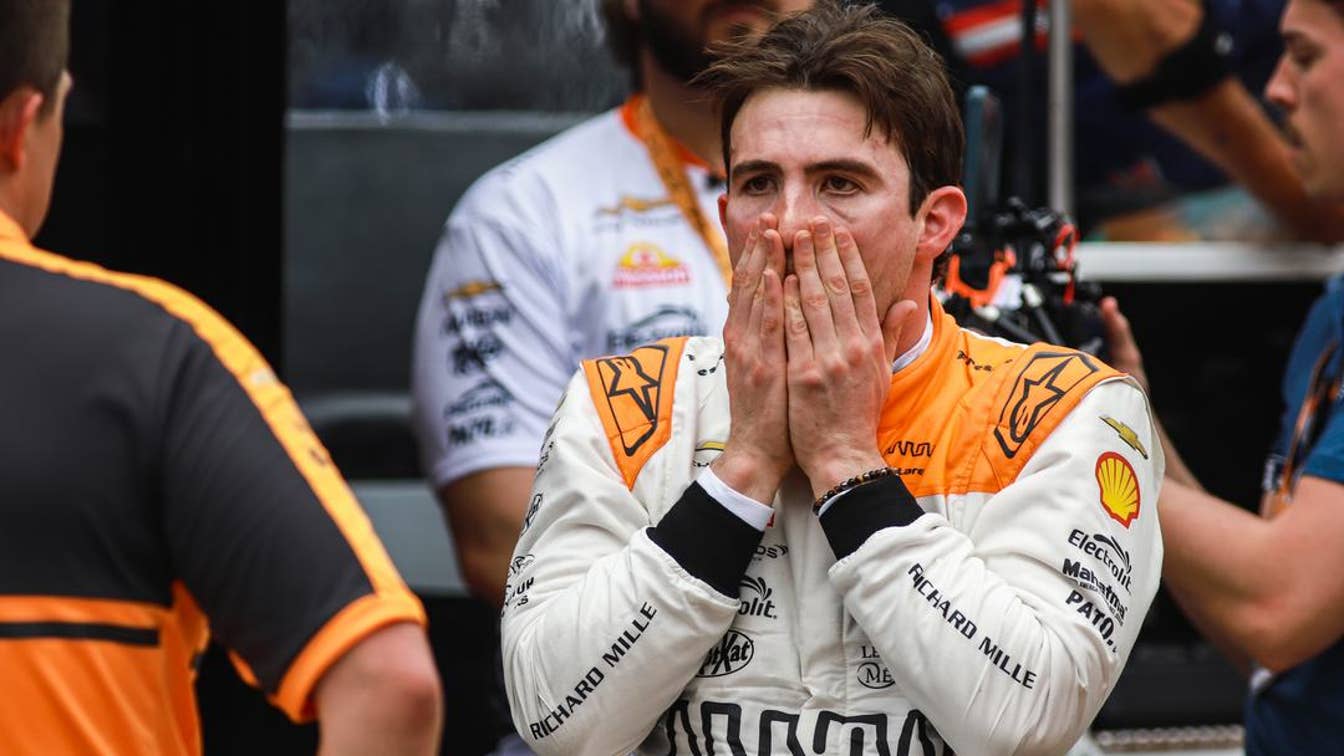
Pato O’Ward after finishing fourth in the 2026 Indy 500. (Aaron Skillman/INDYCAR)
As the race unfolded, it appeared that those who took the lap 130 stop made the right decision, as Rosenqvist, Pato O’Ward and Armstrong were comfortably ahead of the group of chasing drivers who took the extra stop.
BUT… that advantage was nullified when the yellow flag came out, and then the red flag on lap 192, due to Caio Collet’s accident. This closed the chasing group down to the leaders and put everyone on equal footing.
Of course, the final act came when the quick yellow flag came out for Mick Schumacher brushing the wall in Turn 1 and causing the green flag to wave on the final lap.
What looked like it was going to be a battle of strategic brains turned into a good old-fashioned bare-knuckle race to the checkered flag. That’s the kind of racing the drivers and their fans love.
LIVE FROM THE STAND
You’ve probably seen the clip of my booth companions and I on that last lap, the one in which I deployed all the practice I had compartmentalizing my emotions in the race car to stay calm and not miss a second of the action. I hope our extensive reactions have shown the world how much we love this sport and how much we love presenting the show these drivers put on for us every weekend.
I have to say: it was a lot of fun calling this race from the booth. After a marathon month, enjoying a once-in-a-century finale was a true honor.
And while I have you, a shout out to the entire FOX Sports production team, who, at every position on the team, did an excellent job bringing you all the action during a grueling May schedule.
1 FOR THE ROAD
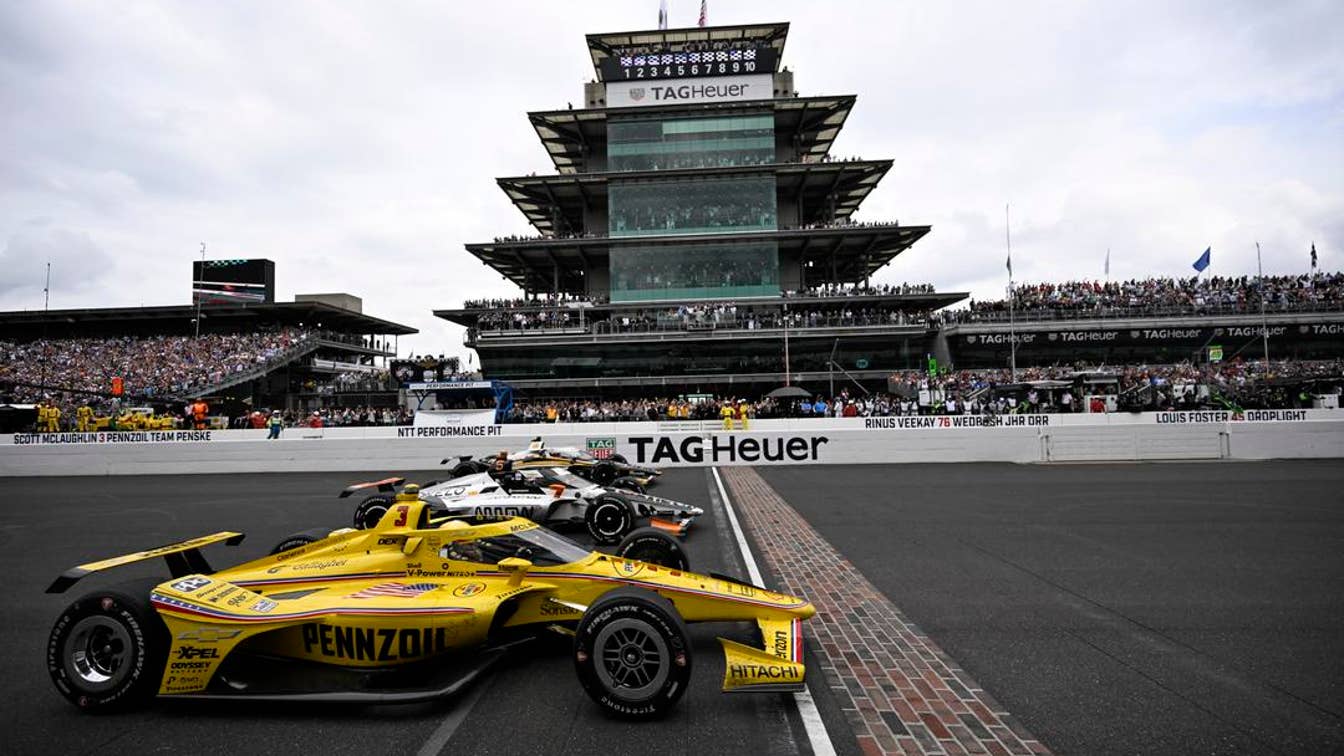
Scott McLaughlin, Pato O’Ward and Marcus Armstrong finished third, fourth and fifth in the 2026 Indy 500. (Doug Mathews/INDYCAR)
Now, as you watch the closest Indy 500 finish in history, you may have missed the wild finish for third, fourth and fifth place at the Yard of Bricks. It’s understandable, considering all the awesomeness after the flag.
But kudos to Scott McLaughlin for timing, perfectly, a Turn 4 exit to move from fifth to third on the line. Fair.
And while we were talking about the smallest margin of victory in history (0.0233 seconds between first and second), right behind them, third, fourth and fifth were covered by just 0.0115 seconds. After 200 laps, 500 miles, three positions settled by centimeters.
Man, this race is amazing. I’m ready to do it again. Is it May already?
MORE DRIVER’S EYE: