
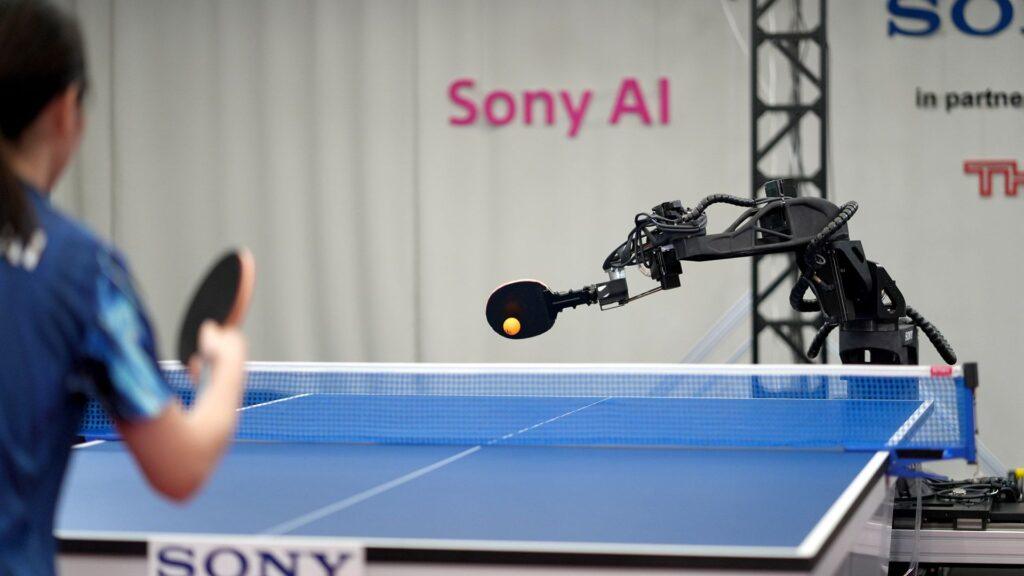
- A robot just beat some elite table tennis players
- Sony AI’s Project Ace is good at competing against unpredictable human players
- Success here could mean it will be easier to use AI to train future robots to handle the real world.
In competitive table tennis, the ball can travel at speeds of up to 112 km/h and can go anywhere. Sure, there’s some predictability based on hit, spin, and how the ball hits the table, but there are also endless possibilities that a robot has now seemingly mastered.
Sony AI’s Project Ace is the first robot to beat multiple elite table tennis players in an International Table Tennis Federation-style stadium under the watchful eye of licensed referees.
In a new Nature article, Outperforming elite table tennis players with an autonomous robotSony AI scientist describes their work and how they built and used AI to train a robot, “Project Ace,” not only to play table tennis, but also at a professional level.
Article continues below.
“Ace achieved three wins in five matches against elite players, in addition to competitive performances in the remaining matches. These results demonstrate the potential of physical AI agents to outperform human experts in real-time interactive tasks,” the scientists wrote.
Project Ace is a cunning combination of “high-speed perception,” a control system based on reinforcement learning (which rewards good behavior), and “high-speed robotic hardware.”
Without feet, but with a perverse backhand.
Ace doesn’t look like a human ping pong player you’ve ever seen. Instead, it glides in four directions on a custom tracking system, while its trunk rotates 360 degrees and the fully articulated arm and wrist adjust on the fly to serve and return the ball. You may have seen robots that play table tennis before (I remember seeing a heavy one at CES 2026), but not like this. The speed alone is amazing.
Still, it’s the AI-based reinforcement learning and training simulation that makes Project Ace special and successful. During training he was able to face all types of game scenarios. He even practiced against a virtualized version of himself. But it is “model-free” reinforcement learning that, at least in part, allows Project Ace to adapt to unpredictable, elite, human competitors.
Equipped with onboard sensors and an array of nine cameras placed around the robot, Project Ace can see things that most human competitors, even elite players, might miss. The spin of the ball, for example, is a determinant of where the ball will go next.
As the researchers explain in the project video, perception is one of the key innovations: “Therefore, it is the only system in the world that can measure the spin of an unaltered table tennis ball at this speed.”
Perhaps the secret here, however, is a technique called “privileged critical,” which Sony’s AI developers used in training simulations. The privileged reviewer accessed perfect match information, which is linked to live sensor data. You could say that it is comparing what should happen with what happens. That learning is the robot’s way of preparing for the unexpected.
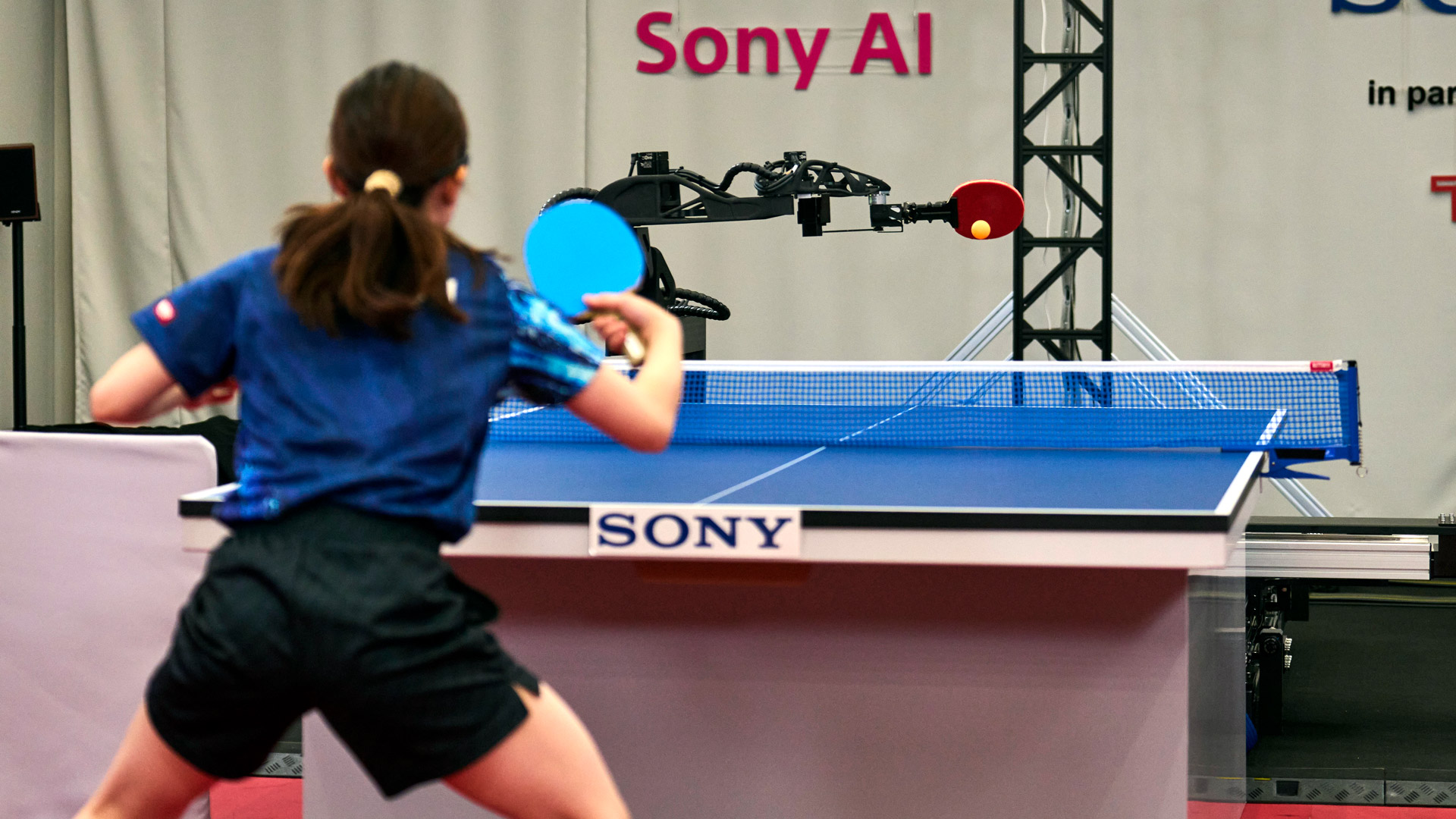
There is a moment in the video where you can see this in operation. The elite human player hits a ball that catches the net, sending it hurtling in a different, perhaps unexpected direction. Clearly, Project Ace already had a comeback planned, but managed to adapt to the new trajectory of the ball and pulled off a comeback. It all happens in milliseconds, and you could argue that a human player wouldn’t have managed to make the same quick adjustment.
“It totally blew my mind,” said Sony AI director and chief engineer Peter Dürr in a statement about Project Ace.
Like Sony AI’s previous project – teaching AI how to beat human-level expert players in a Gran Turismo simulation – Project Ace isn’t about beating professional players and leveling up to become Olympic-class tablet tennis players. It’s about helping robots operate in an unpredictable world.
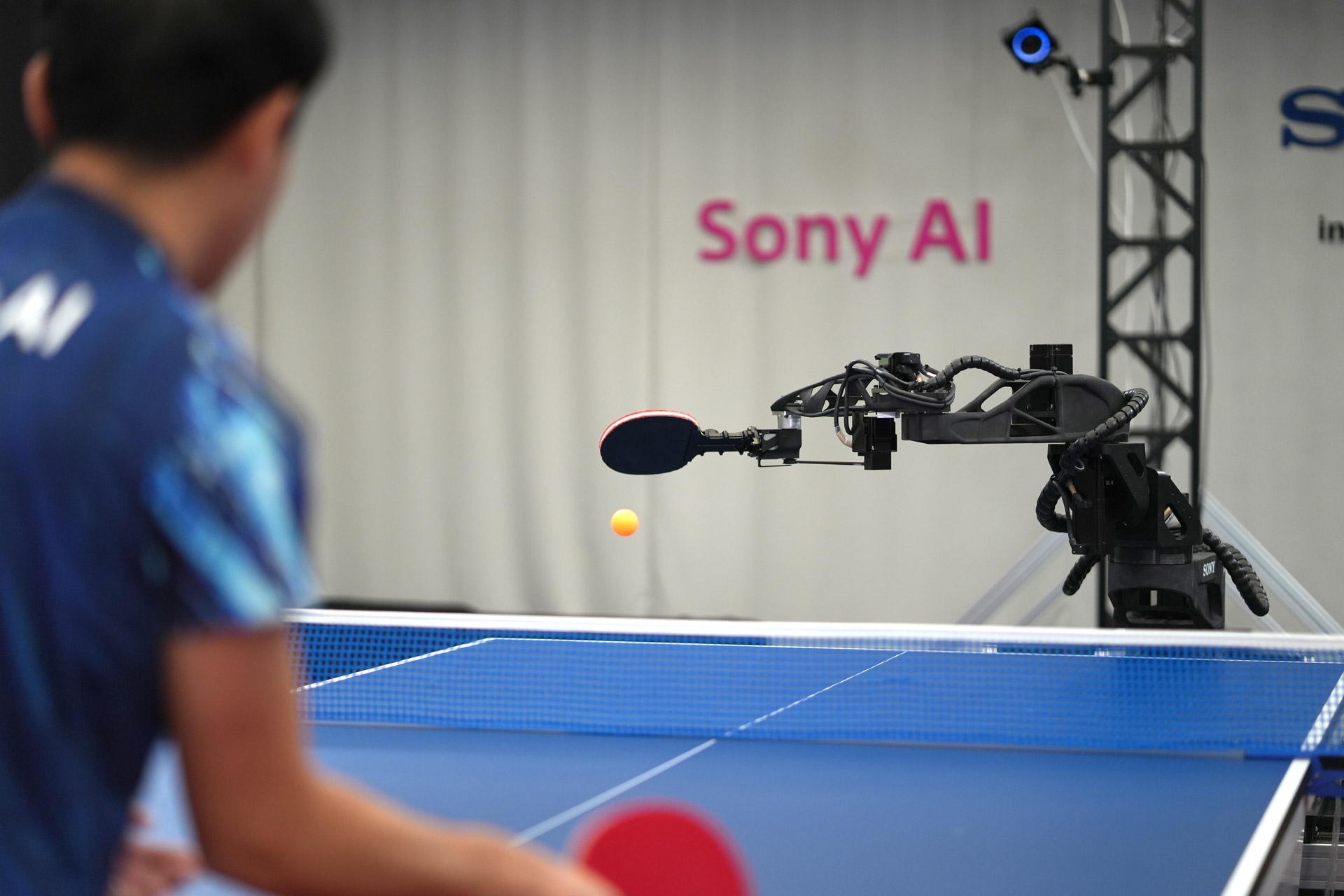
Most people who observe humanoid robots operating in home environments comment on their speed or lack of speed. Robots move deliberately for safety and to manage the unexpected. However, Project Ace demonstrates that robots can train and train themselves to manage an unpredictable world at high speed.
Furthermore, future table tennis competition is not completely ruled out. After all, Sony’s AI team is constantly working to improve Project Ace’s gameplay. They observe, for example, that the robot tends to approach and strike before human opponents. Sometimes taking a step back and waiting a moment can provide a more strategic return.
If they solve that (or maybe Project Ace solves it on its own), why should the Olympics be off the table?

Follow TechRadar on Google News and add us as a preferred source to receive news, reviews and opinions from our experts in your feeds.


