NEWNow you can listen to Pak Gazette articles!
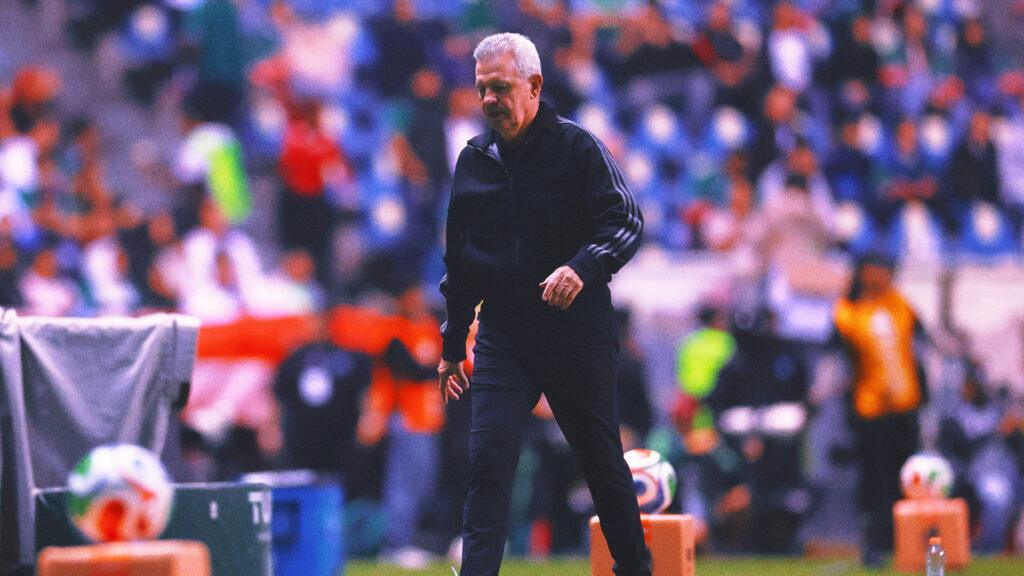
When Javier Aguirre was a player, he believed the grueling, year-long training camp in Mexico before the 1986 World Cup was the key to El Tri reaching the quarterfinals, equaling their best finish.
As coach of the national team, he tries to replicate that classic formula.
Unlike most competing nations, which must wait for domestic leagues to conclude before assembling their teams, Mexico began assembling its players more than a month before its World Cup opener on June 11 against South Africa, keeping them away from their teams while Liga MX was underway.
“This is a project, not a whim; it is a project to try to make this a great World Cup,” says Aguirre. “We concluded that being at home and having these magnificent facilities we needed to be well prepared in every way. This meant having them ready five weeks before the World Cup.”
The 67-year-old, who led Mexico to the World Cup for the third time, was an integral part of the 1986 team that beat Belgium and Bulgaria and lost to eventual finalists West Germany on penalties in the quarterfinals.
The only other time El Tri reached that stage was in 1970, also at home.
“Being part of the national team and being able to play in a World Cup at home is priceless,” Aguirre says of the 48-team tournament that Mexico is co-hosting with the United States and Canada.
A modern dilemma
MEXICO CITY, MEXICO – MAY 20: Mexico players listen to their head coach Javier Aguirre (C) during a training session at the CAR on May 20, 2026 in Mexico City, Mexico. (Photo by Agustín Cuevas/Getty Images)
Modern soccer presents challenges that did not exist in 1986. While that Mexican team had only one European-based star, Real Madrid icon Hugo Sánchez, the current group has 14 players competing in Europe.
To secure his local players early, Aguirre had to convince the owners of Liga MX’s 18 first division teams that an extended camp was the only way to truly stand out at home. Their plan was approved last December and the training camp doors opened on May 6 with an initial group of 12 national players.
However, the strategy has drawn criticism from prominent figures within Mexican soccer, particularly former national team coach Ricardo La Volpe, who led El Tri to the round of 16 at the 2006 World Cup in Germany.
“I am really surprised and I have a lot of respect for Javier Aguirre, but I don’t understand it for one simple reason: first, he doesn’t have the majority of the players, which makes the practices meaningless,” argued La Volpe. “I would say that if you can’t work with everyone you should let the players use the national playoffs to maintain their game rhythm.”
Putting the pieces together
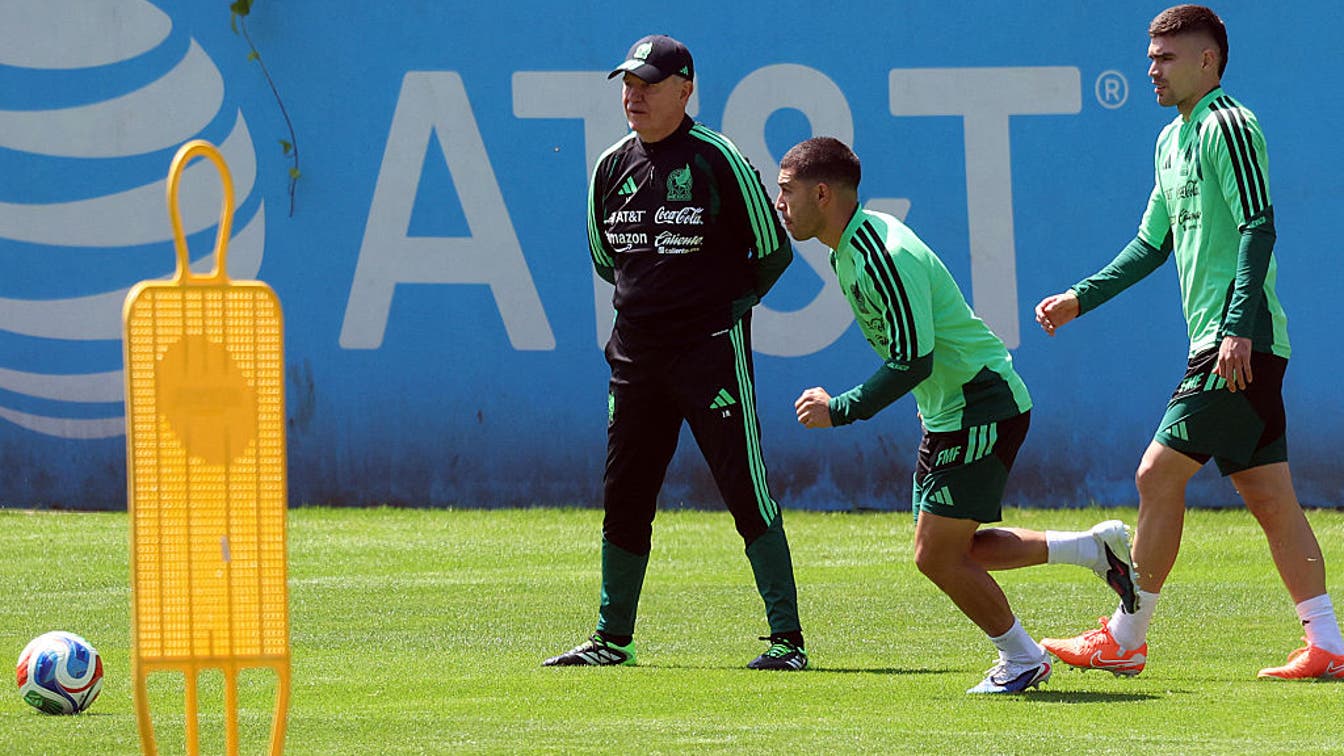
Mexican midfielder Erik Lira (C) and defender Johan Vasquez (R) participate in a training session with coach Javier Aguirre before their friendly match against the Portuguese national team in Mexico City on March 26, 2026. Mexico will play a friendly match against Portugal on March 28 at the Estadio Banorte (previously known as Estadio Azteca) in Mexico City. (Photo by Luis CORTES/AFP via Getty Images)
Due to staggered arrivals, Aguirre initially had to bring in youth players as training partners to complete his training sessions. Behind the scenes, however, the manager used his deep network and public relations skills to persuade some European clubs to release their Mexican players early.
The politicking paid off. Early last week, Aguirre had 18 of his final 26 players available for a warm-up match against Ghana, which Mexico won 2-0.
Mexico’s intensive preparation continues with friendlies against Australia on Saturday in Pasadena, California, followed by a final test against Serbia in Toluca on June 4, just a week before attention turns to the high-stakes World Cup opener against South Africa at the Estadio Azteca. Mexico also faces South Korea and the Czech Republic in Group A.
At the 2022 World Cup in Qatar, Mexico failed to advance from its group.
World class foundations
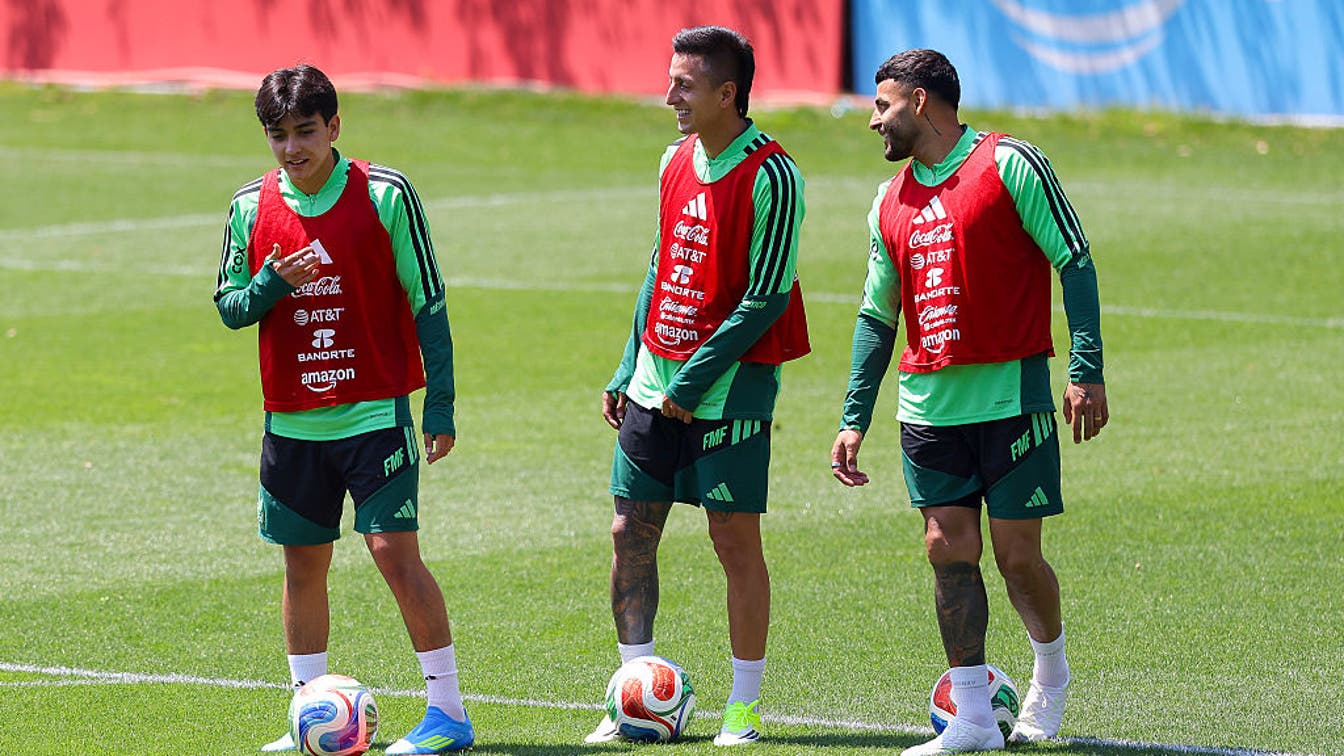
MEXICO CITY, MEXICO – MAY 20: Roberto Alvarado and Alexis Vega of Mexico laugh during a training session at CAR on May 20, 2026 in Mexico City, Mexico. (Photo by Agustín Cuevas/Getty Images)
To ensure optimal preparation, the Mexican Football Federation invested 400 million pesos ($23 million) in a massive renovation of its elite training center, the Centro de Alto Rendimiento on the outskirts of Mexico City.
“This investment reflects our responsibility towards the World Cup,” says federation president Mikel Arriola. “We have built facilities that will provide the national team with the best possible conditions for their preparation, on par with the world’s leading football powers. Organizing a World Cup requires us to raise all our standards, both on and off the field.”
Accommodation for the senior team was expanded from 20 to 45 private rooms, complemented by new player entertainment rooms.
However, the crown jewel of the renovation is a state-of-the-art facility housing a massive gym, which has grown from 1,200 to 6,000 square meters. The new complex also integrates a modernized medical wing, advanced physiotherapy and hydrotherapy laboratories, locker rooms, coaches’ offices and a dedicated sports intelligence center.
Building a brotherhood
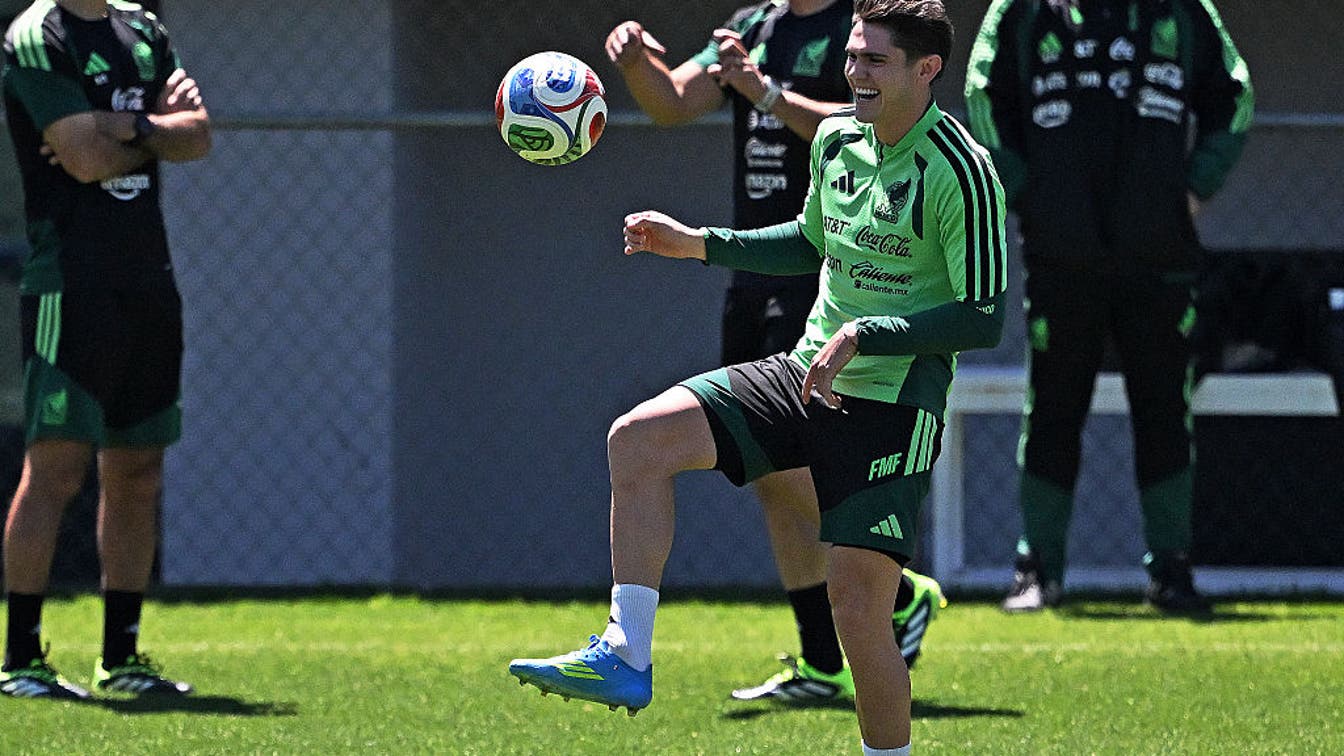
Mexican defender Israel Reyes controls the ball during a training session in Mexico City on May 15, 2026. (Photo by CARL DE SOUZA / AFP via Getty Images)
While critics question the tactical wisdom of the extended camp, the players themselves have defended the early closure. Beyond tactical exercises, the team sees isolation as a crucible to generate chemistry that transcends the field.
“You have to be here to truly understand it,” says defender Israel Reyes. “People might say it’s a long time away, but it’s helping us really get to know each other.”
For Reyes and his teammates, the long hours spent at the upgraded training center are forging a collective identity that could prove decisive under the intense pressure of a home tournament.
“That camaraderie in the locker room is vital because we begin to feel like a brotherhood,” adds Reyes. “On the field, everything changes. You’re no longer just defending a teammate, you’re defending your brother.”
FIFA World Cup 2026: How to watch
The 2026 FIFA World Cup will take place from June 11 to July 19, 2026. Spread across three countries, the tournament will culminate with the final on July 19 at the New York New Jersey Stadium in East Rutherford, New Jersey. All 104 matches of the tournament will be broadcast live on FOX (70) and FS1 (34) and each match will be streamed live and on-demand on both FOX One and the FOX Sports app. A record 40 matches, more than a third of the tournament, will be broadcast in prime time on FOX (21) and FS1 (19).
The June 11 opening match between Mexico and South Africa (3 p.m. ET) will be streamed for free on Tubi, as will the United States’ opening match against Paraguay on June 12 (9 p.m. ET).